


 Trump Allows Commercial Fishing in Protected New England Waters
  Netanyahu to Meet Trump in Washington as Iran Nuclear Talks Intensify
  Trump Endorses Japan’s Sanae Takaichi Ahead of Crucial Election Amid Market and China Tensions
  U.S. Announces Additional $6 Million in Humanitarian Aid to Cuba Amid Oil Sanctions and Fuel Shortages
  Trump Lifts 25% Tariff on Indian Goods in Strategic U.S.–India Trade and Energy Deal
  China Warns US Arms Sales to Taiwan Could Disrupt Trump’s Planned Visit
  Trump Signs Executive Order Threatening 25% Tariffs on Countries Trading With Iran
  Pentagon Ends Military Education Programs With Harvard University
  Jack Lang Resigns as Head of Arab World Institute Amid Epstein Controversy
  Ohio Man Indicted for Alleged Threat Against Vice President JD Vance, Faces Additional Federal Charges
  Trump Backs Nexstar–Tegna Merger Amid Shifting U.S. Media Landscape
  TrumpRx Website Launches to Offer Discounted Prescription Drugs for Cash-Paying Americans
  India–U.S. Interim Trade Pact Cuts Auto Tariffs but Leaves Tesla Out
  TrumpRx.gov Highlights GLP-1 Drug Discounts but Offers Limited Savings for Most Americans
  South Korea Assures U.S. on Trade Deal Commitments Amid Tariff Concerns
  Trump Signs “America First Arms Transfer Strategy” to Prioritize U.S. Weapons Sales
  Iran–U.S. Nuclear Talks in Oman Face Major Hurdles Amid Rising Regional Tensions


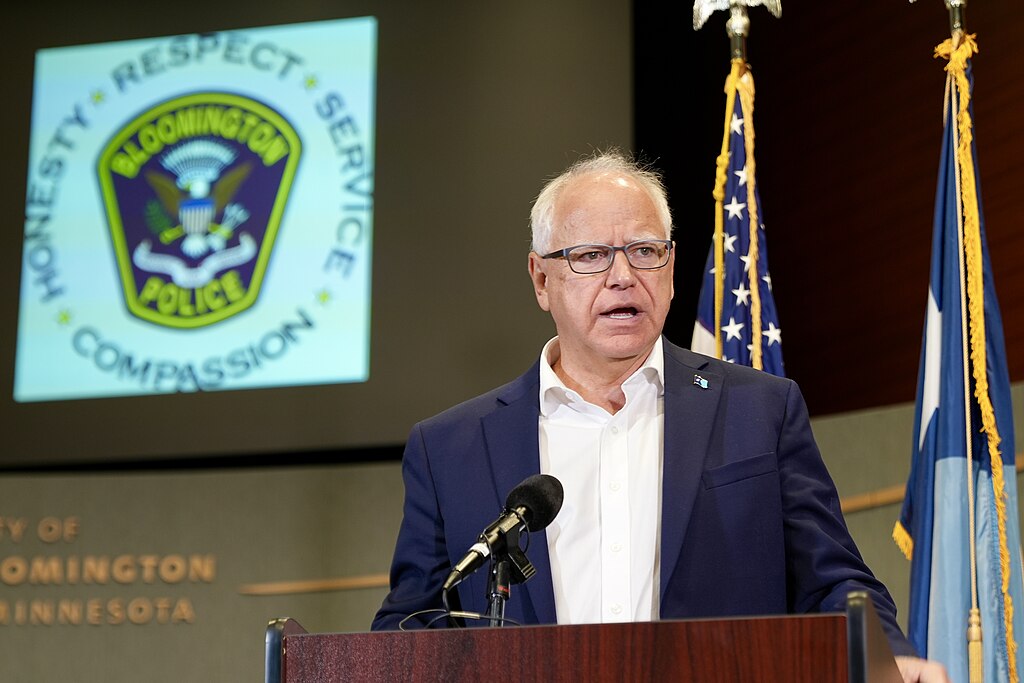
Minnesota Governor Tim Walz is facing backlash after defending President Joe Biden’s recent comment that referred to Trump supporters as “garbage.” In his statement, Walz, who recently compared Trump supporters to Nazis, argued that Biden’s comment was “very clear” in its intent and dismissed criticism of the language used. The governor’s remarks have drawn sharp reactions, with many questioning the tone of political discourse and the implications of such language.
The controversy began when Biden, while discussing the political climate in the U.S., referred to certain Trump supporters as “garbage.” This sparked immediate debate, with critics arguing that such divisive language only deepens partisan divides. Walz, however, defended Biden’s choice of words, stating that the president’s intent was clear and should not be misinterpreted. “What Biden said was precise,” Walz commented during a recent interview. “He’s speaking to those who undermine democracy. His meaning was very clear, and it’s time we stop pretending it’s about everyone who disagrees.”
The governor’s defense follows his own recent controversial comparison of Trump supporters to Nazis. The remark, which Walz made while addressing the dangers of extremism in the country, drew widespread criticism, with opponents accusing him of unfairly vilifying a large segment of the population. Although Walz did not retract his statement, he clarified that he was referencing extremist elements rather than all Trump supporters. Nonetheless, the timing of his latest comments has only fueled the controversy, leading to calls for greater accountability in political rhetoric.
Many political figures, particularly from the Republican Party, have denounced Walz’s stance, arguing that it exemplifies a pattern of inflammatory language targeting Trump’s base. “These statements are reckless and damaging,” said Rep. Greg Hanson, a Minnesota Republican. “When elected leaders casually use terms like ‘Nazis’ or ‘garbage’ to describe people who simply disagree with them politically, it erodes trust and further divides this country.” Hanson’s comments echo broader concerns among Republicans, who view such language as an attempt to delegitimize opposition voices.
On social media, the incident has sparked intense debate, with hashtags like #GarbageGate and #ApologizeWalz trending on X, formerly Twitter. Many users voiced concerns about the impact of derogatory language in politics, arguing that it fuels division rather than fostering meaningful discourse. “When leaders label people ‘garbage,’ they’re sending a message that dissent isn’t welcome,” one user posted. Another user commented, “The focus should be on bridging divides, not widening them.”
Political analysts note that the language used in these comments may influence public opinion ahead of the upcoming election season. “Statements like these have a lasting impact, particularly in swing states where voters are sensitive to divisive rhetoric,” said Dr. Elaine Baker, a professor of political science. “The tendency to label opponents in extreme terms could potentially alienate undecided voters who are looking for leadership that promotes unity.”
The Biden administration has yet to address the governor’s comments directly, though White House representatives previously clarified that Biden’s “garbage” remark was aimed at specific actions rather than the entire base of Trump supporters. Whether Walz’s defense of Biden will lead to further political ramifications remains to be seen, as the controversy continues to unfold.
In the meantime, the governor’s remarks underscore the challenges facing politicians as they navigate a polarized landscape, where language choices can either bridge gaps or deepen divides. As public reaction intensifies, both Walz and Biden face heightened scrutiny over their rhetoric and its implications for national unity.













