


 Chile Central Bank Holds Interest Rate at 4.5% as Inflation and Global Risks Persist
  BOJ Holds Rates at 1% as Inflation Outlook Eases, October Rate Hike Still Possible
  China Set to Hold Benchmark Lending Rates Steady for 15th Month
  Fed Holds Interest Rates Steady as Kevin Warsh Says Rising Treasury Yields Tighten Financial Conditions
  Brazil Cuts Selic Rate to 14% as Inflation Eases but Risks Persist
  Fed Minutes Signal Rate Hikes Remain Possible as Inflation Risks Persist


 Add as a preferred source on Google
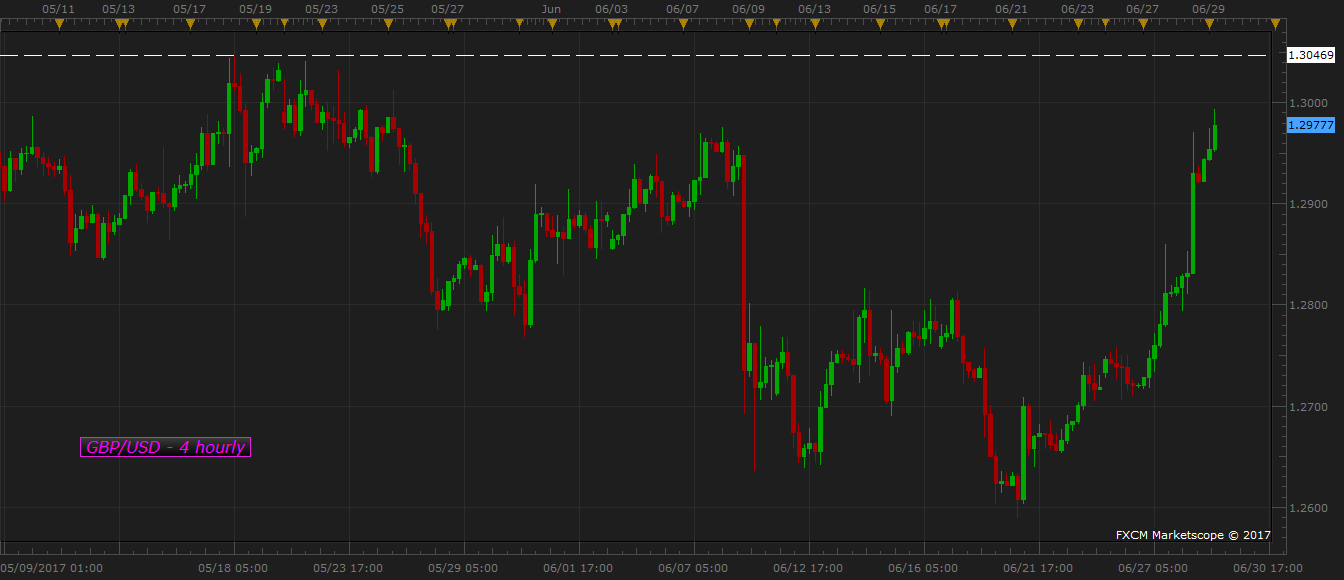
The British pound jumped against the dollar and other key trading counterparts yesterday as the Bank of England (BoE) governor Mark Carney suggested that stimulus withdrawal may prove to be necessary, speaking at the European Central Bank’s (ECB) annual forum in Portugal. He said, “When the MPC last met earlier this month, my view was that given the mixed signals on consumer spending and business investment, it was too early to judge with confidence how large and persistent the slowdown in growth would prove. Moreover, with domestic inflationary pressures, particularly wages and unit labor costs, still subdued, it was appropriate to leave the policy stance unchanged at that time. Some removal of monetary stimulus is likely to become necessary if the trade-off facing the MPC continues to lessen and the policy decision accordingly becomes more conventional. The extent to which the trade-off moves in that direction will depend on the extent to which weaker consumption growth is offset by other components of demand including business investment, whether wages and unit labor costs begin to firm, and more generally, how the economy reacts to both tighter financial conditions and the reality of Brexit negotiations. These are some of the issues that the MPC will debate in the coming months.”
Given the current political and economic conditions in the United Kingdom, the central bank’s biggest concern is stagflation, which is stagnant growth with higher inflation. A weaker pound has already pushed the inflation to the highest among OECD nations. In the first quarter of this year, GDP growth weakened to just 0.2 percent on a quarterly basis and inflation reached 2.9 percent in May.
Despite the weakness from the political fallout and Brexit, the British pound is grinding higher to test the peak around 1.305 against the dollar, made in May.







