


 S&P 500 Hits Record High as AI Rally Lifts Wall Street
  Trump Demands Powell Resign Over Fed Renovation Cost Overruns
  Fed’s Hammack Says Bond Yield Surge Is Not Driven by Inflation Fears
  Asian Currencies Slide as Dollar Rises, Euro Hits 17-Month Low
  RBI Uses $10 Billion Currency Swaps to Drain Excess Rupee Liquidity
  Wall Street Rises as Oil Prices Ease, Nasdaq Hits Record
  Yen Sinks as BOJ Rate Hike Fails to Impress Markets
  Trump Plans Diesel Tax Relief as Fuel Prices Hit Record Highs
  Fed Unveils Stablecoin Rules Under GENIUS Act
  RBI Rate Hike Bets Surge as Inflation Rises
  Europe EV Sales Hit Record as Affordable Models Boost Demand
  Nasdaq Hits Record High as Tech Stocks Lift Wall Street


 Add as a preferred source on Google
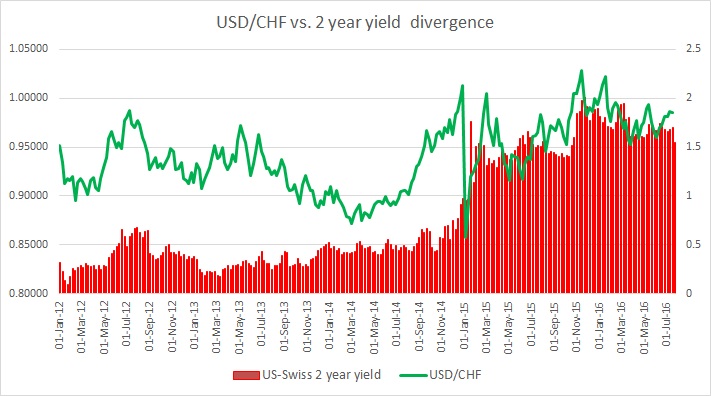
In recent days, Swiss franc’s correlation with the 2-year yield spread (US-Swiss 2 year) has dropped to 25 percent but time on time again it shows relatively high positive correlation, as high as 80 percent at times. Just before and after the Brexit referendum in the UK, the 20-day rolling correlation was averaging above 60. Hence, it is vital to keep a watch on the Swiss yields.
Just after the Swiss floor shock in January 2015 when the Swiss National Bank (SNB) removed a floor in EUR/CHF at 1.20 this relation went to negative and stayed there until October with occasional bounces to positive territory. It hasn’t gone to the negative since and was closely related to the yield (above 80 percent) in January this year.
Unlike the euro or the pound, the Swiss franc is considered a safe haven, hence the yield relation sometimes gets overlooked.
However, Swiss yields are a must watch as they are the lowest for any government bonds in the world and any shift in that will mark a major turnaround in trend. The above chart explains how the relation between the spread and exchange rate has unfolded since 2012.







