


 Bank of America Predicts Yen Rebound as USD/JPY Faces Risks
  Kalshi Seeks Sixth Circuit Review of Sports Betting Ruling
  New York Times, AFP Join Coalition to Protect Content From AI
  Ripple Mints 19.6 Million RLUSD Amid Banking Expansion
  GesiaPlatform Launches Carbon-Neutral Lifestyle App ‘Net Zero Heroes’
  Thousands of satellites are due to burn up in the atmosphere every year – damaging the ozone layer and changing the climate
  Syndax Stock Drops 15% After Axatilimab Trial Failure
  Canton Network Expands Wall Street Reach With Ripple Integration
  Wells Fargo Expands Stablecoin Plans With 20 Major Banks
  IMF Maintains 2027 Global Growth Forecast at 3.4% Amid Rising Risks
  Bank of America Hit With $1.2 Billion Fine Over Money Laundering Failures
  Fed’s Williams Sees One More Rate Hike in 2026, None in 2027
  Fungi are among the planet’s most important organisms — yet they continue to be overlooked in conservation strategies
  How America courted increasingly destructive wildfires − and what that means for protecting homes today
  Drug pollution in water is making salmon take more risks – new research


 Add as a preferred source on Google
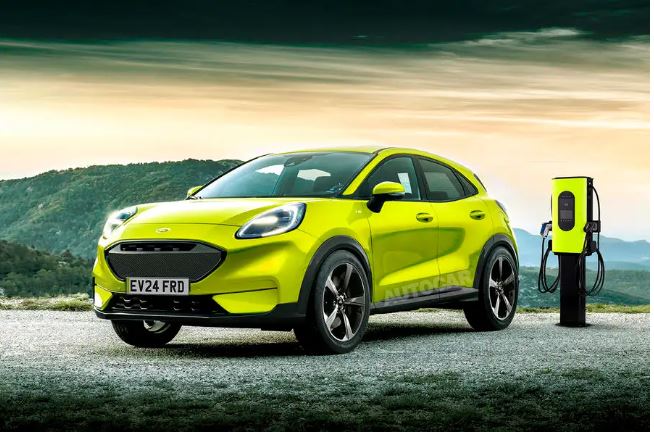
Ford will manufacture an electric variant of the Puma in Craiova, Romania in 2024 to rival the Peugeot e-2008 and upcoming Mini Aceman.
To be produced alongside the ICE Puma, the Puma EV will share its platform and powertrain with the freshly revealed Ford E-Transit Courier van.
Ford said it had engineered the electric powertrain together for Puma and Courier at the same time, suggesting the two will share broadly similar specifications.
Ford said it's working on only one battery for the smallest electric Transit, which is expected to be around 55kWh in capacity and can add 54 miles of range in 10 minutes.
Ford of Europe boss Martin Sander was keen to position the Puma as the “utility version” of the Fiesta, saying that it will remain on sale “for many years.”
The Puma is expected to be around the £35,000 mark while the ICE Puma will be available from around £25,000.
The Puma was Ford’s best-selling car for the past two years, dethroning the soon-to-retire Fiesta, which suffered a drop in sales when heavily impacted by semiconductor shortages and factory closures.
Puma's electrification is the latest step in Ford’s EV strategy, which will involve an investment of $22 billion through 2025.







