


 Nikkei 225 Hits Record High Above 56,000 After Japan Election Boosts Market Confidence
  Trump’s Inflation Claims Clash With Voters’ Cost-of-Living Reality
  Asian Currencies Stay Rangebound as Yen Firms on Intervention Talk
  Japanese Pharmaceutical Stocks Slide as TrumpRx.gov Launch Sparks Market Concerns
  Trump Signs Executive Order Threatening 25% Tariffs on Countries Trading With Iran
  Japan Economy Poised for Q4 2025 Growth as Investment and Consumption Hold Firm
  Lee Seung-heon Signals Caution on Rate Hikes, Supports Higher Property Taxes to Cool Korea’s Housing Market
  Asian Markets Surge as Japan Election, Fed Rate Cut Bets, and Tech Rally Lift Global Sentiment
  Yen Slides as Japan Election Boosts Fiscal Stimulus Expectations
  Australian Household Spending Dips in December as RBA Tightens Policy
  Bank of Japan Signals Readiness for Near-Term Rate Hike as Inflation Nears Target
  Asian Stocks Slip as Tech Rout Deepens, Japan Steadies Ahead of Election
  Trump Lifts 25% Tariff on Indian Goods in Strategic U.S.–India Trade and Energy Deal
  Vietnam’s Trade Surplus With US Jumps as Exports Surge and China Imports Hit Record
  Gold and Silver Prices Rebound After Volatile Week Triggered by Fed Nomination
  South Africa Eyes ECB Repo Lines as Inflation Eases and Rate Cuts Loom


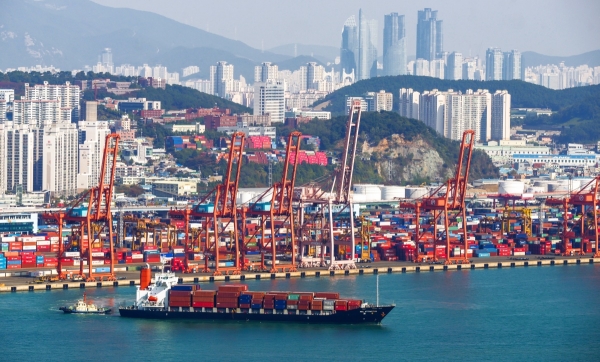
South Korea posted exports worth $45.8 billion in November, increasing by 4 percent on-year while rebounding from a 3.8 percent drop last month.
The country's daily exports in November also rose 6.3 percent on-year, marking the first time since November 2018 that both monthly and daily exports increased.
Exports from March to August exhibited on-year decreases due to the pandemic-triggered economic fallout, bouncing back in September with a 7.3 percent increase.
However, it dropped again in October by 3.8 percent on-year.
The Trade Ministry said the nation’s exports have surpassed the $40 billion bar for the third consecutive month. The ministry expected the upward momentum to continue down the road.
The rebound in exports was attributed to robust overseas sales of IT products.
Exports of chips surged 16.4 percent on-year to mark $8.5 billion, marking its fifth consecutive month to increase.
Memory chips accounted for 19 percent of South Korea's monthly exports in November, reaching $27.2 billion and surpassing the record high for annual exports in 2018, due to the strong demand for new mobile devices and laptop computers.
Exports of other IT products also substantially increased, with displays up 21.4 percent on-year to $1.9 billion and mobile devices increasing 20.2 percent to $1.4 billion.
Outbound shipments of biohealth products soared 78.5 percent on-year to $1.4 billion due to robust sales of COVID-19 test kits.
Automobile exports advanced for the third consecutive month to $3.9 billion, due to strong demand for SUV and eco-friendly vehicles.
Petroleum product exports, however, plummeted by 50.6 percent on-year to $1.6 billion, marking the third consecutive month to post a decrease of over 40 percent.
South Korea’s November exports to its four major destinations all increased, with those to Europe jumping by 24.6 percent and those to the US climbing by 6.8 percent.
Exports to China increased 1 percent on-year and those to other Asian nations rising 6.4 percent.
Meanwhile, South Korea’s imports fell 2.1 percent on-year to $39.8 billion in November.













