


 U.S.-China AI Talks May Take Center Stage at Trump-Xi Summit
  Armani Group Eyes Strategic Stake Sale to Luxury Giants
  Palantir Reports Record Growth, Raises 2026 Revenue Outlook Above Expectations
  Dell Stock Hits Record High After Trump Endorsement, AI Server Demand Fuels Rally
  AWS Data Center Overheating Disrupts Cloud Services in Northern Virginia
  Samsung Appoints New TV Business Head Amid Rising Competition from Chinese Rivals
  Novo Nordisk Raises 2026 Outlook on Strong Wegovy Demand
  Judge Delays SEC Settlement With Elon Musk Over Twitter Stock Disclosure Case
  Agentic AI Boom to Drive Massive Growth in CPU Market, UBS Says
  Taiwan Activates Backup Communications After Undersea Cable Break on Dongyin Island
  Broadcom Eyes $35 Billion AI Chip Financing Deal With Apollo and Blackstone
  AMD Q1 Earnings Surge on AI Demand, Stock Jumps After Strong Guidance
  Continental AG Shares Jump After Q1 Profit Beats Expectations
  Philips Reaffirms 2026 Outlook After Strong Q1 Sales and Margin Beat
  BMW Keeps 2026 Outlook Despite 25% Profit Drop Amid Tariff Pressure


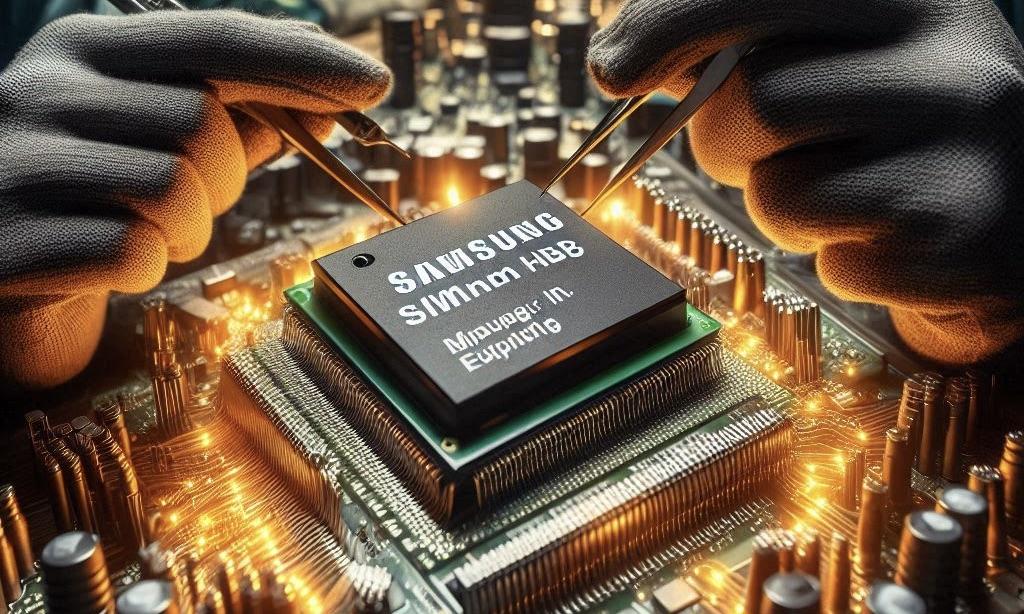
Chinese tech giants Huawei and Baidu, along with startups, are stockpiling Samsung's high-bandwidth memory (HBM) chips in anticipation of upcoming U.S. export restrictions. These actions underscore China's preparation to maintain its technological objectives amid rising trade tensions.
Chinese Tech Giants Stockpile Samsung HBM Chips as U.S. Prepares New Export Restrictions
Three sources have reported that Chinese tech titans, such as Huawei and Baidu, and startups are stockpiling high bandwidth memory (HBM) semiconductors from Samsung Electronics in anticipation of U.S. restrictions on the export of the chips to China.
One of the sources stated that the companies have increased their purchasing of semiconductors capable of artificial intelligence (AI) since early this year, which has contributed to China accounting for approximately 30% of Samsung's HBM chip revenue in the first half of 2024.
The actions demonstrate that China is preparing to maintain its technological objectives in the face of intensifying trade tensions with the United States and other Western nations. Additionally, they illustrate the extent to which the tensions are affecting the global semiconductor supply chain.
Reuters reported last week that U.S. authorities are preparing to introduce an export control package this month that will impose new restrictions on shipments for China's semiconductor industry, citing sources.
Those sources also stated that the program is anticipated to establish parameters for restricting access to high-bandwidth memory chips. The U.S. Department of Commerce declined to comment. Still, it had previously stated that it is constantly evaluating the changing threat environment and updating export controls "to protect U.S. national security and safeguard our technological ecosystem."
Reuters needed help to ascertain the specifics of the proposed HBM restrictions and their potential impact on China.
HBM circuits are essential in developing advanced processors, such as Nvidia's graphics processing units, which can support generative AI work.
HBM chips are manufactured by only three main chipmakers: Samsung and SK Hynix, both based in South Korea, and Micron Technology, headquartered in the United States.
China's Demand for Samsung's HBM2E Chips Surges Amid AI Growth and Limited Advanced Supply
According to sources knowledgeable about China's interest in HBM, the HBM2E model has been the primary focus of semiconductor demand despite being two generations behind the most advanced version, HBM3E. The advanced model is in short supply due to global AI growth.
"Given that its domestic technology development is not yet fully mature, China's demand for Samsung's HBM has become exceptionally high, as other manufacturers’ capacities are already fully booked by American AI companies," said Nori Chiou, investment director at Singapore-based White Oak Capital Partners.
The sources stated that businesses varying from satellite manufacturers to tech firms such as Tencent have been purchasing the stockpiled HBM chips in China despite the difficulty in estimating their volume or value. According to one of the sources, a semiconductor design startup recently acquired HBM chips from Samsung.
In contrast, according to one of the sources, Huawei has been employing Samsung HBM2E semiconductors to develop its sophisticated Ascend AI processor.
Samsung and SK Hynix declined to comment. Hawking, Huawei, Baidu, and Tencent did not respond to inquiries for comment. The sources declined to provide their names due to the subject matter's sensitivity.
U.S. Regulations Threaten China's HBM Production Progress as Samsung Faces Potential Sales Impact
Reuters reported on August 6 that Huawei and memory chipmaker CXMT have made some progress in producing HBM. They are concentrating on developing HBM2 chips, three generations behind the HBM3E model.
However, the new U.S. regulation may affect those endeavors.
According to sources who were informed about the sales, Samsung may be more affected by restrictions on HBM sales to China than its primary competitors, who depend less on the Chinese market.
Micron has refrained from selling its HBM products to China since last year, while SK Hynix, whose main HBM customers include Nvidia, concentrates on producing advanced HBM chips, according to the source.
SK Hynix announced earlier this year that it is adjusting production to increase the output of HBM3E. The company's HBM processors were sold out for the current year and are nearly sold out for 2025.







