


 Silver Prices Plunge in Asian Trade as Dollar Strength Triggers Fresh Precious Metals Sell-Off
  RBI Holds Repo Rate at 5.25% as India’s Growth Outlook Strengthens After U.S. Trade Deal
  Trump Lifts 25% Tariff on Indian Goods in Strategic U.S.–India Trade and Energy Deal
  Japanese Pharmaceutical Stocks Slide as TrumpRx.gov Launch Sparks Market Concerns
  Russian Stocks End Mixed as MOEX Index Closes Flat Amid Commodity Strength
  Dollar Steadies Ahead of ECB and BoE Decisions as Markets Turn Risk-Off
  India–U.S. Interim Trade Pact Cuts Auto Tariffs but Leaves Tesla Out
  Thailand Inflation Remains Negative for 10th Straight Month in January
  South Africa Eyes ECB Repo Lines as Inflation Eases and Rate Cuts Loom
  Trump Endorses Japan’s Sanae Takaichi Ahead of Crucial Election Amid Market and China Tensions
  Global Markets Slide as AI, Crypto, and Precious Metals Face Heightened Volatility
  U.S. Stock Futures Slide as Tech Rout Deepens on Amazon Capex Shock
  South Korea’s Weak Won Struggles as Retail Investors Pour Money Into U.S. Stocks
  Bank of Japan Signals Readiness for Near-Term Rate Hike as Inflation Nears Target
  Trump’s Inflation Claims Clash With Voters’ Cost-of-Living Reality
  China Extends Gold Buying Streak as Reserves Surge Despite Volatile Prices
  Gold and Silver Prices Rebound After Volatile Week Triggered by Fed Nomination


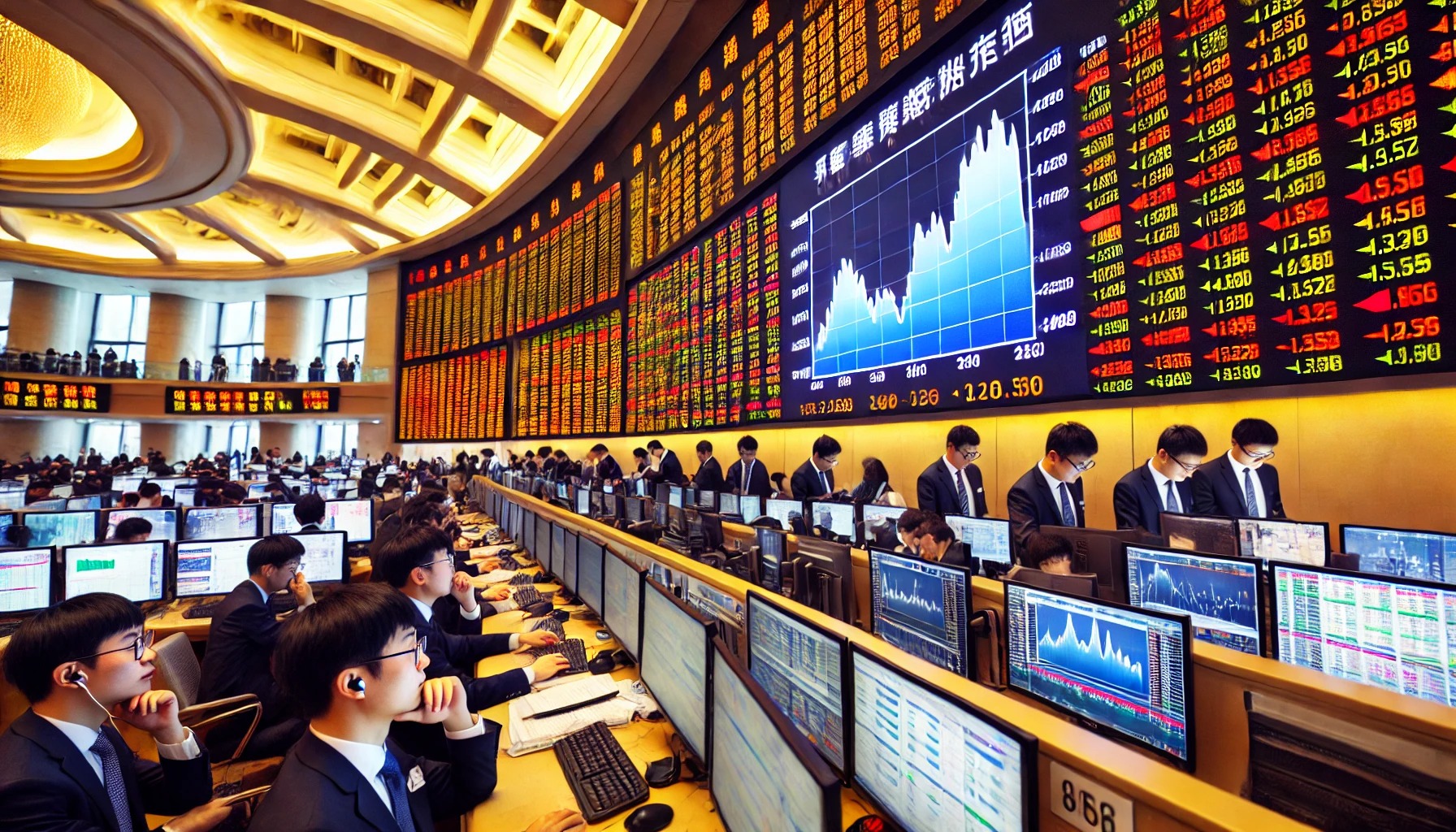
Chinese stocks extended a powerful rally on Monday, with mainland markets poised for their best month in nearly a decade. Beijing's stimulus efforts to halt an economic slowdown have fueled investor optimism, driving shares higher.
Benchmark indexes in mainland China surged at the start of the week after recording their strongest weekly performance in nearly 16 years. The CSI300 blue-chip index gained over 6.22%, while the Shanghai Composite Index jumped 5.7%. Hong Kong's Hang Seng Index climbed 3.34%.
Property Sector Leads Rally
Property shares led the rally after China's central bank announced on Sunday that it would encourage banks to lower mortgage rates for existing home loans by October 31. This is part of wider policies to support the country's struggling property sector. Additionally, Guangzhou city lifted all home purchase restrictions, while Shanghai and Shenzhen eased property buying curbs.
"The market is still surprised by China's policy support, and momentum is continuing," said Kenny Ng, a strategist at China Everbright Securities International in Hong Kong.
Mainland-listed property stocks surged 6.4%, and the Hang Seng Mainland Properties Index gained 8.4%. Shares of consumer staples traded 7% higher, while the smaller Shenzhen index soared 8.2%.
Markets Post Decade-High Gains
The CSI300 index is set for a monthly gain exceeding 18%, marking its best performance since December 2014. The Shanghai Composite is on track for a 14.8% rise, the strongest since April 2015. The Hang Seng Index could achieve its best month since November 2022, with a 14.7% increase.
"A coordinated stimulus blitz suggests that China has reached a 'whatever it takes' moment," said Eli Lee, Chief Investment Strategist at the Bank of Singapore. "This could potentially mark the start of a sustainable bull market if Beijing delivers sufficient stimulus to drive a turnaround."
Further Stimulus and Market Support
China has introduced a slew of stimulus measures in the past week, including rate cuts and fiscal support, to bolster its weakening economy. In addition, the People's Bank of China (PBOC) rolled out new tools to boost capital markets, including a swap program to improve funding access for buying stocks.
The CSI300 index soared nearly 16% last week, while the Shanghai Composite climbed almost 13%. Both recorded their largest weekly gains since November 2008. Meanwhile, the Hang Seng Index achieved its biggest weekly rise since 1998 and its fifth-largest in the past half-century.













