


 Apple Q2 2026 Earnings Surge as iPhone 17 Sales Drive Record Revenue
  FBI Warns of China’s Expanding Hack-for-Hire Network Amid Extradition Case
  Dell Stock Hits Record High After Trump Endorsement, AI Server Demand Fuels Rally
  Supermicro Forecasts Strong Q4 Revenue Growth as AI Server Demand Surges
  Trump Invites Top CEOs Including Nvidia, Apple, Boeing to China Summit With Xi Jinping
  Anthropic Secures $1.5B AI Venture Backed by Wall Street Giants, Shaking Software Sector
  Hua Hong Semiconductor Stock Surges to Multi-Year High Amid AI Boom
  Shell Q1 Profit Surges to Two-Year High as Dividend Rises Despite War-Driven Debt Pressure
  JD Sports Backs Nike CEO Elliott Hill Amid Brand Turnaround Efforts
  Arm Stock Drops Despite Strong AI Chip Demand and Earnings Beat
  AMD Q1 Earnings Surge on AI Demand, Stock Jumps After Strong Guidance
  AWS Data Center Overheating Disrupts Cloud Services in Northern Virginia
  Apple Explores Intel and Samsung Partnerships to Diversify Chip Supply Chain
  Aker BP Q1 Profit Jumps on Higher Oil Prices and Asset Reversal
  Lufthansa Q1 Loss Narrows as Strong Summer Travel Demand Boosts Outlook


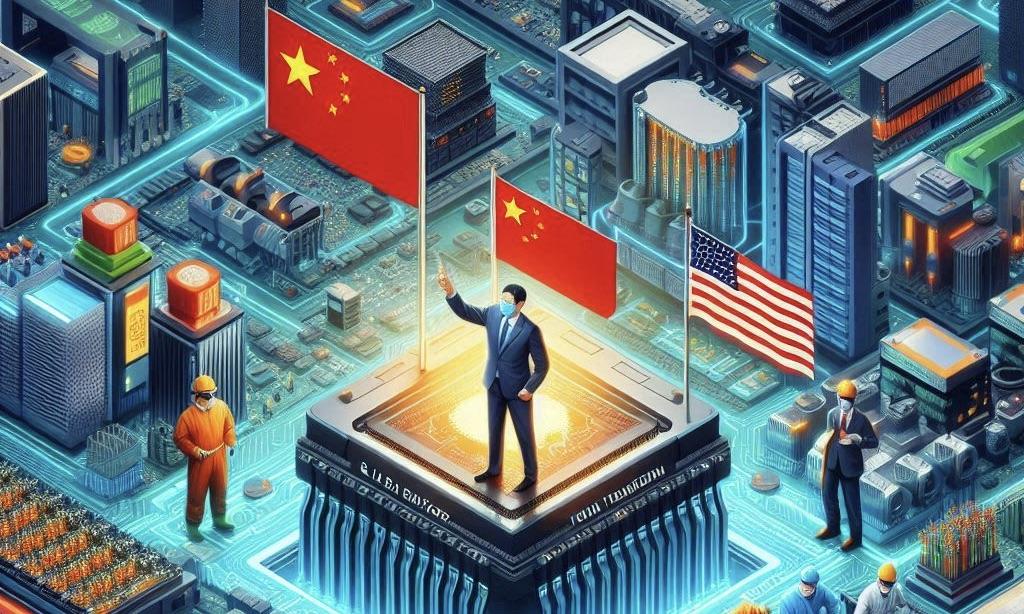
China's relentless drive to bolster its chipmaking capabilities saw a record $25 billion spent on equipment in the first half of 2024, eclipsing the combined expenditures of the U.S., South Korea, and Taiwan. This massive investment underscores China's determination to secure a dominant position in the global semiconductor industry.
China’s $25 Billion Push in Chipmaking Escalates Silicon Tensions Amid Emerging AI Power Struggles
The new cold war, which is concealed in silicon, is intensifying, with the emerging AI-led, productivity-unlocking paradigm providing an opportunity for uncontested supremacy. China is striving to enhance its indigenous capabilities while simultaneously circumventing the restrictions imposed by the United States and its allies, which are resolved to impede Beijing's access to state-of-the-art chips.
Nikkei Asia has recently reported that China spent an unprecedented $25 billion on chipmaking apparatus during the first half of 2024, setting a new record. Additionally, China's cumulative global purchasing spree for specialized chipmaking equipment surpassed that of the United States, South Korea, and Taiwan in H1 2024.
China was responsible for a staggering 49.9 percent of Tokyo Electron's revenue in the quarter that concluded in June. In the most recent quarter, Beijing's relentless purchasing spree resulted in ASML, Applied Materials, Lam Research, and KLA earning 49 percent, 32 percent, 39 percent, and 44 percent of their total revenue, respectively.
China appears to be accumulating essential chipmaking equipment in anticipation of the November presidential election in the United States and the potential for a substantial increase in silicon-related sanctions against Beijing.
China Threatens Economic Retaliation Against Japan Over Chip Equipment Restrictions, Amid Declining Rare Earth Dominance
In the same vein, China on September 2 issued a severe economic retaliation threat to Japan if it continued to restrict the sale and servicing of chip-related equipment to Chinese firms. The threat included the threat to deprive Tokyo of critical raw materials and minerals that are essential for the production of automobiles. It is important to remember that Beijing's monopoly on the supply of rare earth metals is presently in decline.
Nevertheless, as Wccftech previously mentioned, China's indigenous chips are currently maintaining a competitive edge against the relatively high-end offerings from companies such as TSMC. The majority of the performance improvements in these domestically produced chips are the result of a more efficient overall design. However, there are no confirmed indications that China is capable of mass-producing processors on sub-7nm nodes.







