


 US Dollar Falls as Weak July Jobs Report Dents Fed Rate Hike Bets
  US Stock Futures Flat as Iran Strait of Hormuz Demands Fuel Oil Concerns
  Asian Stocks Cautious Ahead of US Jobs Data as Oil Rises
  US Job Growth Seen Picking Up in July
  US Yen Intervention Unlikely to Deliver Lasting Recovery, Yardeni Says
  Trump Unveils $3 Billion U.S. Critical Minerals Push
  China Inflation Cools in July as CPI Misses Forecast, PPI Deflation Eases
  Japan Posts First Current Account Deficit in 17 Months as Dividend Payments Surge
  Asian Stocks Rise as Weak US Jobs Data Eases Fed Rate Hike Bets
  Asian Stocks Mixed as Chip Selloff Hits KOSPI, Nikkei Ahead of US Jobs Data


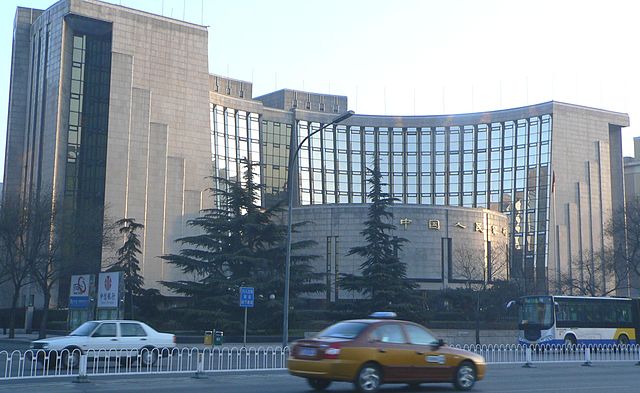
After holding the Renminbi-USD exchange rate relatively steady for the past few years, China announced on Tuesday that it had lowered the midpoint of the daily trading range (“fix”) of the RMB relative to the USD by 1.9%. This was the largest one-day change since 1993. By week’s end, the renminbi had fallen 3% vs the USD, but movement from here should be limited.
The People’s Bank of China (PBOC) also announced that from now on, it would set the fix according to wherever the market was trading the onshore spot renminbi price at the end of the previous day. This would allow for more market influence over the RMB, but will still limit the daily moves to 2%, as the PBOC continues to maintain a tight trading band.
This move had not been telegraphed beforehand, catching markets completely off-guard. Following a disappointing trade data, some participants viewed the move as a sign that China’s economy was slowing faster than expected, and RMB depreciation was driven by a need to boost exports. The PBoC initially tried to sell the depreciation as a one-off adjustment in order to better align the daily fix with markets, which had been trading the RMB close to the bottom of the 2% band. However, this did not dissuade markets concern of more depreciation to come, and the RMB weakened further on Wednesday. At this point however, China directly intervened in FX markets to stem the decline.
This sent a signal to markets that China wanted to limit RMB depreciation. While the fix was lowered by roughly 1% on Thursday, the RMB ended the day largely unchanged. A rare press conference by the PBOC that day also helped assuage concerns that China would engineer a sharp devaluation in order to support exports.
According to a TD Bank economist, the move was also driven by "China’s motivations and its desire to be included in the IMF’s basket of reserve currencies."
Once the dust settled on Friday, the RMB had fallen by roughly 3% relative to the USD. Assuming that China pursues a gradual revaluation of the renminbi, as we expect, the global impact will be limited. Even after the depreciation, the nominal effective exchange rate of the renminbi remains up 10.2% Y/Y. Despite concerns about its global deflationary impact, the effect of RMB devaluation on U.S. CPI inflation is likely to be minuscule. Indeed, to the extent that the move helps to support Chinese growth, lower prices on Chinese imports could be offset by higher commodity prices. Moreover, initial fears over the possibility of currency wars appear overblown. While Vietnam did widen its trading band in the aftermath of the PBOC decision, the Bank of Korea remained pat at its meeting on Thursday, diminishing the likelihood of other tit-for-tat responses.
The move by China overshadowed positive developments in Greece, where a new bailout plan was agreed on and approved by the Greek parliament on Friday. Assuming the plan passes through other European parliaments, Greece-related volatility and risks should considerably diminish at least in the near term. This also removes a shroud of uncertainty that was hanging over the wider European economy. On Friday, real GDP figures showed that the euro area economy grew 1.3% (annualized) in the second quarter, below expectations and down from 1.5% in the first. But with reduced uncertainty amid improving fundamentals, a rebound in growth is expected going forward.
In America, equity markets tumbled in the aftermath of the Chinese decision on Tuesday, with market pricing for a September rate hike also falling sharply. However, as fears of large-scale Chinese depreciation ebbed through the week, equity markets stabilized and market expectations for a September hike picked up to 45% by Friday. Ultimately, while overseas events are certainly a factor to keep an eye on, domestic fundamentals remain key for the Fed’s decision.
On that note, July retail sales data for this week suggests that consumer spending was stronger than initially thought. Headline retail trade advanced 0.6% m/m, while the June figure was revised up from -0.3% to flat. Echoing this positive news, industrial production grew 0.6% m/m in July, led by manufacturing. This provided a signal that the negative impact of lower energy prices and higher dollar may be starting to diminish. The bottom line is that domestic fundamentals are strong, and a September hike remains firmly in the cards.







