


 Xiaomi Shares Drop After Weak Q1 Earnings Amid Rising Smartphone Costs
  Elon Musk Explores Possible Tesla-SpaceX Merger Amid Growing AI Investments
  Dell Raises 2027 Revenue Forecast as AI Server Demand Drives Record Quarterly Results
  SpaceX IPO Could Become Largest in History with $1.8 Trillion Valuation Target
  HP Q2 2026 Earnings Beat Expectations Despite Memory Chip Pressure
  MongoDB Q1 FY2027 Earnings Beat Expectations, Raises Full-Year Outlook
  Morgan Stanley Names Top AI Security and Data Center Stocks for 2026
  SQM Q1 Profit More Than Doubles as Lithium Prices Surge
  Kentucky School District Secures $27 Million in Social Media Addiction Lawsuit Settlements
  SpaceX Delays Starship V3 Launch Ahead of Potential Record IPO
  Autodesk Beats Q1 Estimates, Acquires MaintainX for $3.6 Billion
  Snowflake Stock Soars 30% After Q1 Earnings Beat and Major AWS AI Partnership
  PDG Explores $1 Billion Sale of China Data Center Assets
  Marvell Stock Rises After Record Q1 FY2027 Earnings Fueled by AI Demand
  Meta AI Push Could Add $26 Billion in Revenue by 2027, Wolfe Research Says


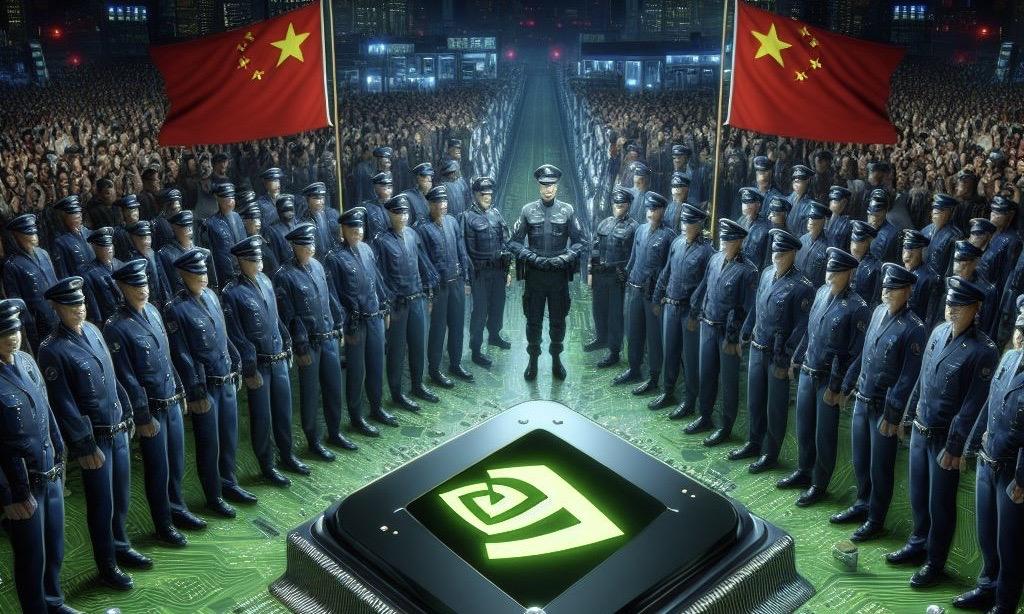
A Reuters investigation shows that despite U.S. sanctions restricting exports of advanced Nvidia AI chips, several Chinese educational and research institutions have acquired these through Super Micro and Dell servers.
Chinese Entities Acquire Advanced Nvidia Chips Despite Expanded U.S. Export Embargo
According to a Reuters review of hundreds of tender documents, ten Chinese entities acquired advanced Nvidia chips embedded in server products made by Super Micro Computer, Dell Technologies, and Taiwan's Gigabyte Technology after the US expanded the embargo on November 17 to subject more chips and countries to licensing rules.
According to previously undisclosed tenders completed between November 20 and February 28, the servers specifically had some of Nvidia's most powerful CPUs. While the United States prohibits Nvidia and its partners from exporting advanced semiconductors to China, including through third parties, selling and purchasing the chips is not unlawful in China.
The 11 sellers of the chips were unknown Chinese shops. Reuters could not establish whether the purchases were fulfilled using inventories acquired before the US tightened chip-export restrictions in November.
In a Reuters contact, Nvidia said the tenders specify products that were shipped and publicly available before the restrictions.
“They do not indicate that any of our partners violated the export control rules and are a negligible fraction of the products sold worldwide,” a spokesperson said.
The server manufacturers stated that they complied with applicable legislation or would conduct further investigations.
Buyers included the Chinese Academy of Sciences, the Shandong Artificial Intelligence Institute, the Hubei Earthquake Administration, Shandong and Southwest universities, a tech investment firm owned by the Heilongjiang provincial government, a state-run aviation research center, and a space science center.
None of the Chinese buyers or retail vendors responded to Reuters' questions.
Daniel Gerkin, a Washington-based partner at law firm Kirkland & Ellis, believes Nvidia chips could have been moved to China without the manufacturer's knowledge due to a lack of insight into downstream supply networks.
If the producer had conducted sufficient due diligence, “it presumably would be challenging for the US government to pursue an enforcement action”, he said.
U.S. and Tech Companies Tighten Oversight Amid Allegations of Export Control Violations
The US Commerce Department told Reuters (via Business Times) that it could not comment on any ongoing investigations but that its Bureau of Industry and Security was monitoring restricted chip diversions, doing end-of-use checks, and investigating breaches.
According to a spokeswoman, officials will investigate credible complaints of infractions, including the use of shell corporations.
Nvidia stated that systems created with its graphics processing units (GPUs) - chips that divide computer tasks into smaller bits and process them together - and resold by third parties must adhere to US regulations.
“If we determine that any product was subsequently resold in violation of US export control rules, we will work with our customers to take appropriate action,” the spokesperson said.
Super Micro stated that it complied with US regulations regarding the selling and export of GPU systems to countries and persons that require permits.
“If we become aware that a third party has exported or reexported without the required licenses, we investigate the matter and take appropriate action,” it said.
In a statement to Reuters on behalf of Super Micro, US law firm Clare Locke stated that its client "goes above and beyond what US export restrictions require" by taking proactive steps to guarantee that its customers do not break the limitations.
About the tenders that identified its products, Super Micro stated “older generation or general-purpose servers not capable of the largest scale AI operations that were available in China before the export control regulations”. The awarded suppliers “are not known Supermicro customers”, the company said.
A Dell spokeswoman stated that the business has "found no evidence of shipping products configured with the restricted chips you listed to the entities you named" but will continue investigating.
“Our distributors and resellers are required to comply with all applicable global regulations and export controls. If we become aware of a distributor or reseller that is not complying with these obligations, we take appropriate actions, including termination of our relationship,” the spokesperson said.
Gigabyte stated that it followed Taiwanese laws and international rules. It did not answer further inquiries about tenders that listed its products as a supplier of banned Nvidia chips. Taiwan's economy ministry expects Taiwanese enterprises to follow US export rules.
Photo: Microsoft Bing







