


 Central Banks Could Buy 20,000 Tonnes of Gold: BofA
  UK Housebuilder Stocks Surge on New First-Time Buyer Loan Scheme
  RBA Set for September Rate Hike as Inflation Stays High
  Fed’s Williams Signals One More Rate Hike Before Year-End
  Fed Unveils Stablecoin Rules Under GENIUS Act
  South Korea Exports Set for 16th Monthly Gain on AI Chip Demand
  Oil Prices Jump Nearly 3% as Iran Holds Firm on Hormuz Conditions
  China, US Extend Trade Truce Through January 10 After Trump-Xi Summit
  Japan Warns Markets Over Yen Weakness
  BOJ Flags Import Costs and Yen Shocks as Persistent Inflation Risks
  Yen Sinks as BOJ Rate Hike Fails to Impress Markets
  BlackRock’s Rick Rieder Favors Bonds Over Stocks as Treasury Yields Surge
  Hong Kong Home Prices Stabilize in August After July Decline
  BOJ Raises Interest Rate to 31-Year High as Yen Weakens


 Add as a preferred source on Google
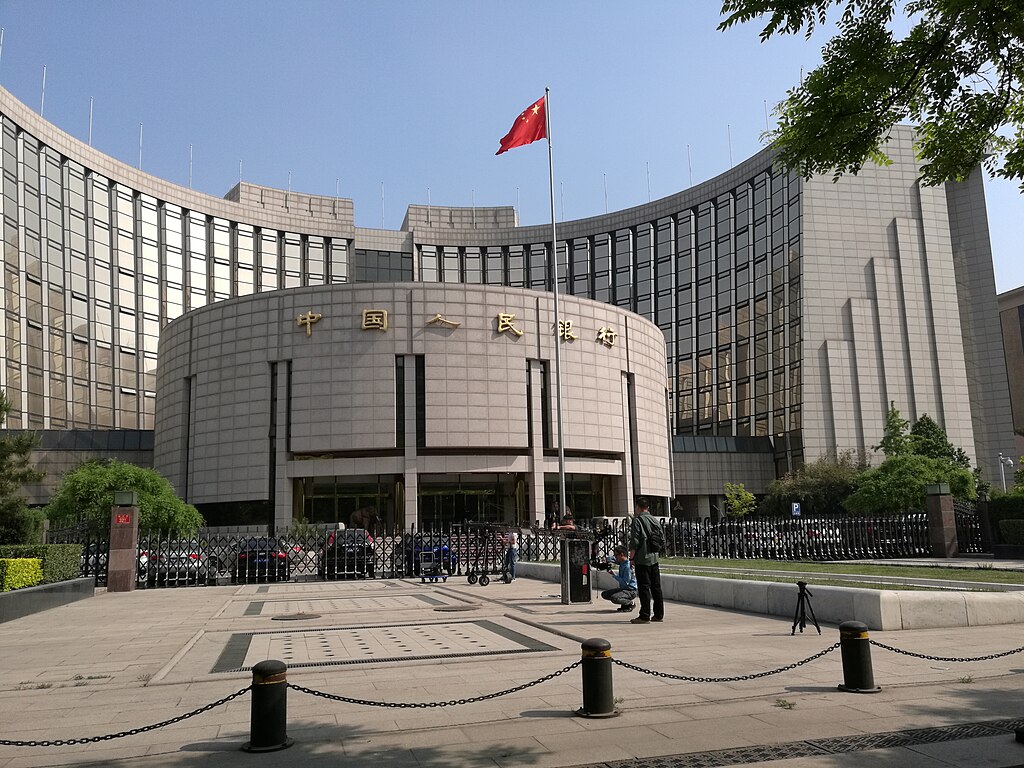
China’s central bank left its benchmark lending rates unchanged in May for the 12th straight month, matching market expectations as policymakers continue to balance economic support with inflation concerns. The People’s Bank of China (PBOC) maintained the one-year loan prime rate (LPR) at 3.00% and the five-year LPR at 3.50%, signaling a cautious stance toward monetary easing despite slowing economic momentum.
The decision comes as interbank liquidity remains ample and the PBOC shows little urgency to introduce aggressive stimulus measures. Analysts believe the central bank is prioritizing financial stability while closely monitoring inflation risks and domestic demand conditions. The seven-day reverse repo rate, which acts as the benchmark for LPR pricing, has also remained unchanged throughout the year, reinforcing expectations that borrowing costs would stay stable.
A Reuters survey conducted among 20 market participants showed unanimous expectations that both key lending rates would remain unchanged in May. Market observers said the central bank’s latest quarterly policy report hinted at a less accommodative approach compared to previous quarters.
China’s economy has recently shown signs of losing momentum. Industrial production slowed in April, while retail sales dropped to their weakest level in more than three years. Economists pointed to rising energy costs linked to geopolitical tensions involving Iran, combined with persistently weak domestic consumption, as major pressures on the world’s second-largest economy.
TD Securities analysts said the PBOC may be reluctant to cut interest rates further due to increasing producer prices, which could indicate mounting inflationary pressure. Instead of broad monetary easing, analysts expect Beijing to rely more heavily on targeted fiscal stimulus, particularly infrastructure spending, to support growth.
Huatai Securities noted that the PBOC recently described its monetary policy as “targeted and effective” alongside its “moderately loose” stance, suggesting policymakers are focusing more on strengthening internal economic growth drivers rather than implementing large-scale rate cuts.







