


 Fast Retailing Raises Full-Year Forecast After Uniqlo Owner Beats Q3 Profit Estimates
  Nippon Paint Reportedly Offers Up to €7.5 Billion for Akzo Nobel Decorative Paints Business
  Paramount-Warner Bros. Discovery Merger Faces Lawsuit From 12 States
  Deutsche Bank Fined A$2 Million by ASIC Over OTC Derivatives Reporting Errors
  Elon Musk Says Anthropic Leads AI Race as Claude Models Challenge OpenAI
  Goldman AM Sees Strong Buyout Opportunities in Japan, South Korea and Australia
  SK Hynix Prices Record U.S. ADR Offering at $149 After $200 Billion Investor Demand
  DOJ Grand Jury Investigates UAW President Shawn Fain Ahead of Union Election
  SK Hynix Shares Drop After Strong Nasdaq Debut Despite $26 Billion ADR Listing
  Samsung to Launch First Yongin Chip Plant by 2029 as South Korea Speeds Up Semiconductor Hub
  Mastercard Explores Sale of Majority Stake in UK Payments Firm Vocalink: Report
  AstraZeneca Shares Sink After Wainua Trial Misses Key Heart Disease Goal
  Morgan Stanley Says China’s Reusable Rocket Progress Poses Long-Term Challenge to SpaceX
  Nvidia Tightens AI Chip Sales in Asia With Stricter Customer Approval Process
  Kitron Q2 Revenue Beats Estimates as Defense Demand Lifts Growth
  SK Hynix Soars 13% in Nasdaq Debut After Record $26.5 Billion IPO
  Genesis Minerals to Acquire Vault in A$5.6 Billion Deal After Regis Withdraws


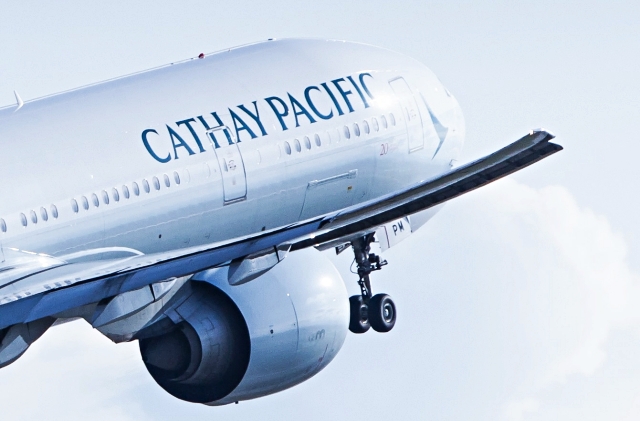
Cathay Pacific Airways CEO Ronald Lam announced Monday that the Hong Kong-based carrier is committed to sustaining its current flight capacity despite mounting pressure from surging jet fuel prices triggered by the ongoing Middle East conflict. Speaking at a Seattle event marking the launch of the airline's new Seattle-Hong Kong route, Lam made clear that reducing capacity would only be considered as a last resort.
Since hostilities between the U.S., Israel, and Iran escalated last month, air traffic through the Middle East has dropped significantly, rerouting travel demand toward long-haul destinations. Cathay Pacific has responded by capitalizing on increased passenger and cargo interest across its North American, European, and Australian routes, with Lam noting a noticeable uptick in bookings on select long-haul services.
However, the airline's leadership remains cautious. Jet fuel costs have more than doubled compared to pre-conflict levels, raising serious concerns about long-term financial sustainability. Lam acknowledged that if elevated fuel prices persist, the demand environment would no longer remain viable for normal operations. To offset the financial strain, Cathay Pacific has implemented fuel surcharges — a strategy widely adopted across the aviation industry — without resorting to the capacity reductions seen at other major carriers such as United Airlines, SAS, and Air New Zealand.
Cathay Pacific's approach reflects a calculated balance between seizing short-term demand opportunities and managing growing cost pressures. The airline appears determined to protect its market position and passenger commitments, even as geopolitical uncertainty continues to reshape global aviation dynamics. Industry analysts will be watching closely to see whether sustained fuel price volatility eventually forces the carrier's hand, or whether Cathay Pacific's disciplined strategy allows it to weather the turbulence more effectively than its competitors.







