


 X Challenges Australia’s Expanded Social Media Ban Enforcement Powers
  Standard Chartered Beats Profit Forecasts as First-Half Earnings Rise 9%
  Exosens H1 Profit Beats Forecasts as Defense Demand Drives Growth
  Robinhood Q2 Earnings Beat Estimates, But HOOD Stock Falls as Investors Question Profit Quality
  Stellantis Sells Free2move Car-Sharing Business to Mutares to Strengthen Core Auto Strategy
  Qualcomm Stock Falls as Weak Q4 Forecast, Apple Revenue Decline Overshadow AI Data Center Growth
  Starbucks Stock Jumps as Q3 Earnings Beat, Sales Growth Drives Higher 2026 Outlook
  Meta CEO Zuckerberg Opposes U.S. Ban on Chinese AI Models, Warns Against Overregulation
  Air Liquide Q2 Sales Growth Tops Forecast as Electronics Business Drives Strong Performance
  Unilever Raises 2026 Sales Outlook After Strong Q2 Volume Growth
  Seagate Stock Jumps as AI-Fueled Earnings Beat and Strong FY2027 Outlook Impress Investors
  Toyota First-Half Global Sales and Production Decline on Weak China Demand, RAV4 Transition
  TSMC Gradually Restarts Japan Chip Plant After Kumamoto Earthquake
  Arm Holdings Q1 Earnings Beat Estimates, Strong Q2 Outlook Fails to Lift ARM Stock
  SpaceX Wins $1.6 Billion U.S. Space Force Launch Contracts for Falcon 9 Missions Through 2027
  BHP, Port Hedland Unions Fail to Reach Wage Deal as Negotiations Continue



The distribution of Paycheck Protection Program loans for small businesses hasn’t been smooth, from unclear guidelines to technical problems.
A most disconcerting issue has been large and wealthy businesses being able to obtain the loan, while much smaller businesses have not.
While some attribute it to pressure being put on government and banks to release loans as quickly as possible, as a scholar of microbusinesses and the informal economy, I believe much of the public’s frustration with how the PPP was paid out is related to how the federal government defines small business.
What is a small business?
When most of us think of small businesses, we imagine a local business such as our favorite pizzeria on Main Street, the bodegas and street vendors in New York City or even our local plumber.
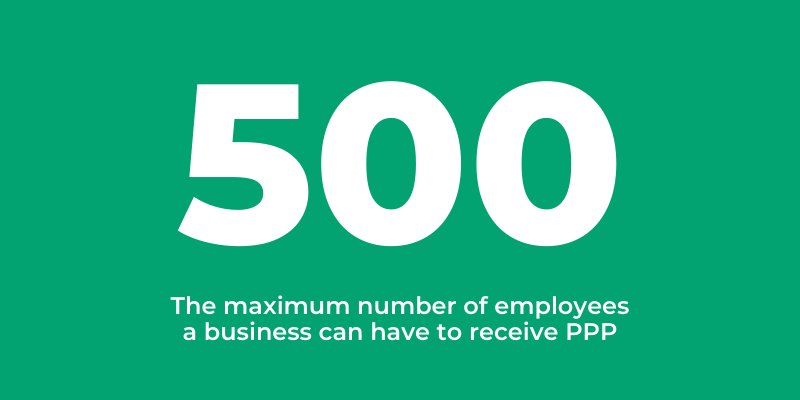
My own research focuses on the social welfare of immigrant families that run such businesses. Often with just a handful of employees – and in many cases, just one – these businesses are nowhere close to the limit of 500 employees the government used to limit qualification for the PPP loan.
Businesses with fewer than 10 employees are known as a microbusiness to researchers. They are the most common type of business in the United States.
Yet were we to ask microbusiness owners if they have heard of the term microbusiness, most would likely say no.
In fact, researchers and policymakers define small business in a number of ways, some of which make more sense than others.
The federal definitions
The Small Business Administration, the department overseeing the PPP loan, uses a size standard to determine what qualifies as a small business for SBA and federal contracting programs.
The standard is measured by number of employees or average annual receipts and varies by industry, with 500 employees as the most common standard.
The PPP loan program waives rules found in general SBA loans to include businesses, such as nonprofits, that are usually not supported. And while a 500-employee limit may seem too generous since it allowed organizations like the LA Lakers to qualify for the PPP loan, it is actually an attempt to narrow down a standard for SBA loans that typically includes businesses with as many as 1,500 employees.
Additionally, a compendium of federal data from the Bureau of Labor Statistics, Internal Revenue Service and other departments suggests that there is no consistent standard defining small business among federal agencies.
A broad, federal definition for small business explains why even some multinational corporations like Singapore-based biotech firm Wave Life Sciences were initially able to obtain PPP loans that they later decided to return. This along with upcoming legislation may give little, or even micro, businesses a better shot.
The Conversation has received funds from the Paycheck Protection Program.







