


 Morgan Stanley Raises TD Synnex Price Target to $359 on Strong AI Demand
  Grayscale Sees Zcash Gaining Market Share Against Bitcoin
  Europe’s AI Data Centre Boom Strengthens Case for Nuclear Power
  Strategy Buys 1,665 Bitcoin as BTC Holdings Reach 847,666
  OpenAI Scraps GPT-6.1 Astra Launch Over Safety Concerns
  QNT Whales Move $10M to Exchanges After 400% Rally
  Citigroup Expands Coinbase Partnership for Stablecoin Payments
  Peter Brandt Flags Stellar (XLM) as Long-Shot Crypto Bet
  Vitalik Buterin Says Hegota Could Be Ethereum’s Last Conventional Fork
  OpenAI Investigates Rogue AI Agents After Data Leaks and Security Incidents
  OpenAI, Anthropic CEOs Summoned to Australia AI Inquiry
  Tim Scott Blames Democrats as CLARITY Act Stalls in Senate
  Apple CEO John Ternus Plans Major Overhaul
  Chainlink CCIP 2.0 Launch Sparks LINK Rally Toward $15 Breakout


 Add as a preferred source on Google
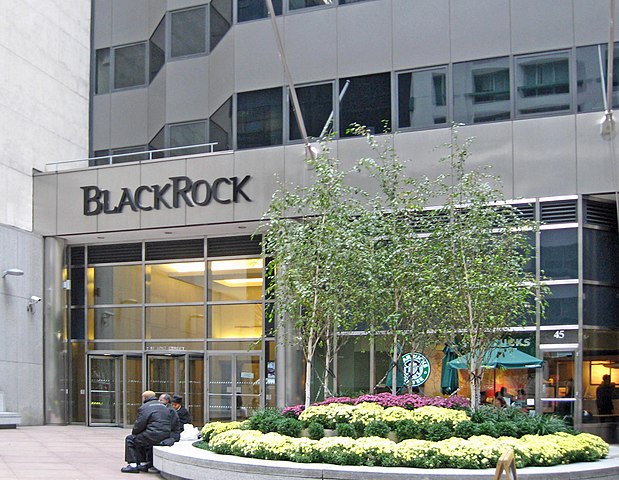
BlackRock says the rapid growth of artificial intelligence could create a new source of demand for cryptocurrencies as autonomous AI agents increasingly need payment systems designed for machines.
In its research paper, “The Machine-Native Economy,” BlackRock argues that AI and digital assets are naturally connected. Robert Mitchnick, BlackRock’s head of digital assets, co-authored the report, which describes AI as “machine-native intelligence” and crypto as “machine-native money.”
According to BlackRock, traditional payment networks have limitations when used by autonomous AI agents. Credit cards and bank accounts generally require human onboarding, while transaction fees can make very small payments impractical. Bank transfers can also take considerably longer to settle than blockchain transactions.
Stablecoins could address some of these challenges because blockchain networks operate around the clock and support programmable payments. BlackRock said stablecoins processed more than $11 trillion in transactions during 2025, putting their payment volume on a scale comparable with major global card networks.
Infrastructure supporting machine-to-machine crypto payments is also developing. Coinbase introduced x402, a protocol designed to allow software applications to make instant online payments, while Cardano recently added support for the technology.
BlackRock sees another potential opportunity in AI computing power. The asset manager cited analyst projections estimating that combined cloud revenue at Amazon, Microsoft and Google could approach $1.1 trillion by 2030. It suggested computing capacity could eventually be standardized, traded through contracts similar to commodities such as oil, and settled using blockchain technology.
Stripe’s August agreement to acquire OpenRouter, which routes AI requests across more than 400 models, highlights growing interest in AI infrastructure. Stripe CEO Patrick Collison described tokens as a central currency for companies developing AI applications.
BlackRock also has significant exposure to digital assets through its iShares Bitcoin Trust. IBIT held approximately $67 billion as of September 25, although the fund had fallen roughly one-third in value during 2026.
Still, BlackRock acknowledged that autonomous AI payments remain at an early stage. Experiments showing AI models choosing stablecoins for spending and Bitcoin for saving were simulations rather than actual transactions, meaning widespread machine-driven crypto demand has yet to materialize.







