


 Oil Prices Trim Gains After Trump Rules Out Iran Strikes Before Midterms
  US, EU Push for Action Against Asia’s Excess Factory Capacity
  Oil Prices Slip as Trump Rules Out Iran Strike Before Midterms
  Asian Currencies Steady as Dollar Eyes Fourth Weekly Gain
  Oil Prices Rise as Gulf Hurricane and Middle East Supply Risks Mount


 Add as a preferred source on Google
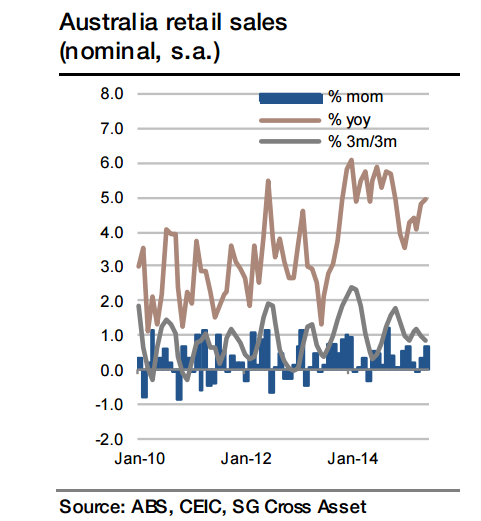
Australia's retail sales surprised on the upside in June with a 0.7% mom gain, despite a marginal (0.1%) decline in food sales, meaning that non-food sales jumped by 1.2% mom, their largest gain since January (food sales account for just over 40% of the total). Given the moderate gains in disposable income (2.6% yoy in Q1), retail sales growth of just short of 5% is unlikely to be sustained for long.
Hence, a moderate pull-back is expected in July non-food sales (-0.1% mom), which combined with a 0.5% rebound in food sales, implies a marginal 0.1% mom gain in overall sales. The weakness is likely to be concentrated in sales of household goods, which have seen an impressive run over the past year, partly on the back of the housing boom. One key downside risk comes from department store sales, which have in recent years seen dramatic volatility in July/August (with steep declines in July and August rebounds), though this did not occur in 2014.

- News

- Economy

- Central Banks
- Investing
- Research
- Roundups
- Digital Currency
- Insights
- Technical Analysis
- Technology
- Business
- Law
- Health
- Nature
- Fintech
- Science
- Topic
- Opinions
- ©Econometrics LLC . All Rights Reserved.
Australia's retail sales consolidating after autumn surge
Monday, August 31, 2015 1:53 AM UTC
Editor's Picks



- Market Data
Most Popular




