


 U.S. Futures Slide as Iran Denies Nuclear Talks with Washington
  Gold Prices Climb as Middle East Ceasefire Talks Stir Market Optimism
  Trump Administration Opens Two New Investigations Into Harvard Over Discrimination and Antisemitism
  U.S. Oil Prices Slide as Middle East Ceasefire Talks Spark Market Optimism
  Trump Administration Settles Lawsuit Barring Federal Agencies from Pressuring Social Media Censorship
  Trump Backs Down on Iran Strikes After Gulf Allies Sound the Alarm
  Russia Strikes Kharkiv and Izmail as Cross-Border Drone War Escalates
  Asian Currencies Stay Muted as Dollar Holds Firm Amid Iran Uncertainty
  Jay Bhattacharya to Continue Leading CDC as White House Searches for Permanent Director
  ICE Arrest of Guatemalan Woman at San Francisco Airport Sparks Outrage
  Iran-Israel Missile Strikes Continue Amid Mixed Signals on U.S.-Iran Diplomacy
  Australia-EU Free Trade Deal Signed After Years of Negotiations
  Oil Prices Climb as Iran Reviews U.S. Peace Proposal Amid Middle East Tensions
  U.S. Deploys Elite 82nd Airborne Troops to Middle East Amid Iran Tensions
  U.S. Stock Futures Steady as Iran Reviews U.S. Ceasefire Proposal
  Oil Prices Plunge Over 6% as Middle East Ceasefire Hopes Ease Supply Fears
  US-Iran Ceasefire Talks Underway: What You Need to Know


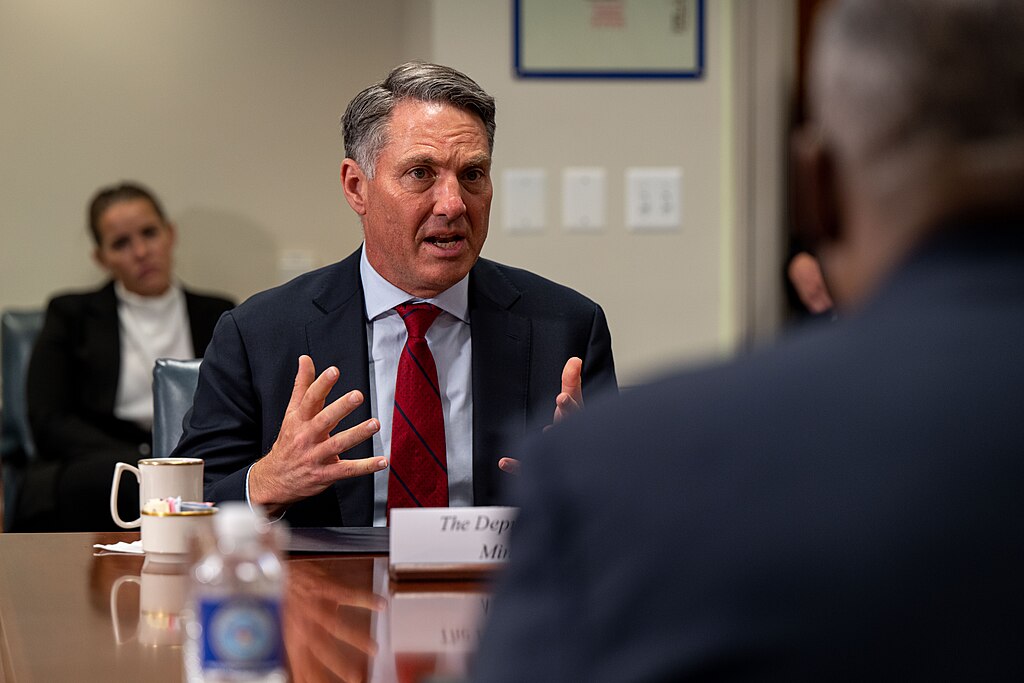
Australia’s Defence Minister Richard Marles expressed strong confidence on Thursday that the AUKUS submarine agreement with the U.S. and UK will proceed, despite a formal review by the Trump administration. Valued at A$368 billion ($239 billion), AUKUS is Australia’s largest-ever defense project, aiming to build and acquire nuclear-powered submarines to enhance deterrence in the Indo-Pacific.
A U.S. Pentagon official confirmed the review is to ensure alignment with President Trump’s “America First” agenda. Marles downplayed concerns, calling the review expected with new administrations and reaffirmed Australia’s long-term commitment to the trilateral pact.
Australian Prime Minister Anthony Albanese is set to meet President Trump during the G7 summit in Canada, where discussions will include a U.S. request for Australia to raise its defense spending from 2% to 3.5% of GDP. Albanese has pledged to increase spending to 2.3%, but remains firm on not committing to the higher target.
Under AUKUS, Australia is scheduled to purchase up to three Virginia-class submarines from the U.S. beginning in 2032, with a $2 billion payment to support U.S. shipyard expansion starting in 2025. The first $500 million installment was paid in February. However, U.S. submarine production delays have raised questions, especially from key review figure Elbridge Colby, about the feasibility of fulfilling both domestic and allied commitments.
Experts say the review primarily assesses U.S. capability to deliver submarines while balancing its own strategic needs, particularly amid tensions with China. Meanwhile, the UK and Australia plan to co-develop the AUKUS-class submarine, expected to launch around 2040.
Despite criticism over Australia’s defense spending, Marles emphasized that AUKUS strengthens collective security and creates thousands of jobs, reinforcing long-term defense ties among the allies.













