


 Tabletop particle accelerator could transform medicine and materials science
  NASA Faces Major Workforce Reduction as 20% of Employees Prepare to Leave
  Trump and Merck KGaA Partner to Slash IVF Drug Costs and Expand Fertility Coverage
  Eli Lilly’s Inluriyo Gains FDA Approval for Advanced Breast Cancer Treatment
  Trump Administration to Launch Autism Initiatives Targeting Acetaminophen Use and New Treatment Options
  SpaceX Starship Explodes in Texas During Test, Citing Nitrogen Tank Failure
  CDC Vaccine Review Sparks Controversy Over Thimerosal Study Citation
  FDA Adds Fatal Risk Warning to J&J and Legend Biotech’s Carvykti Cancer Therapy
  Neuren Pharmaceuticals Surges on U.S. Patent Win for Rare Disorder Drug
  Neuralink Expands Brain Implant Trials with 12 Global Patients
  SpaceX’s Starship Completes 11th Test Flight, Paving Way for Moon and Mars Missions
  Is space worth the cost? Accounting experts say its value can’t be found in spreadsheets
  Lost in space: MethaneSat failed just as NZ was to take over mission control – here’s what we need to know now
  Blue Origin’s New Glenn Achieves Breakthrough Success With First NASA Mission


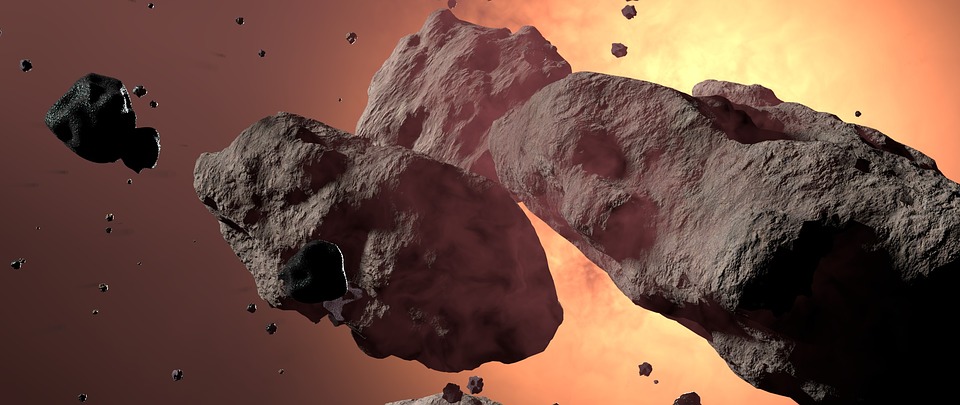
Asteroids can sometimes pass by without getting noticed, and that was the case for a pair of space rocks earlier this week. NASA has confirmed that two asteroids made a close approach to Earth around the same time.
The asteroids, formally known as 2020 RF3 and 2020 RD4, passed by Earth on Monday at a very close distance. 2020 RF3 passed by first, followed by the slightly smaller RD4, but neither rock posed a threat to the planet. Both asteroids passed by within 14 hours of each other, with RF3 getting as close as 94,000 kilometers while RD4 approached at a similar distance. It should be noted that the distance between the Moon and the Earth is 385,000 kilometers. These asteroids were picked up by Dr. Gianluca Masi of the Virtual Telescope Project.
Space agencies all over the world are keeping tabs on asteroids in space that could potentially pass by Earth, especially in case of a collision. While chances of asteroid collisions are very minuscule, there is still a chance, and thus the agencies are already developing measures and plans to defend the planet from these wandering space rocks.
Because RF3 and RD4 are relatively small asteroids, they do not pose any major threat to Earth if they do pass through the atmosphere. Very small asteroids burn up upon coming into contact with the atmosphere, and asteroids relatively bigger but still on the smaller end could only cause damage to the area it hits, and it will most likely hit a body of water.
RF3 also happens to be the 61st asteroid to get much closer to the Earth this year, and Dr. Masi was able to take a very detailed photo of the space rock upon its approach. “The near-Earth asteroid 2020 RF3 had an extremely close, but safe approach with our planet, reaching a minimum distance from the Earth of about 92,000 kilometers, 0.24 times the average distance of the Moon. We managed to capture it a few hours before,” said the Virtual Telescope Project.
“At the imaging time, asteroid 2020 RF3 was at about 400,000 kilometers from Earth, basically the lunar distance, and it was still safely approaching us.”













