


 FDA Pilot Program Eases Rules for Nicotine Pouch Makers
  NASA Cuts Boeing Starliner Missions as SpaceX Pulls Ahead
  SpaceX Prioritizes Moon Mission Before Mars as Starship Development Accelerates
  SpaceX Delays Starship V3 Launch Ahead of Potential Record IPO
  Eli Lilly’s Inluriyo Gains FDA Approval for Advanced Breast Cancer Treatment
  Is space worth the cost? Accounting experts say its value can’t be found in spreadsheets
  NASA Artemis II: First Crewed Moon Mission Since Apollo Takes Four Astronauts on 10-Day Lunar Journey
  Tabletop particle accelerator could transform medicine and materials science
  SpaceX’s Starship Completes 11th Test Flight, Paving Way for Moon and Mars Missions
  Trump Signs Executive Order to Boost AI Research in Childhood Cancer
  Neuralink Expands Brain Implant Trials with 12 Global Patients
  Blue Origin New Glenn Rocket Explodes During Launch Pad Test, Delaying Space Ambitions


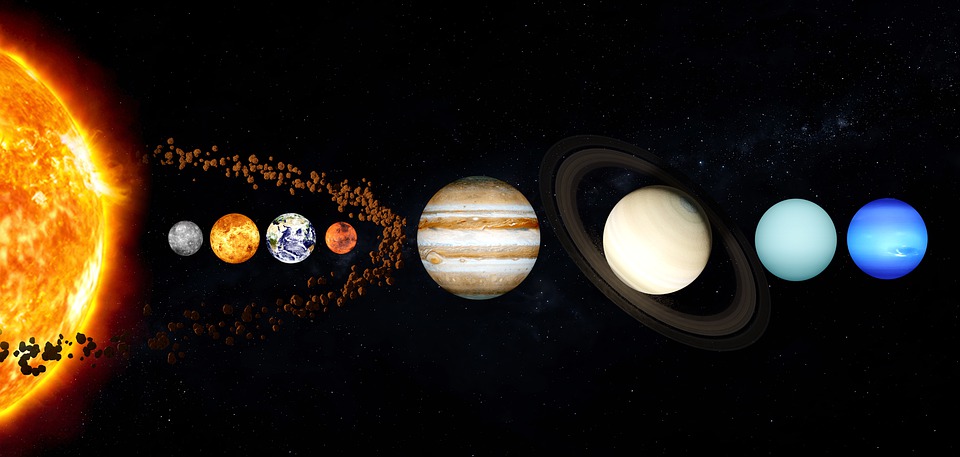
As certain asteroids are known to be making their way towards Earth, NASA has released a new photo showing two particularly large asteroids within the asteroid belt. These two asteroids are shown to be potentially hazardous as they are revealed to be bigger than some cities.
Express reports the space agency has shared a photo of the asteroids Lina and Klotho, flying within the asteroid belt between Mars and Jupiter. NASA kept tabs on the two asteroids with its NEOWISE telescope. “Appearing as strings of orange dots, the brightest dots belong to asteroids Klotho and Lina. Both orbit out in the main asteroid belt between Mars and Jupiter, while smaller, more distant asteroids can also be seen passing through the image,” said the agency.
Lina and Klotho are incredibly massive asteroids. Lina measures 60 kilometers in diameter while Klotho measures 82 kilometers in diameter. Asteroid Lina takes over 2,000 days to orbit the Sun while Klotho takes a little less at 1,596 days to orbit the Sun.
Fortunately for us, the asteroids found in the asteroid belt pose no threat to Earth. This because of the very strong gravitational pull of Jupiter that helps keep the asteroid belt in place and prevents asteroids from colliding with Earth or flying around recklessly throughout the Solar System. According to NASA’s scientists, had it not been for Jupiter’s gravitational pull and the asteroid belt, then planets would constantly be impacted by asteroids.
NASA added that Jupiter appears to protect the planets of Mars, Earth, Mercury, and Venus from constant or potential asteroid collisions. Thus, the chances of an asteroid actually hitting Earth are very small, at one in 300,000.
In other news, astronomers have announced that a solar storm is coming towards Earth this week. The solar winds are set to arrive by July 23 or July 24. According to the site Space Weather, this would be caused by a gassy material coming from an equatorial hole found in the Sun’s atmosphere.
This could result in auroras in areas with high latitudes. When solar winds hit the Earth’s magnetosphere, blue lights appear which turn into auroras - aurora borealis or the northern lights and aurora australis, also known as the southern lights.







