


 Nvidia Options Price in $280 Billion Earnings Swing
  Nvidia Eyes Perplexity Investment at $30 Billion Valuation
  New Zealand Moves to Ban Social Media for Children Under 16
  Pinterest Stock Falls as CFO Julia Brau Donnelly Resigns
  OpenAI Data Center Chief Chris Malone Exits Ahead of Planned 2027 Listing
  PayPal Shares Sink as $50 Billion Takeover Bid Collapses
  U.S. Disrupts China-Linked Hacking Campaign Targeting Government Agencies
  BofA Names ASML Top Semiconductor Equipment Pick on Growth, Valuation
  Countries Tighten Social Media Bans for Children
  Google Expands Gemini Enterprise With AI Tools for Legal Sector
  Luxshare Shares Rise as First-Half Profit Jumps 18%
  Alibaba Raises $10.2 Billion to Expand AI Infrastructure
  Salesforce Shares Surge as AI Demand Powers Q2 Earnings Beat


 Add as a preferred source on Google
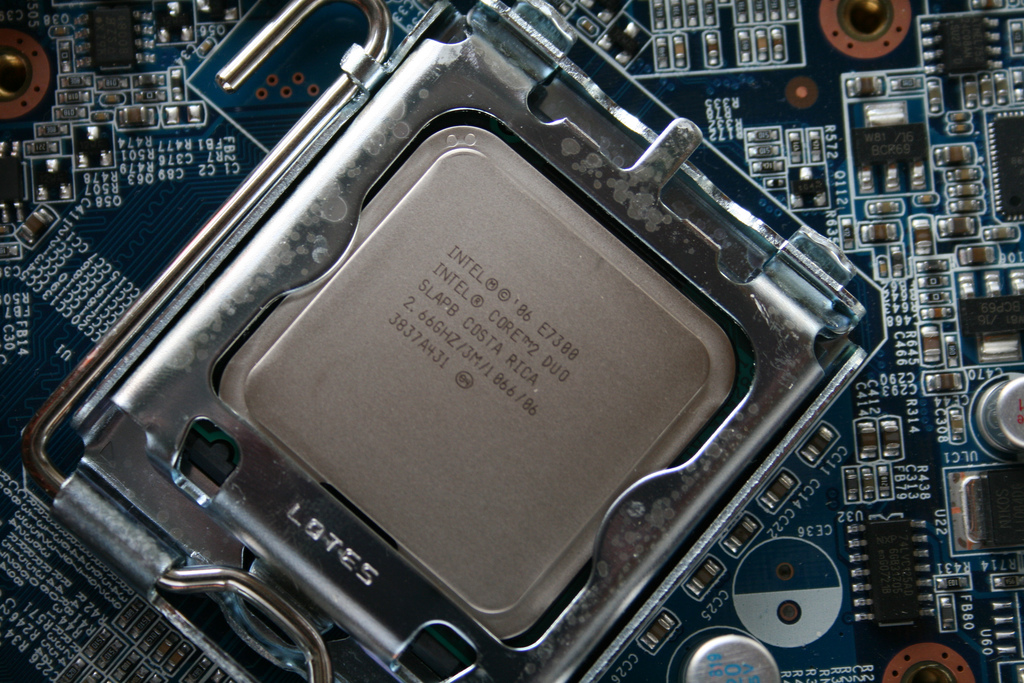
Right now, most standard computers and laptops only have up 16 cores in terms of the processors that they use, and the higher the number of cores the more efficient the performance of the device will be. With the unveiling of the 1,000 core CPU that UC Davis researchers created this reportedly 100 times more efficient than standard CPUs, one has to wonder what on earth that kind of processing power would be used for.
The researchers actually collaborated with IBM in order to create what they are calling the KiloCore, according to PC Mag. Each core can work independently with each other and can shut down or turn on whenever they are needed to process particular functions. Not only does this allow for maximum output when performing tasks with the computer such as performing calculations, it also enables the processor to use energy more efficiently.
The KiloCore is so effective at using energy in fact that it can actually be powered by a single AA battery. The researchers published a press release about the CPU, with UC Davis Professor of Electrical and Computer Engineering, Bevan Baas saying that their 1,000 core processor is the first in the world.
"Based on the best of our knowledge, it is the world's first 1,000-processor chip and it is the highest clock-rate processor ever designed in a university," he said.
Much like the KiloCore, other processors that featured more than 16 cores were developed in laboratories in order to perform specific functions which would not necessarily be needed for commercial purposes. As BGR pointed out, very few people would have any need for a CPU that has over 1,000 cores. Even something like the 72-core Xeon Phi by Intel is already considered overkill by modern standards.
More than that, GPUs not CPUs are necessary for most modern needs, particularly in the video game and virtual reality industries. Even so, a KiloCore is a huge engineering feat that’s worth celebrating.







