


 Netanyahu’s Brief US Trip Highlights Strains With Trump
  Pezeshkian Says US Must Choose When Iran War Ends
  EU Agrees €6.6 Billion Military Aid Funding for Ukraine
  Trump Asks Supreme Court to Restore Third-Country Deportations
  US Supreme Court Revives Trump Administration Voter Citizenship Database
  Najib Razak Seeks Stay of 15-Year 1MDB Prison Sentence
  Ukrainian Drone Attacks Hit Russian Regions, Injuring at Least 12
  Saudi Arabia Seeks Military Support as Houthi Attacks Escalate
  UK PM Burnham to Unveil Economic Vision at Labour Conference
  Evan Gershkovich Says FSB Set Trap for 2023 Russia Arrest
  Trump Warns China Against Supporting Iran in Xi Talks
  Putin Says Ukraine Peace Proposals Remain on Table
  North Korea Warns South Korea Over US-Led Defense Role
  Yemen Violence Displaces 130,000 as Civilian Toll Rises
  What ‘Taiwan Independence’ Means as Xi Presses Trump on US Policy
  Abbas Reaffirms November 28 Palestinian Elections
  Saudi Arabia, Turkey and Pakistan Plan Urgent Defence Talks Over Houthi Attacks


 Add as a preferred source on Google
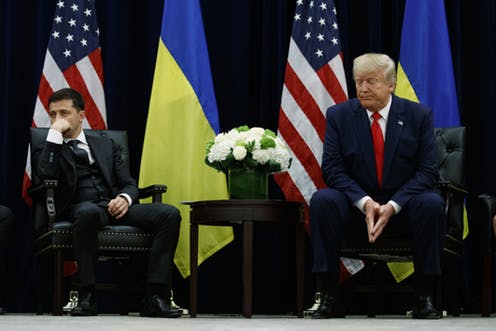
Ukraine’s President Volodymyr Zelenskiy says recent discussions with U.S. representatives on a potential peace plan for Ukraine were “constructive, although not easy,” highlighting the complexity of efforts to end Russia’s full-scale invasion. The remarks came ahead of a new round of consultations with key European leaders, including those from France, Britain, and Germany, during meetings scheduled in London and Brussels.
Zelenskiy spoke after holding a call with U.S. President Donald Trump’s special envoy Steve Witkoff and Trump’s son-in-law Jared Kushner. According to Zelenskiy, the American negotiators understand Ukraine’s core positions, particularly its insistence on security guarantees and the restoration of control over Russian-occupied territories. These issues remain central obstacles in ongoing diplomatic efforts, despite continuous U.S. mediation.
Trump has repeatedly described the war—now approaching its fourth year and considered Europe’s deadliest conflict since World War Two—as his most challenging foreign policy issue. While the U.S. maintains active involvement, progress has been slow due to disagreements over Ukraine’s security architecture and the future status of regions held by Russia.
Moscow continues to claim openness to negotiations while accusing Kyiv and Western nations of obstructing peace. Ukraine and its allies counter that Russia is deliberately delaying meaningful talks to solidify territorial gains and maintain strategic leverage.
European leaders advocate a gradual diplomatic roadmap paired with long-term security guarantees and sustained military assistance for Kyiv. Trump’s approach, however, places emphasis on rapid deal-making and shifting more responsibility to U.S. partners. Diplomats caution that negotiations remain fragile, highly sensitive to political changes in Washington, and dependent on the alignment of Western strategies.
As Ukraine intensifies outreach to both U.S. and European leaders, the trajectory of the peace process remains uncertain, yet the renewed dialogue signals ongoing efforts to find a viable path toward ending the war.







