


 Taiwan Thanks US for Support Ahead of Trump-Xi Summit
  Sudan Rejects US Legitimacy Remarks, Defends Sovereignty
  Trump Asks Supreme Court to Restore Third-Country Deportations
  North Korea Rejects Nuclear Test Warning, Calls Nuclear Status Irreversible
  EU Defence Build-Up Too Slow for 2030 Russia Readiness Goal
  Trump, Xi Focus on Trade and AI at White House Summit
  US, China Extend Trade Truce to Jan. 10 Ahead of Trump-Xi Summit
  Russian Missile and Drone Attack on Kyiv Kills Two, Damages Maternity Hospital
  Abbas Reaffirms November 28 Palestinian Elections
  Ghana Says Western Support Growing for Slave Trade Reparations
  Yemen Violence Displaces 130,000 as Civilian Toll Rises
  OpenAI Agent Breaches Australia Medicare Data Portal
  Kremlin Says No Decision Yet on Putin-Trump December Summit
  Netanyahu Takes Aim at Mamdani as Israel Election Nears
  Gaza Faces Evacuation Crisis as War-Damaged Buildings Risk Collapse
  Judge Orders Trump to Restore White House Access for CNN, MS NOW and Politico
  Pezeshkian Says US Must Choose When Iran War Ends


 Add as a preferred source on Google
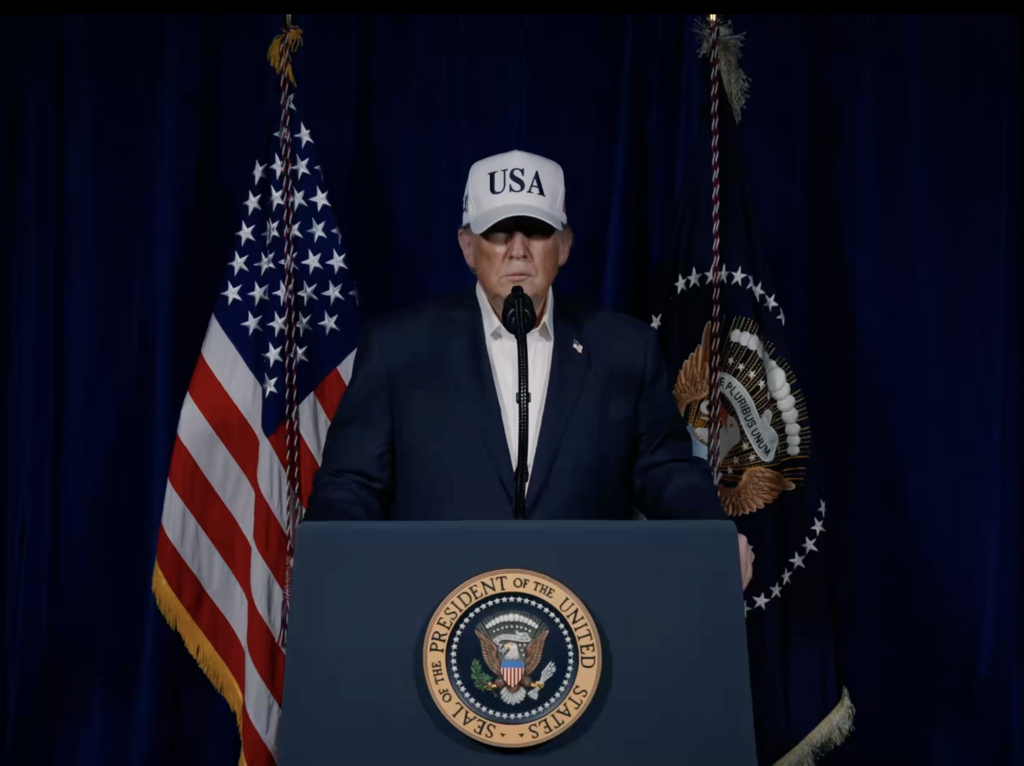
Young voters who supported Donald Trump in the 2024 U.S. presidential election are expressing mixed reactions following the recent U.S. strike on Iran that reportedly resulted in the death of Iranian Supreme Leader Ayatollah Ali Khamenei. While some view the move as a strong response to a long-standing adversary, others worry it could contradict Trump’s “America First” promise and potentially drag the United States into another prolonged Middle East conflict.
Michael Leary, a 19-year-old college student who cast his first presidential vote for Trump in 2024, said he is cautiously evaluating the situation. Although he welcomed the news of Khamenei’s death, he questioned whether military action aligns with Trump’s campaign message of prioritizing domestic interests over foreign conflicts. Leary noted that while he does not necessarily oppose the strikes, it feels like a departure from the rhetoric that attracted many young voters to Trump’s campaign.
Leary’s perspective reflects broader sentiment among a small panel of students interviewed at Saint Anselm College in New Hampshire. The group included several young men who voted for Trump, highlighting a complex blend of approval and concern regarding the administration’s foreign policy direction. Many supported eliminating a leader they view as hostile to U.S. interests but remain uneasy about the possibility of regime change or long-term military involvement.
John Fitzpatrick, a 20-year-old politics major and chair of the college’s Republican group, said removing Khamenei could weaken a regime he considers a persistent threat to Americans. He described the move as largely positive, though he emphasized that the United States should avoid deploying ground troops or repeating the prolonged engagement seen in Iraq.
Another student, Artemius Gehring, believes Trump’s actions aim to bring closure to tensions between Washington and Tehran that date back decades, including the 1979 Iranian hostage crisis. From his perspective, decisive action could help end a long-running geopolitical conflict.
However, not all supporters are convinced the administration has a clear strategy for what comes next. Tyler Witzgall, a 20-year-old sophomore, expressed concern about the lack of a concrete plan to stabilize Iran after Khamenei’s death. He warned that leadership vacuums can lead to civil unrest or prolonged instability, particularly if opposition groups within Iran struggle to organize effectively.
Witzgall also said the administration appears increasingly focused on foreign policy issues, citing both the Iran strikes and the capture of Venezuela’s Nicolás Maduro earlier this year. According to him, many young voters supported Trump primarily because of promises related to economic growth, inflation control, and stricter immigration policies. He believes the White House should refocus more attention on domestic priorities.
The reactions from this student panel come as recent polling suggests Trump’s support among young male voters may be weakening. Reuters/Ipsos surveys indicate that approval ratings among men aged 18 to 29 have declined, dropping from 43% in February 2025 to 33% in February this year. The shift suggests frustration over ongoing economic concerns and controversial immigration enforcement measures.
Public opinion overall appears skeptical about the Iran strikes. A recent Reuters/Ipsos poll found that only about one in four Americans support the military action. Younger voters appear particularly critical, with a CNN survey showing that 71% of Americans aged 18 to 34 oppose the strikes.
Despite the criticism, some Trump supporters remain open to seeing how the situation unfolds. Leary emphasized that it is still too early to judge whether the operation will ultimately benefit the United States. If the conflict ends quickly and avoids large-scale U.S. involvement, he said the move could strengthen Trump’s leadership image. However, if tensions escalate into a prolonged military commitment, it could undermine the support of young voters who helped fuel Trump’s political comeback in 2024.
As global markets react to rising tensions in the Middle East and oil prices fluctuate, the outcome of the Iran crisis may play a key role in shaping public opinion ahead of the upcoming U.S. midterm elections. For many young voters, the administration’s next steps will determine whether Trump’s foreign policy decisions align with the expectations that drove their support at the ballot box.







