


 FAA Allows Boeing to Sell 35 More 777F Freighters Beyond 2028
  CNN, MS NOW and Politico Sue Trump Over White House Media Ban
  Europe can’t achieve space sovereignty alone. Here’s why
  LVMH-Hermès Dispute Deepens Over Secret 2002 Share Deal
  White House Bars CNN, MS NOW and Politico Reporters
  Apple Pay Set for India Launch With Axis Bank
  Burnham Eyes UK Leadership Role in AI Ahead of Trump Meeting
  SoftBank Launches $11 Billion Bond Sale to Fund OpenAI Investment
  SpaceX Nasdaq 100 Weight to More Than Double in Rebalance
  Rosenblatt Starts Nokia at Buy on AI Networking Growth
  Petrobras Joins Brazil’s New Diesel Subsidy Program
  MediaTek Unveils 2nm Dimensity 9600 Pro AI Chip
  Trump Plans Federal AI Force and AI Czar
  Hyundai CEO Warns Chinese Automakers Could Disrupt US Market
  NASA, Boeing Discuss Expanding Starliner Missions
  Paramount Skydance Faces $30 Million Film Penalty in Warner Bros. Deal
  fnny Beta Launches With a Simple Idea: Find an Event, Show Up, Get Rewarded


 Add as a preferred source on Google
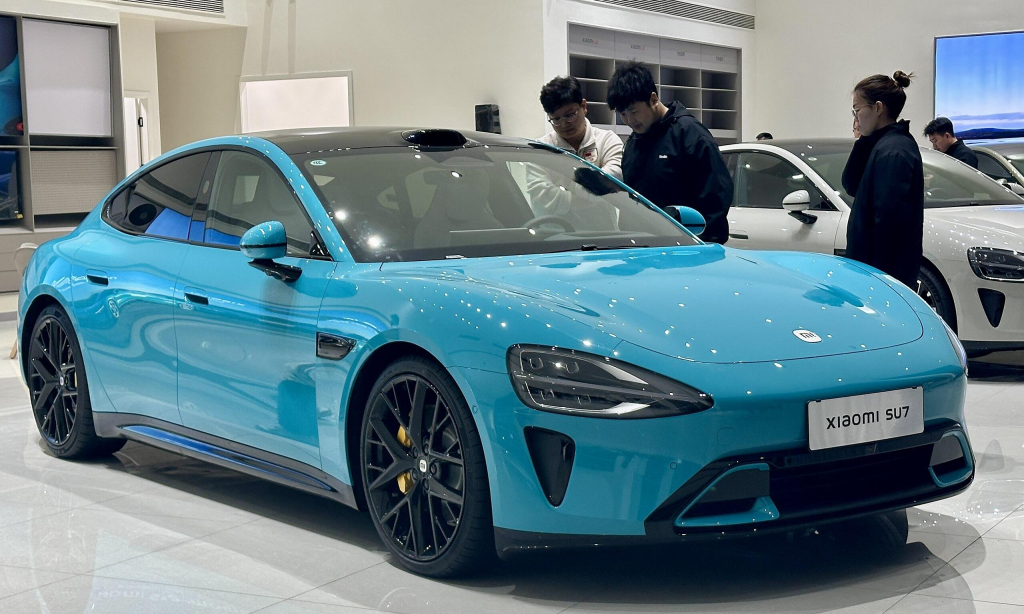
Xiaomi's second-quarter revenue surpassed expectations, with its automotive unit, led by SU7 sales, making a significant impact for the first time.
Xiaomi's Q2 Revenue Beats Estimates
Xiaomi Corp. of China announced on Wednesday better-than-expected quarterly sales of 6.2 billion yuan ($869.2 million), the first time the company had disclosed the contribution of its automotive business unit.
According to LSEG (via Reuters), Xiaomi's revenue for the three months ending in June was 88.9 billion yuan, a 32% increase, above the 85.8 billion yuan predicted by analysts.
In 2021, the firm initially declared its intention to diversify from its primary smartphone operations by entering the electric vehicle market.
27,307 SU7 EVs Delivered in Q2
After declaring that it would price its SU7 models competitively against Tesla's offerings, Xiaomi began distributing its SU7 electric vehicles in early April.
It made 6.2 billion yuan in revenue during the second quarter from the delivery of 27,307 EVs. Details of its automotive business segment are included in this financial report for the first time.
Lu Weibing, president of Xiaomi, expressed his "confident" belief that the business will achieve its goal of delivering 120,000 electric vehicles by the end of the year in a media teleconference that followed the results announcement.
With the goal of consistently exceeding 10,000 units each month, Xiaomi has been using double-shift methods since June.
Xiaomi's Auto Unit Loss Narrows as Sales Increase
The automotive division of Xiaomi is still losing money. Despite a 15.4% gross profit margin, the division posted a quarterly loss of 1.8 billion yuan after adjustments. Lu stated that the unit's profitability is anticipated to rise with the increase in deliveries.
Per MSN, following a protracted slump, the worldwide smartphone market began to show indications of recovery towards the end of last year.
IDC, an industry research agency, reports that in the second quarter, Xiaomi's worldwide smartphone shipments increased by 27.4 percent to 42.3 million devices, giving the company a 14.8 percent market share and putting it in third place.
Specifically, IDC reports a 16.5% increase in shipments in China, the company's most lucrative smartphone market.
Despite experts' expectations of 4.8 billion yuan, adjusted net income came in at 6.18 billion yuan.







