


 US Backs Musk in Fight Against EU’s €120 Million X Fine
  Oracle Shares Fall as New Mexico AI Data Center Faces Power Delays
  SpaceXAI to Double Nvidia Chips at Colossus 2 by Year-End
  Meta Found Liable in New Mexico Facebook Data Privacy Case
  Apple Extends Qualcomm Patent Licensing Deal
  Select Water Solutions Shares Surge on $700 Million Pilot Water Deal
  DaVoice Sues Perplexity AI Over Trade Secrets
  BMW 2028 Margin Target Could Fall Below Consensus, UBS Says
  US Appeals Court Upholds Anthropic AI Supply Chain Ban
  Almonty Industries Shares Jump 8% After Stifel Sets $25 Target
  OpenAI to Preview GPT-6 Cyber AI Model for Cybersecurity
  Solidigm Eyes $150 Billion IPO as SK Hynix Expands AI Storage Push
  Novo Nordisk Strikes €1.17 Billion Nanexa Drug Delivery Deal
  Former OpenAI Data Center Chief Chris Malone Joins Nvidia
  Tesla Semi Rollout Begins at Nevada Factory
  EQT Plans €1.7 Billion Sale of Parques Reunidos Stake
  SoftBank Shares Fall as Oracle Flags Stargate Data Center Delay Risk


 Add as a preferred source on Google




The Australian government spends A$6.7 billion a year on private health insurance rebates. These rebates are the government’s contribution towards the costs of individuals’ premiums.
But our analysis shows higher rebates for people aged 65 and older are not doing much to encourage them to sign up for private hospital cover, the very group who may benefit the most from it.
This and other research point to these rebates largely going to people on higher incomes, ones who’d be more likely to buy private health insurance anyway.
Remind me, what are these rebates?
In 1999, the Australian government introduced the private health insurance rebate. Initially, the rebate meant the government paid 30% of the cost of private health insurance for everyone, regardless of income or age. Then in 2005, the Howard government increased the rebate rate to 35% for those aged 65-69 and to 40% for those aged 70 and older, regardless of how much they earned.
Over time, the rebate rates have decreased slightly and now depend on both income and age. However, the higher discount for older people has always remained.
We wanted to understand whether the higher rebates for older people actually encourage them to buy private health insurance.
So we looked at data from more than 300,000 people who filed tax returns over more than a decade (2001-2012). We then compared the trends in insurance coverage of people younger than 65 and older than 65, before and after the 2005 rebate policy change.
What we found
We found higher rebates led to a modest and short-term increase in private health insurance take-up. We estimated that lowering premium prices by 10% through higher rebates would only result in 1-2% more people aged 65 and older buying private health insurance in the next two years.
This means higher rebates for older people are a very expensive way to get them to insure.
People aged 65-74 with income in the bottom 25% of earners were the most likely to buy insurance in response to higher rebates that reduced premium prices. That’s an income under $21,848 in today’s money (income increased to 2023 dollar amount, in line with the consumer price index).
Higher earners may end up paying more via the tax system if they don’t have private health insurance.
— The Conversation - Australia + New Zealand (@ConversationEDU) August 13, 2023
💸 According to research from @yutingzhang66 (@UniMelb) + @NathanKettlewe1 (@UTSEngage), this won’t increase participations rates as much as you’d think. https://t.co/1dJcZ6gfb6
What do we propose?
Our findings suggest a more targeted subsidy program would be a more effective way to increase private health insurance. To achieve this, we recommend lowering income thresholds for rebates to target people of all ages on genuinely low incomes.
Currently, people earning as much as $144,000 (singles) or $288,000 (families) can receive rebates.
Other evidence to back our proposal comes from research released earlier this year. This suggests higher income earners are likely to buy private insurance regardless of rebates.
A recent consultation report commissioned by the federal health department reviewed a range of health insurance incentives.
The report recommends removing rebates for those with income higher than $108,000 for singles and $216,000 for families (we recommend removing them at $93,000 for singles and $186,000 for families). The report also recommends increasing rebates for those older than 65 (we believe income, rather than age, is a better marker of someone’s means).
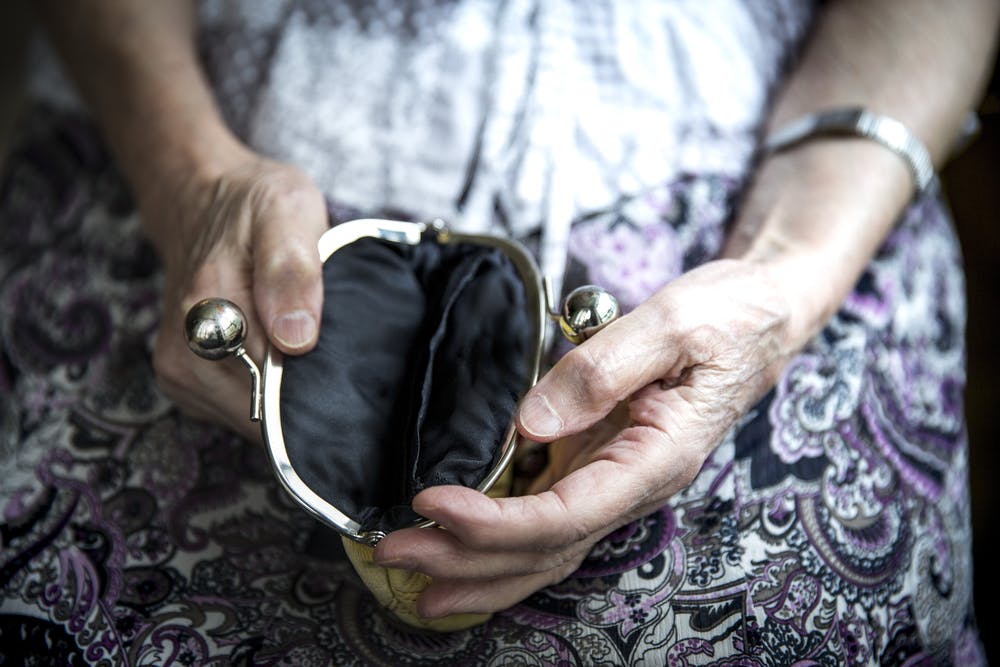
People on low incomes should be targeted instead. Shutterstock
Are rebates good value for money?
We also need to look at whether rebates provide value for money more broadly, and across all ages.
Existing evidence shows a 10% decrease in premiums due to rebates only leads to a 3.5-5% increase in private health insurance take-up among all Australians. We show this is only 1-2% for people over 65.
So rebates are likely to cost taxpayers more than they generate in savings, and are largely windfalls to those who would privately insure anyway, often those who are financially better off.
What happens if we scrapped the rebates?
It is uncertain how many people would drop private cover if the rebate was removed.
But based on research from when the rebate was introduced, the rebate might account for a maximum 10-15 percentage points of the overall take-up rate. Other research suggests it might be much less than this, closer to 2 percentage points.
In other words, the rebate only appears to influence a small percentage of people to buy private health insurance. So scrapping it would likely have a similarly small effect.
Governments spend billions of dollars every year to encourage us to take up private cover.
— The Conversation - Australia + New Zealand (@ConversationEDU) August 27, 2023
However, Yuting Zhang + colleagues (@UniMelb) finds public hospital waiting lists barely shift from the average 69 days – they're just eight hours shorter. https://t.co/HooFWQ9zzu
Then there’s the impact of scrapping the rebate, people dropping their cover and putting more pressure on the public system. Earlier this year, we found private health insurance had minimal impact on reducing waiting times for surgery in Victorian public hospitals. So scrapping the rebate might have minimal impact on waiting lists.
Taken together, the billions of dollars a year the government spends to subsidise private health insurance via rebates might be better directed to public hospitals and other high-value care, including primary care and preventive care.







