


 Foreign U.S. Treasury Holdings Fall as Japan, UK and China Cut Positions
  US Dollar Slips as Soft Economic Data Eases Fed Rate Hike Expectations
  Citadel Warns High Treasury Yields Pose Broader Market Risks
  Canada Faces 50% U.S. Tariffs as Trade Tensions Threaten USMCA Talks
  Gold Prices Rise as Weak US Data and Hormuz Risks Boost Safe-Haven Demand
  US Dollar Holds Steady as Fed Rate Bets and Iran Tensions Drive Markets
  Oil Prices Rise as US-Iran Tensions Renew Strait of Hormuz Supply Fears
  Colombia Earthquake Losses Estimated at $9.58 Billion as Reconstruction Challenge Mounts
  US Stock Futures Mixed as Fed Rate Hike Bets Fade, AI Deals in Focus
  US Stock Futures Steady as Cooling Inflation and Strong Earnings Support Markets
  Gold Prices Slide as Treasury Yields Surge, Fed Minutes in Focus
  Oil Prices Rise as Iran-U.S. Tensions Threaten Strait of Hormuz Supply
  Malaysia Inflation Eases to 1.8% in July, Below Forecast
  Wall Street Falls as Oil Prices Rise, Fed Minutes and Retail Earnings in Focus
  BSP Sees Philippine Inflation Easing, Keeps Policy Options Open
  Japan Economy Grows 1.1% in Q2 as Consumer Spending Stalls


 Add as a preferred source on Google
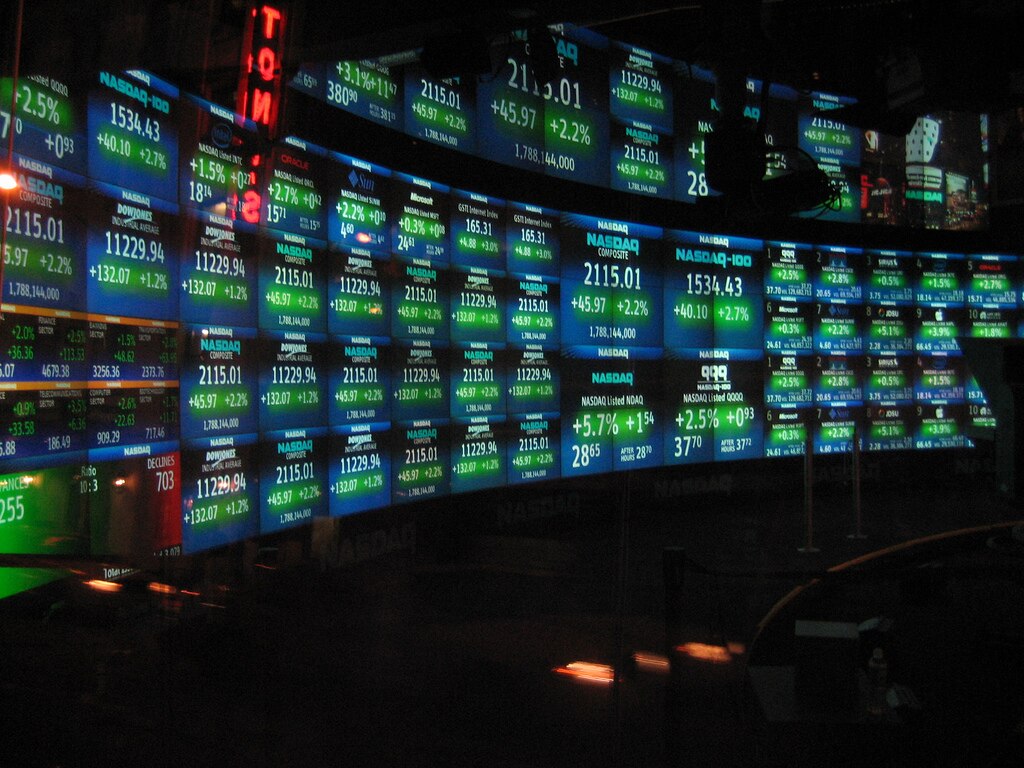
Wall Street stocks closed lower Tuesday as a sharp U.S. Treasury bond sell-off pushed long-term yields to their highest level in nearly two decades, weighing heavily on technology shares. Rising oil prices and renewed inflation concerns added pressure across global markets.
The S&P 500 dropped 0.7% to 7,694.31, while the Dow Jones Industrial Average declined 0.2% to 53,343.64. The Nasdaq Composite suffered the steepest loss, falling 1.3% to 26,289.71 as rate-sensitive technology stocks retreated.
The U.S. 30-year Treasury yield briefly climbed to 5.335%, its highest since June 2007, before easing to around 5.29%. The bond rout came despite relatively mild U.S. consumer and producer inflation reports. Investors instead focused on higher energy prices and concerns about growing corporate debt issuance.
Major technology companies including Microsoft, Meta, Alphabet, Amazon and Oracle issued roughly $121 billion in U.S. corporate bonds during 2025, largely as companies increased spending on artificial intelligence infrastructure. Heavy AI investment and additional debt issuance in 2026 have intensified concerns about financing costs.
Technology stocks fell 1.9%, making the sector the S&P 500's worst performer Tuesday. Meanwhile, investors rotated toward defensive areas, helping health care gain nearly 1.6% and consumer staples rise around 1.1%.
Oil prices provided another source of market uncertainty amid tensions between the United States and Iran over the Strait of Hormuz. Brent crude traded around $91 per barrel after briefly reaching $92, while West Texas Intermediate hovered near $84 after touching $85.01.
Investors are now awaiting minutes from the Federal Reserve's July FOMC meeting for clues about the interest rate outlook. Attention will also turn to upcoming earnings from Nvidia and Broadcom, which could influence whether Wall Street's August rebound continues.
Elsewhere, Home Depot reported better-than-expected quarterly results and 1.7% comparable sales growth, its strongest performance since the third quarter of 2022. The retailer also maintained its fiscal 2026 outlook, while its shares finished largely unchanged.







