


 Meta Unveils Muse Charm AI Device, Expands Smart Glasses Lineup
  NASA, Boeing Discuss Expanding Starliner Missions
  Microsoft Stock Upgraded as Stifel Sees Stronger Azure Growth
  Burnham Eyes UK Leadership Role in AI Ahead of Trump Meeting
  Anthropic’s Claude Discovers CRISPR-Like Enzyme System
  Westinghouse Targets $50 Billion Valuation in U.S. IPO
  SoftBank Shares Fall as Oracle Flags Stargate Data Center Delay Risk
  Tencent Launches TenPayGo Payment App for Foreign Tourists in China
  Former OpenAI Data Center Chief Chris Malone Joins Nvidia
  US Northeast Airports Resume Operations After Telecom Outage Disrupts Thousands of Flights
  Xi Calls for Deeper U.S.-China AI Cooperation in Trump Talks
  Oracle Shares Fall as New Mexico AI Data Center Faces Power Delays
  Jeff Bezos Invests $32 Billion in Blue Origin as Space Firm Targets Major Growth
  US Backs Musk in Fight Against EU’s €120 Million X Fine
  Scott Bessent Eyed as Trump’s New AI Czar
  OpenAI to Preview GPT-6 Cyber AI Model for Cybersecurity


 Add as a preferred source on Google
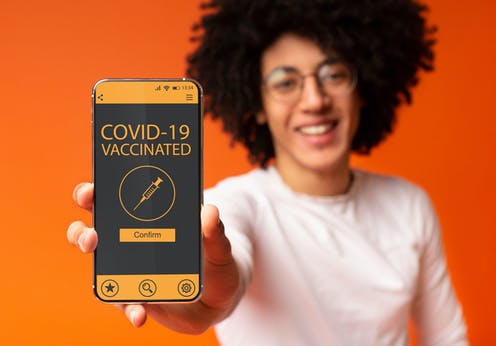


As more and more people get vaccinated, some governments are relying on “vaccine passports” as a way of reopening society. These passports are essentially certificates that show the holder has been immunised against COVID-19, which restaurants, pubs, bars, sports venues and others can use to grant them entry.
Israel currently operates a “green pass” system, which allows vaccinated people access to theatres, concert halls, indoor restaurants and bars. The UK government, had to roll back plans to trial vaccine passports after some of the venues involved experienced significant backlash against the proposals.
This is perhaps not surprising – vaccine passport schemes are controversial, with some arguing that they will reinforce inequalities. But there is an ethical case for using some form of certification of COVID status, as long as it is designed properly and as long as everyone has access to vaccines.
Let’s look at the ethics of vaccination and certification.
The duty of easy rescue has been used to make the case for public health measures, including the use of health records and the donation of blood. As a society, we have a collective duty of easy rescue.
For example, if each person in the population who was eligible could donate a few millilitres of blood easily (say some vial was created that could be posted to each person), and collectively this would solve the blood supply shortage, then each person ought to donate a few millilitres of blood. Doing so would literally be life-saving, at no cost and minimal discomfort to the donors.
The duty of easy rescue is what is known as a minimal theory of moral obligation. To understand this theory, philosopher Peter Singer famously described the following thought experiment:
If you are walking past a shallow pond and see a child drowning in it, you ought to wade in and pull the child out. This will mean getting your clothes muddy, but this is insignificant, while the death of the child would be a tragedy.
The thought experiment illustrates a situation in which a person can benefit another greatly at minimal cost.
This is currently the case for COVID-19 vaccinations. There is an extremely low risk of serious side effects with the COVID-19 vaccines. So it is not just a safety for oneself and a kindness to others, but a moral obligation to be vaccinated.
Equally, vaccination passports are a minimal cost for returning to normal daily life and for reducing anxiety for those you come into contact with on aeroplanes or in theatres, restaurants or public stadiums. They are a small sacrifice for a greater good.
A duty to ensure health
Governments also have a duty to ensure good public health. For example, in the UK, the US and elsewhere, governments have made smoking illegal in enclosed places because of the risk to public health due to passive smoking.
Studies have shown that smoke-free legislation has been associated with reduced heart attacks related to passive smoking. The danger of being enclosed with individuals with COVID-19 in close environments is similar – in fact, COVID-19 presents a far greater danger to life than passive smoking.
Making room for exceptions
The relatively small group of people who are unable to have vaccinations for health reasons should still be given a form of passport that indicates this is the case, and this should not be the basis for refusing them access to events or venues.
In fact, as with vaccination in general, the existence of these excepted groups makes it even more important that those of us who can get vaccinated do so to protect the whole community.
More than simply helping to reopen the economy, vaccination passports provide a way to allow those who have had to shield during the pandemic, and may have experienced social isolation and loneliness, to have social contact with other members of society without fear. They will also facilitate access to care homes to allow for ease of visitation for families who have been separated for too long.
As members of a society, it is our moral obligation to get vaccinated to protect everyone in our community. Vaccination passports will help with this and also enhance quality of life and wellbeing as we return to normal daily life.







