


 Australia Inflation Cools in May, But Core CPI Keeps RBA Rate Hike Risks Alive
  US Dollar Hits One-Year High as Hawkish Fed Outlook Overshadows Middle East Developments
  Dollar Holds Firm as U.S.-Iran Talks Ease Tensions, GBP/USD Slips Amid UK Political Uncertainty
  South Korea’s KOSPI Rebounds as Samsung and SK Hynix Lead Tech Stock Recovery
  Gold Price Rises as Investors Weigh U.S.-Iran Talks and Fed Policy Outlook
  US Stock Futures Recover as Iran Signals Progress in Peace Talks
  Gold Prices Mixed as Stronger Dollar Offsets Safe-Haven Demand Amid U.S.-Iran Peace Talks
  Asian Stocks Slip as Oil Rebounds Amid Fed Rate Hike Fears
  South Korea Remains MSCI Emerging Market Despite Reform Progress
  100+ Global Companies Push Governments to Prioritize Electrification for Economic Growth
  Yen Near 40-Year Low as USD/JPY Approaches Key 162 Level, Raising Intervention Concerns
  China Keeps Loan Prime Rates Unchanged for 13th Straight Month as Policymakers Prioritize Credit Demand Recovery
  Asian Stocks Slide as AI Rally Pauses, South Korean Chipmakers Lead Regional Decline
  Russian Stocks End Flat as MOEX Index Hits New 52-Week Low
  Japan Keeps Markets Guessing as Yen Nears 40-Year Low, Raising Intervention Risks
  Singapore Inflation Stays Muted in May as Core CPI Misses Forecasts Ahead of MAS Review
  Bessent Says U.S. Must Strengthen Supply Chains and Economic Security


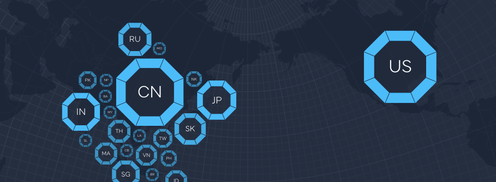

The United States has registered the largest fall in relative regional power of any country in the Indo-Pacific during the last year, according to the Lowy Institute’s Asia Power Index.
The index, started in 2018, ranks 26 countries and territories according to the power they wield in the region. It uses multiple indicators across military capability and defence networks, economic resources and relationships, diplomatic and cultural influence, and resilience and future resources.
While the US is still the most powerful country in the region, it has gone from a 10 point lead over China two years ago to five points in 2020, scoring a rating of 81.6.
“Despite its continuing pre-eminence, US standing has waned in all but one of the eight Index measures,” the report says.
It says the closing power disparity with China suggests America, “far from being the undisputed unipolar power, can more correctly be described as the first among equals in a bipolar Indo–Pacific”.
The US lost the most points in measures where China is ahead – economic relationships, economic capability, and diplomatic influence.
Despite the US’s significant advantages, “the current US administration’s unilateral inclinations mean the United States is an underachiever in its ability to wield broad-based power in Asia. In addition, the coronavirus has contributed to a loss of US prestige.
"America has suffered the largest reputational hit in the region for its domestic and international handling of the COVID-19 pandemic.”
The report says while China has been “diplomatically diminished” by COVID it is “holding ground in its overall power”.
“In conditions where most countries are less powerful than a year ago, China’s fast economic rebound from COVID-19 will widen the power differentials between itself and the rest of the region.”
China, which ranks second at 76.1 on the regional power index, has an unchanged score.
“China leads in four of the eight measures of power: economic capability, diplomatic influence, economic relationships and future resources. But the country delivers inconsistent results in the other measures, with stark strengths and weaknesses. By contrast, US performance in the Index still appears more rounded.”
Australia and two other middle powers – Vietnam and Taiwan – were the only countries to gain in comprehensive power in 2020.
“Their competent handling of the COVID-19 pandemic was a necessary, but not sole condition for improving their regional standing.”
Australia ranks number 6 on the index with an overall rating of 32.4. It was previously 7th and has overtaken South Korea. Its greatest improvement was in cultural influence.
“Australia’s comparative advantages as a middle power are most evident in its defence networks, where it ranks second behind the United States. Despite a far more modest military capability, Australia is ranked ahead of the United States for its defence diplomacy with non-allied partners.
"Canberra has led the way in forging variable geometry — bilateral, trilateral, quadrilateral and ‘quad plus’ — defence partnerships with a diverse range of countries, including India, Japan, Indonesia and Vietnam. Australia carries less ‘great power baggage’ and has demonstrated it can be far nimbler in Southeast Asia than its US ally.”
But the report warns of the effect of the contraction of migration to negative levels.
“Dropping out of the demographic ‘Goldilocks zone’ will have adverse implications for Australia’s fundamentals as a young and growing middle power. The failure to reverse this trend in the next few years would result in a smaller, poorer and ultimately less secure nation.”
The report also concludes that Japan will take much of the next decade to recover economically from COVID. It says that of all the countries, “India’s economy has lost the most growth potential through the damage inflicted by the pandemic”.







