


 China vs. NASA: The New Moon Race and What's at Stake by 2030
  SpaceX Prioritizes Moon Mission Before Mars as Starship Development Accelerates
  SoftBank Launches $11 Billion Bond Sale to Fund OpenAI Investment
  Scott Bessent Eyed as Trump’s New AI Czar
  Senate Sets December 8 Vote on Trump’s NASA Nominee Jared Isaacman
  Burnham Eyes UK Leadership Role in AI Ahead of Trump Meeting
  Big AI wants to slow down AI research. Is it a safety pause or a strategic retreat?
  China Reviews Broadcom Switch Use in State Data Centres
  Guterres Urges Stronger Global AI Safeguards Ahead of UN Assembly
  Cathie Wood Backs AI Slowdown as Safety Concerns Grow
  Trump Administration Releases New UFO Files and Apollo Mission Records
  Japan, U.S. Discuss $19 Billion GlobalFoundries Chip Plant
  OpenAI Urges US-Led Global Standards for Frontier AI
  Trump Plans Federal AI Force and AI Czar


 Add as a preferred source on Google
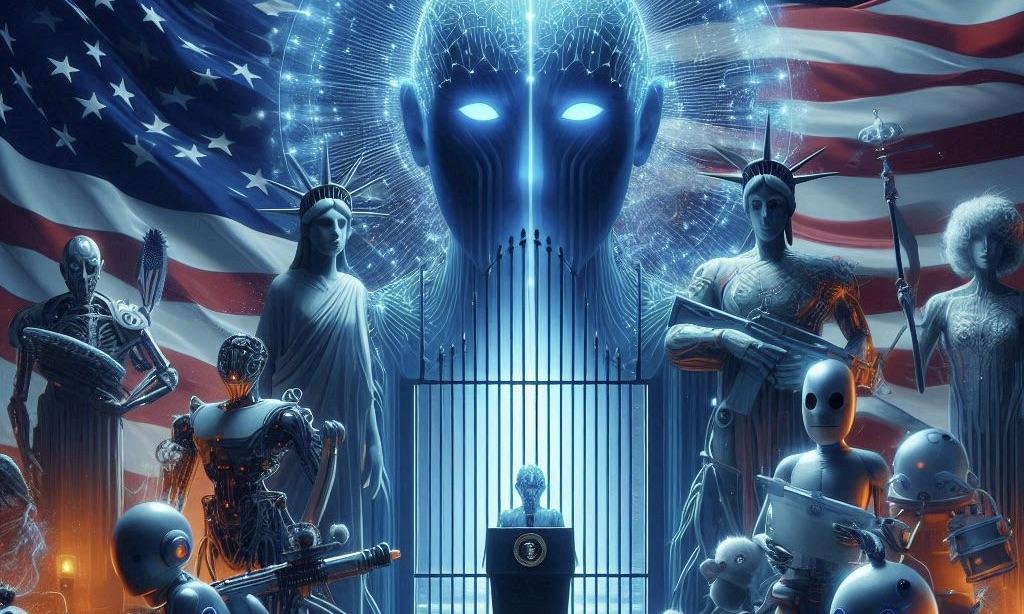
The U.S. government has taken a significant step in AI development by securing early access to new models from OpenAI and Anthropic. This move, part of a broader strategy to geofence AI technology, aims to ensure safe and trustworthy innovation through collaboration and rigorous evaluation.
The U.S. Takes a Major Step in AI Security by Partnering with OpenAI and Anthropic for Early Model Access
As artificial intelligence (AI) becomes more widely acknowledged as a foundation for future economic development, governments worldwide are implementing measures to geofence critical components of this emerging technology, referred to as "sovereign AI plays." In this context, the United States has substantially strived toward promoting "safe and trustworthy AI innovation" by establishing agreements with OpenAI and Anthropic.
The U.S. Department of Commerce's AI Safety Institute has signed a Memoranda of Understanding (MoUs) with OpenAI and Anthropic, marking the initial stage in geofencing America's AI technology. These agreements, which emphasize 'AI safety research, testing, and evaluation,' are a testament to the collaborative efforts to ensure the safety of AI innovation.
As a result of the MoUs, the AI Safety Institute will have access to "major new models from each company before and following their public release." This early access will allow the U.S. government to assess the capabilities of new AI models and collaborate with their developers to reduce potential hazards. It is important to note that the U.S. AI Safety Institute intends to work closely with its counterpart in the UK to mitigate and resolve the risks associated with AI innovation at OpenAI and Anthropic.
NVIDIA Projects Billions in Revenue as Sovereign AI Becomes Key to National Security Strategies
Parallel to this, NVIDIA's CFO, Colette Kress, emphasized the emergence of sovereign AI during the company's earnings call, stating that "sovereign AI revenue will reach low double-digit billions this year."Jensen Huang, CEO of NVIDIA, provided additional insight into this phenomenon, highlighting the necessity for "sovereign countries" to establish their own AI infrastructure to retain control over their digital intelligence.
According to Wccftech, Huang believes that the transition of data centers to accelerated computing to manage the increasing AI workload presents a $1 trillion opportunity. Governments are anticipated to establish national control or oversight over this transformative technology as sovereign AI initiatives become essential to national security in major economies worldwide. Consequently, these initiatives are anticipated to drive a substantial portion of this investment in the coming years.







