


 SEC Seeks ISS Client Voting Records in Proxy Adviser Probe
  North Korea Fires Two Ballistic Missiles From Wonsan
  United Russia Leads Russia Election as Ukraine Drones Hit Moscow
  Trump Administration Removes Confederate Memorial Criticism From Arlington Website
  ICE Agent Arrested in Minneapolis Over Venezuelan Man Shooting
  Trump Administration Prepares Sanctions Against Entire ICC
  Who should own the knowledge that underpins AI technology?
  Michelle Bachelet Withdraws From UN Secretary-General Race
  Carney Condemns Belleville Synagogue Shooting That Wounded Police Officer
  Burnham Eyes UK Leadership Role in AI Ahead of Trump Meeting
  Lula Meets Mamdani in New York as Elections Approach
  US Plans Two New Military Bases in Greenland Under Arctic Deal
  FDA Weighs Safety Standards for Psychedelic Therapies
  Trump Grants Clemency to Jay-Z Associate Emory Jones
  US Judge Dismisses Imran Ahmed Deportation Lawsuit
  Canada Unveils Bill to Fast-Track Major Resource Projects
  Diana’s Brother Backs Security for Harry and Meghan


 Add as a preferred source on Google
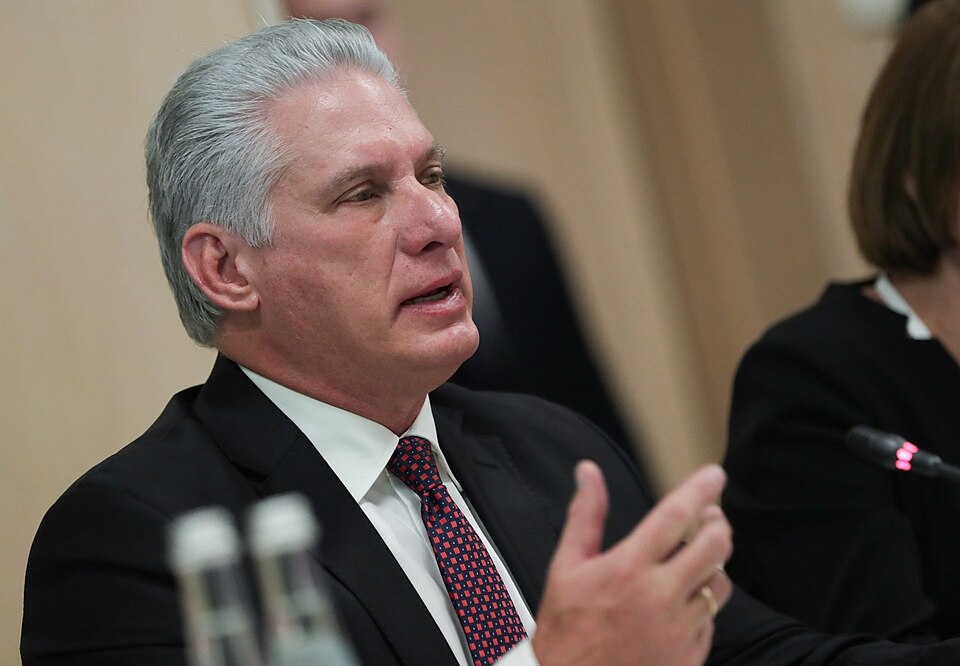
The United States has imposed new sanctions on Cuban President Miguel Diaz-Canel, along with several individuals and entities linked to Cuba’s government, according to information published by the U.S. Treasury Department. The move marks the latest escalation in Washington’s efforts to increase pressure on the island nation’s communist leadership.
The sanctions target Diaz-Canel, 66, who has served as Cuba’s president since 2018 after succeeding Raul Castro. Also included in the sanctions package are four additional individuals and five entities. Among those affected are Diaz-Canel’s wife, Lis Cuesta Peraza, two members of the Castro family, and Cuba’s Ministry of the Revolutionary Armed Forces.
Cuban authorities did not immediately comment on the U.S. action. However, Cuban Foreign Minister Bruno Rodriguez strongly criticized the sanctions, calling them “despicable” and describing them as another example of U.S. interference in Cuba’s internal affairs. In a statement shared on social media, Rodriguez argued that attempts to create conflict between the two countries would ultimately fail.
The announcement comes as U.S. President Donald Trump reiterated Washington’s position on Cuba, telling reporters that the United States wants the country to be “a nicely run country.” The latest measures highlight the ongoing tensions between the two governments and signal continued efforts by the U.S. administration to hold Cuban leaders accountable through economic and diplomatic pressure.
The sanctions follow a series of recent actions taken by Washington against Cuban officials. In the previous month, the United States sanctioned 11 Cuban officials, including the communications minister, several senior military leaders, and the country’s primary intelligence agency.
In a separate development, U.S. authorities charged former Cuban leader Raul Castro with murder over his alleged role in the 1996 incident in which Cuban military aircraft shot down planes operated by a Cuban exile organization.
The latest sanctions underscore the increasingly strained relationship between the United States and Cuba, with both sides maintaining sharply different views on governance, human rights, and regional security.







