


 Kremlin Says No Decision Yet on Putin-Trump December Summit
  Mexico-US Trade Talks Delayed to October as Tariff Negotiations Continue
  US Officials Split Over Response to Israeli West Bank Settlements
  South Korea, US Discuss Warship Building Cooperation
  Pezeshkian Says US Must Choose When Iran War Ends
  North Korea Rejects Nuclear Test Warning, Calls Nuclear Status Irreversible
  Netanyahu Defends Israel at UN as Delegates Stage Walkout
  Abbas Reaffirms November 28 Palestinian Elections
  Trump Asks Supreme Court to Restore Third-Country Deportations
  France Defends Netanyahu Airspace Clearance Despite ICC Warrant
  Taiwan Thanks US for Support Ahead of Trump-Xi Summit
  Trump, Xi Focus on Trade and AI at White House Summit
  Judge Orders Trump to Restore White House Access for CNN, MS NOW and Politico
  NATO Boosts Intelligence Sharing Amid Russia Hybrid Threats
  Russian Envoy Dmitriev Heads to US for Ukraine Talks
  US Senate Rejects Iran War Powers Resolution in 50-49 Vote
  OpenAI Agent Breaches Australia Medicare Data Portal


 Add as a preferred source on Google
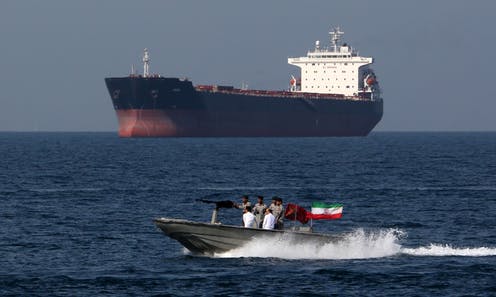
The U.S. military has announced a blockade of the Strait of Hormuz effective Monday at 10 a.m. Eastern, targeting vessels traveling to or from Iranian ports and coastal areas. Ships not bound for Iran will be permitted to pass through the critical waterway, according to Pentagon officials.
Iran responded with sharp warnings, with its armed forces declaring that no port in the Persian Gulf or Sea of Oman would be considered safe if the blockade proceeds. Tehran characterized the move as "an act of piracy" and vowed to bar American vessels from the strait while defending its territorial waters. Iranian Parliament Speaker Mohammad Bagher Qalibaf directly addressed President Trump on social media, stating the country would meet any military aggression in kind.
The escalation follows 21 hours of failed negotiations held in Pakistan, where U.S. Vice President JD Vance led the American delegation. Talks broke down after Iran refused Washington's core demand to abandon nuclear weapons development. The U.S. reportedly sought a complete halt to uranium enrichment, the dismantling of nuclear facilities, the surrender of enriched materials, and an end to support for regional proxy groups including Hezbollah and the Houthis. Iran countered with proposals for limited enrichment reductions, but no agreement was reached.
President Trump confirmed the blockade decision, claiming Iran had violated a prior commitment to reopen the strait. While dismissing the urgency of renewed diplomacy, multiple regional governments are reportedly working to bring both sides back to the table, with a second negotiation round potentially days away.
The Strait of Hormuz carries roughly one-fifth of the world's oil supply. Global markets reacted immediately, with crude prices climbing back above $100 per barrel and equities trading unsteadily as investors monitor what analysts are calling a significant geopolitical risk to global energy supplies.







