


 Europe Warns Russia Is Escalating Hybrid Attacks Across NATO
  US Invites Putin to Miami G20, Opening Door to Trump Summit
  Taiwan Thanks US for Support Ahead of Trump-Xi Summit
  US Backs Musk in Fight Against EU’s €120 Million X Fine
  US, China Extend Trade Truce to Jan. 10 Ahead of Trump-Xi Summit
  Yemen Violence Displaces 130,000 as Civilian Toll Rises
  Mexico-US Trade Talks Delayed to October as Tariff Negotiations Continue
  Russian Missile and Drone Attack on Kyiv Kills Two, Damages Maternity Hospital
  OpenAI Agent Breaches Australia Medicare Data Portal
  South Korea, US Discuss Warship Building Cooperation
  US Senate Rejects Iran War Powers Resolution in 50-49 Vote
  North Korea Rejects Nuclear Test Warning, Calls Nuclear Status Irreversible
  Judge Orders Trump to Restore White House Access for CNN, MS NOW and Politico
  Abbas Reaffirms November 28 Palestinian Elections
  Netanyahu Defends Israel at UN as Delegates Stage Walkout
  NATO Boosts Intelligence Sharing Amid Russia Hybrid Threats
  Pezeshkian Says US Must Choose When Iran War Ends


 Add as a preferred source on Google
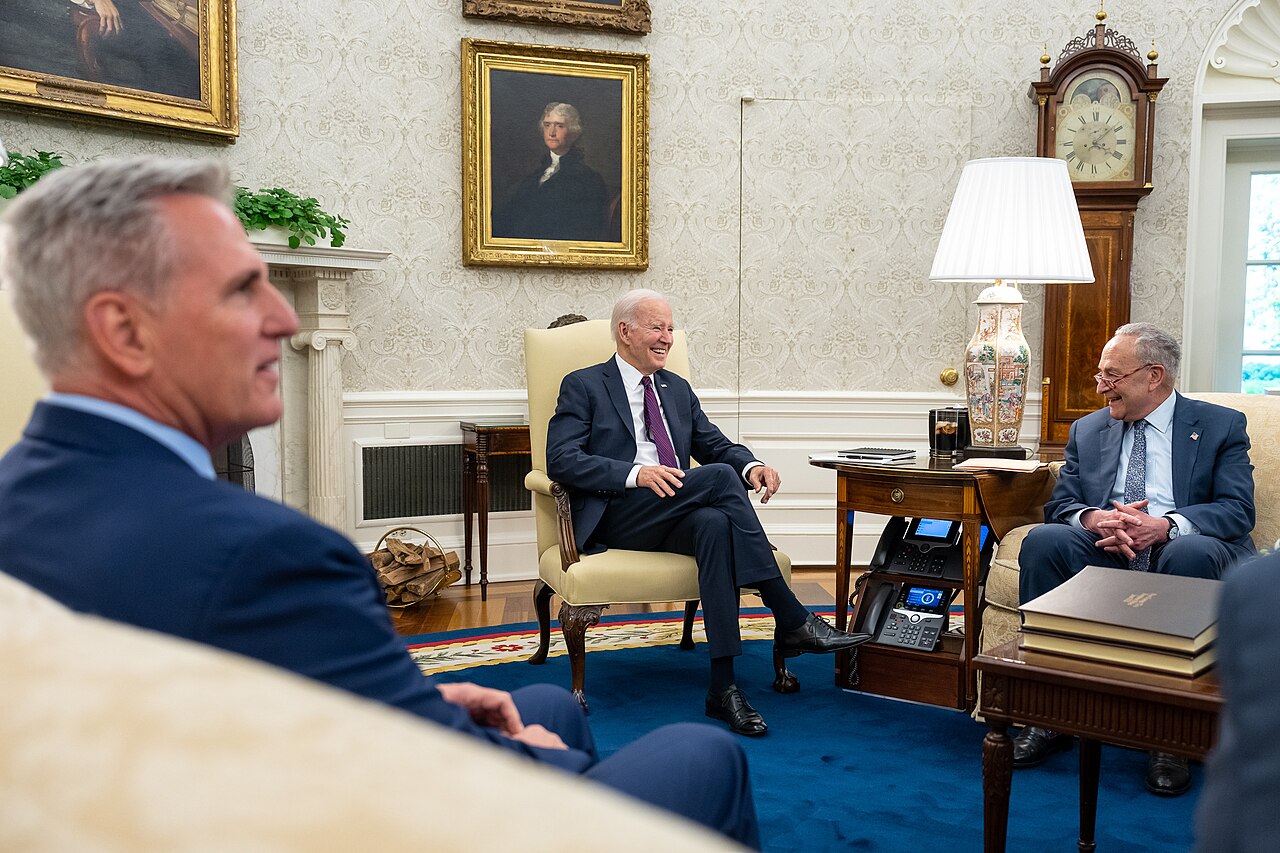
Following several rounds of talks, US President Joe Biden and Republican House Speaker Kevin McCarthy have reached a deal that would clear the way for Congress to raise the debt ceiling. The deal is likely going to draw the ire of lawmakers of both parties due to the concessions that were made.
On Saturday, Biden and McCarthy reached a tentative deal that would allow Congress to raise the country’s debt ceiling ahead of the warned deadline of when the United States runs out of funds and goes into default. The deal, however, is bound to draw the ire of lawmakers from both Democratic and Republican Parties due to the concessions that were made in order to come to the agreement.
Under the deal, the debt ceiling would be raised for two years while capping spending over that time. The deal was made “in principle” in a phone conversation between Biden and McCarthy that lasted 90 minutes. Biden later issued a statement, saying that the agreement reached with the Republican Speaker “represents a compromise, which means not everyone gets what they want.”
Biden said the agreement was “good news for the American people because it prevents what could have been a catastrophic default and would have led to an economic recession, retirement accounts devastated, and millions of jobs lost.”
Speaking at the Capitol, McCarthy told reporters that the deal reached with Biden was “worthy of the American people.” McCarthy said he expects the legislation to be done on Sunday before speaking with Biden again and holding a vote on the deal by Wednesday.
McCarthy also predicted on Sunday that his fellow House Republicans, who currently hold the chamber’s majority, would support the deal reached with the Democratic president. Biden later expressed confidence that the legislation to lift the debt ceiling would pass Congress to avoid a government default. Biden also said there were no points of contention in the deal when pressed by reporters.
Members of the hardline Republican Freedom Caucus said they plan to try and stop the agreement from passing the House in the upcoming vote on Wednesday. However, McCarthy dismissed the threats of opposition, saying that a majority of the House Republican caucus supported the deal. McCarthy added that bipartisan support is needed for the legislation to get to Biden’s desk.
Photo: White House/Wikimedia Commons(CC by 2.0)








,_House_Speaker_Kevin_McCarthy_(R-CA)_to_discuss_the_debt_ceiling_on_May_9,_2023_in_the_Oval_Office_-_P20230509AS-0867.jpg)