


 Oil Prices Fall on U.S.-Iran Hormuz Deal Hopes
  Pope Leo Warns UN, Multilateral Groups Face Crisis
  Iran Rejects Nuclear Concessions in Hormuz Deal
  Trump Warns China Against Supporting Iran in Xi Talks
  Japanese Yen Rebounds as Trump Flags Currency Weakness
  France Defends Netanyahu Airspace Clearance Despite ICC Warrant
  Netanyahu’s Brief US Trip Highlights Strains With Trump
  Saudi Arabia Seeks Military Support as Houthi Attacks Escalate
  Soybean Futures Slip as Traders Await Trump-Xi Trade Signals
  Asian Currencies Mixed as Dollar Holds Near Two-Month High
  Netanyahu Defends Israel at UN as Delegates Stage Walkout
  Putin Says Ukraine Peace Proposals Remain on Table
  NATO Boosts Intelligence Sharing Amid Russia Hybrid Threats
  EU Defence Build-Up Too Slow for 2030 Russia Readiness Goal
  Dollar Holds Near Two-Month High as Yen Approaches 160
  North Korea Warns South Korea Over US-Led Defense Role
  U.S. Dollar Hits Two-Month High as Oil, Treasury Yields Surge


 Add as a preferred source on Google
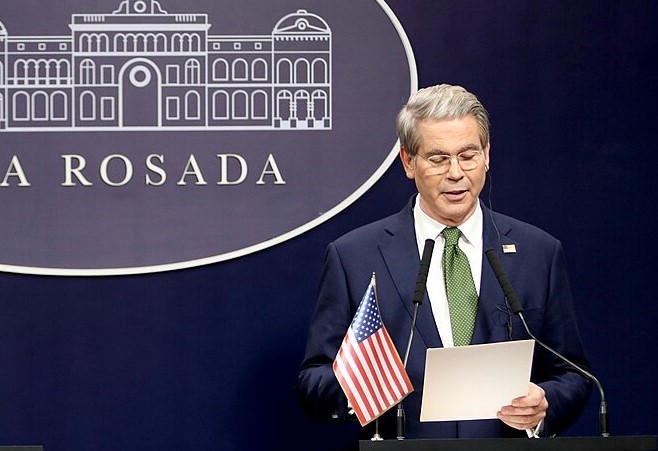
The United States has announced a $20 billion financial support package for Argentina, signaling strong backing for President Javier Milei’s economic reform agenda. U.S. Treasury Secretary Scott Bessent emphasized that the initiative is not a bailout but a strategic investment aimed at stabilizing Argentina’s struggling economy. He stated that the Argentine peso is currently undervalued and that the U.S. is actively purchasing pesos to support its exchange rate, affirming that the existing exchange rate band is appropriate.
Bessent underscored that stabilizing Argentina is a top priority for Washington, describing the move as part of a broader effort to strengthen regional stability and counter rising Chinese influence in Latin America. “We don’t want another failed or China-led state in Latin America,” he remarked, highlighting the geopolitical motivations behind the financial package.
In response, a spokesperson for the Chinese Embassy in Argentina criticized the U.S. approach, urging Washington to focus on genuine development efforts in Latin America and the Caribbean rather than hindering other nations’ cooperation. The spokesperson reiterated that the region is “not anyone’s backyard” and insisted that China’s partnerships with Latin American nations are based on mutual respect and shared growth.
Meanwhile, global trade tensions escalated after former President Donald Trump threatened to impose a “massive increase” in tariffs on Chinese imports. Trump’s warning followed Beijing’s new export controls on rare earth minerals—materials vital to the tech and defense industries. He also hinted that he might cancel his upcoming meeting with Chinese President Xi Jinping amid the rising dispute.
The developments underscore a growing U.S.-China rivalry extending beyond trade into global finance and geopolitical influence, with Argentina now emerging as a key focal point in this power struggle.







