


 Asian Currencies Slip as Dollar Holds Firm, Yen Near Four-Decade Low Ahead of Fed, Jobs Data
  Greece’s Bad Loan Crisis Continues to Limit Credit Access Despite Economic Recovery
  India Manufacturing PMI Slows in June as Demand Weakens Despite Lower Cost Pressures
  Asian Stocks Mixed as South Korea Slides on Profit-Taking, Japan and China Gain on Strong Factory Data
  Trump Suspends Some Morocco Fertilizer Tariffs to Ease U.S. Supply Shortage
  China Manufacturing PMI Edges Higher in June as Exports and AI Investment Boost Growth
  Dollar Slips Ahead of Key U.S. Jobs Data as Fed Rate Outlook, ECB, and Iran Talks Shape Forex Markets
  US Stock Futures Steady as Investors Await Payrolls Data and Monitor Iran Tensions
  Oil Prices Slip as U.S.-Iran Peace Talks and Strait of Hormuz Risks Keep Markets on Edge
  Central Banks Eye Gold, Reduce Dollar Exposure as AI Adoption Accelerates: OMFIF Survey
  Gold Price Hits Annual Low as Fed Rate Hike Bets and Sticky Inflation Weigh on Bullion


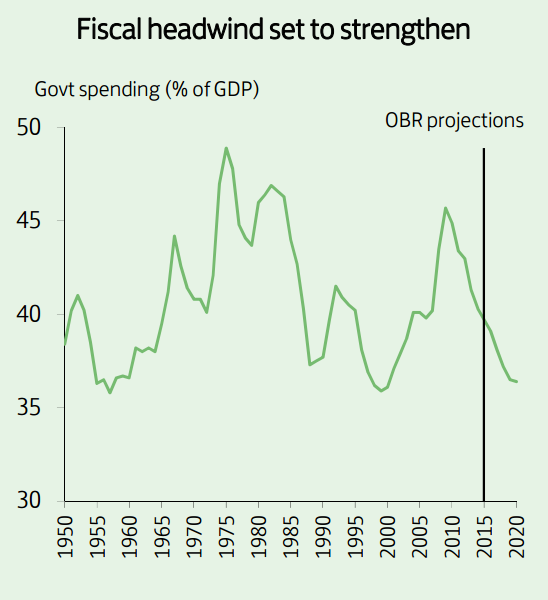
Ongoing fiscal austerity will continue to constrain overall economic growth. While the Chancellor's recent Autumn Statement modestly softened the near-term impact of the cut backs - increasing spending and cutting borrowing relative to the projections in the July Budget - the big picture remains that the bulk of the structural consolidation still lies ahead.
Indeed, the fiscal headwind over the next few years through to 2020-21 is set to be larger than that seen to date since 2010. Latest forecasts also project public spending as a share of GDP dropping to just 36.4% by 2020-21, a low previously only seen briefly in recent history in the late 1950s and late 1990s. The scale of the coming cuts continues to raise doubts about whether they will be achieved. Risks thus remain either of slippage, or of an outsized adverse impact on the economy.

- News

- Economy

- Central Banks
- Investing
- Research
- Roundups
- Digital Currency
- Insights
- Technical Analysis
- Technology
- Business
- Law
- Health
- Nature
- Fintech
- Science
- Topic
- Opinions
- ©Econometrics LLC . All Rights Reserved.
UK fiscal headwind still strong
Thursday, December 10, 2015 10:01 PM UTC
Editor's Picks



- Market Data
Most Popular




