


 US Plans Two New Military Bases in Greenland Under Arctic Deal
  China’s robots can run faster than Usain Bolt – now they are being prepared for war
  Trump Says ‘Freedom’ Is Coming to Cuba
  Lula Meets Mamdani in New York as Elections Approach
  Banking scandal rocks Brazil’s politics and the country’s presidential election in October
  Trump Scales Back Endangered Species Act Protections
  Trump Says U.S.-Iran Peace Deal Near After UN Talks
  Who should own the knowledge that underpins AI technology?
  Yen in Focus as BOJ, Fed Rate Hikes Reshape Currency Markets
  Carney Condemns Belleville Synagogue Shooting That Wounded Police Officer
  Gold Prices Slip as Strong Dollar and Hawkish Fed Pressure Bullion
  European Stocks Slip as Iran Tensions Offset Strong Eurozone Data
  UK Home Asking Prices Rise for First Time Since May
  US, Japan and South Korea Back Taiwan Ahead of Trump-Xi Summit
  Trump to Press Xi on Release of US Nuclear Expert Held in China


 Add as a preferred source on Google
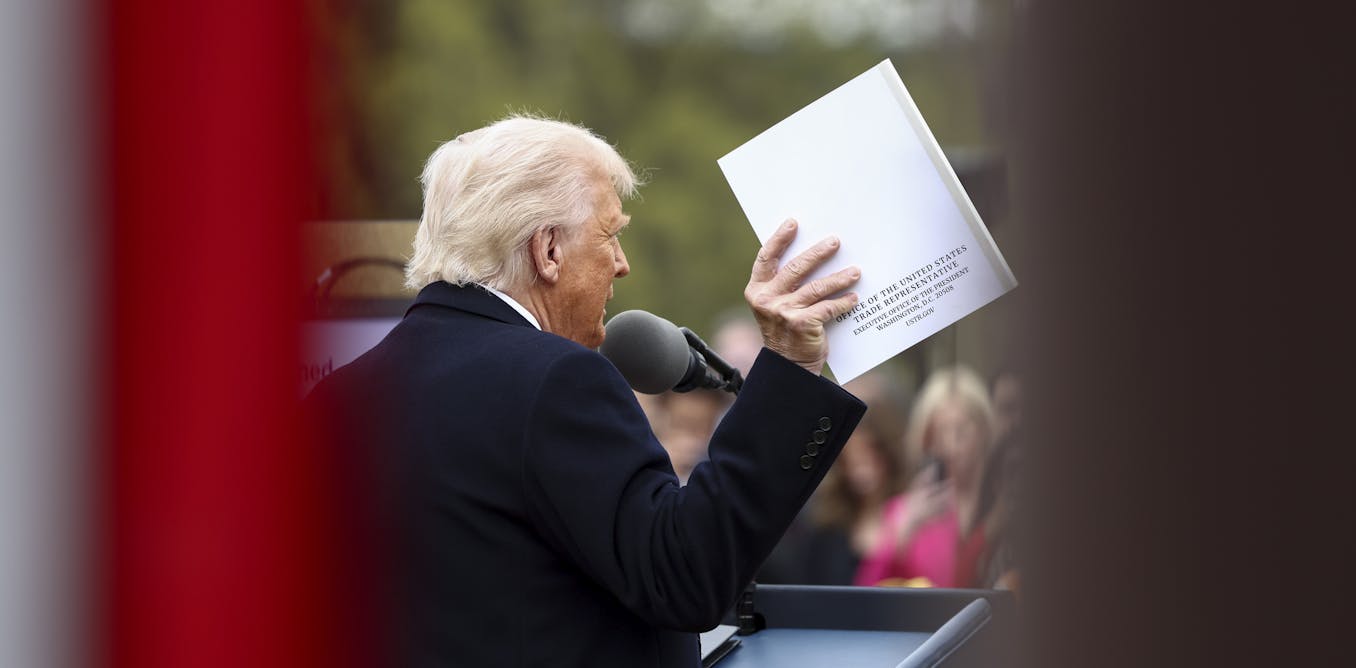

A US court has blocked the so-called “Liberation Day” tariffs that US President Donald Trump imposed on imported goods from around 90 nations. This puts implementation of Trump’s current trade policy in disarray.
The Court of International Trade ruled the emergency authority Trump used to impose the tariffs could not override the role of Congress, which has the right to regulate commerce with other countries.
Tariffs imposed via other legislative processes such as those dealing with cars, steel and aluminium continue to stand. But the broad-based “reciprocal” tariffs will need to be removed within 10 days of the court’s ruling. Trump administration officials have already filed plans to appeal.
The ruling calls into question trade negotiations underway with more than 18 different nations that are trying to lower these tariffs. Do these countries continue to negotiate or do they wait for the judicial process to play out?
The Trump administration still has other mechanisms through which it can impose tariffs, but these have limits on the amount that can be imposed, or entail processes which can take months or years. This undermines Trump’s preferred method of negotiation: throwing out large threats and backing down once a concession is reached.
Emergency powers were a step too far
The lawsuits were filed by United States importers of foreign products and some US states, challenging Trump’s use of the International Emergency Economic Powers Act of 1977.
The lawsuits argued the national emergencies cited in imposing the tariffs – the trade deficit and the fentanyl crisis – were not an emergency and not directly addressed by the tariff remedy. The court agreed, and said by imposing tariffs Trump had overstepped his authority.
The ruling said the executive orders used were “declared to be invalid as contrary to law”.
The act states the president is entitled to take economic action in the face of “an unusual and extraordinary threat”. It’s mainly been used to impose sanctions on terrorist groups or freeze assets from Russia. There’s nothing in the act that refers to tariffs.
The decision means all the reciprocal tariffs – including the 10% tariffs on most countries, the 50% tariffs Trump was talking about putting on the EU, and some of the Chinese tariffs – are ruled by the court to be illegal. They must be removed within 10 days.
The ruling was based on two separate lawsuits. One was brought by a group of small businesses that argued tariffs materially hurt their business. The other was brought by 12 individual states that argued the tariffs would materially impact their ability to provide public goods.
Some industry tariffs will remain in place
The ruling does not apply to tariffs applied under Section 201, known as safeguard tariffs. They are intended to protect industries from imports allegedly being sold in the US market at unfair prices or through unfair means. Tariffs on solar panels and washing machines were brought under this regulation.
Also excluded are Section 232 tariffs, which are applied for national security reasons. Those are the steel and aluminium tariffs, the automobile and auto parts tariffs. Trump has declared all those as national security issues, so those tariffs will remain.
Most of the tariffs against China are also excluded under Section 301. Those are put in place for unfair trade practices, such as intellectual property theft or forced technology transfer. They are meant to pressure countries to change their policies.
Other trade investigations are still underway
In addition, there are current investigations related to copper and the pharmaceuticals sector, which will continue. These investigations are part of a more traditional trade process and may lead to future tariffs, including on Australia.

The Trump administration is still weighing possible sector-specific tariffs on pharmaceuticals. Planar/Shutterstock
Now for the appeals
The Trump administration has already filed its intention to appeal to the federal appeals court. This process will take some time. In the meantime, there are at least five other legal challenges to tariffs pending in the courts.
If the appeals court provides a ruling the Trump administration or opponents don’t like, they can appeal to the Supreme Court.
Alternatively, the White House could direct customs officials to ignore the court and continue to collect tariffs.
The Trump administration has ignored court orders in the past, particularly on immigration rulings. So it remains to be seen if customs officials will release goods without the tariffs being paid in 10 days’ time.
The administration is unlikely to lay down on this. In addition to its appeal process, officials complained about “unelected judges” and “judicial overreach” and may contest the whole process. The only thing that continues to be a certainty is that uncertainty will drive global markets for the foreseeable future.







