


 Paramount-Warner Bros $110 Billion Deal Draws Antitrust Backlash
  NASA, Boeing Discuss Expanding Starliner Missions
  US Plans Two New Military Bases in Greenland Under Arctic Deal
  United Russia Leads Russia Election as Ukraine Drones Hit Moscow
  Paramount Skydance Faces $30 Million Film Penalty in Warner Bros. Deal
  Diana’s Brother Backs Security for Harry and Meghan
  Rosenblatt Starts Nokia at Buy on AI Networking Growth
  SoftBank Launches $11 Billion Bond Sale to Fund OpenAI Investment
  Japan, U.S. Discuss $19 Billion GlobalFoundries Chip Plant
  Michelle Bachelet Withdraws From UN Secretary-General Race
  US, Denmark and Greenland Set to Sign Arctic Security Deal
  Supertanker Orders Surge as US-Iran War Reshapes Oil Trade
  Carney Condemns Belleville Synagogue Shooting That Wounded Police Officer
  OpenAI Urges US-Led Global Standards for Frontier AI
  AI is supercharging money scams – here’s what you can do to protect yourself
  Nike Earnings at Risk as UBS Cuts Price Target to $42


 Add as a preferred source on Google
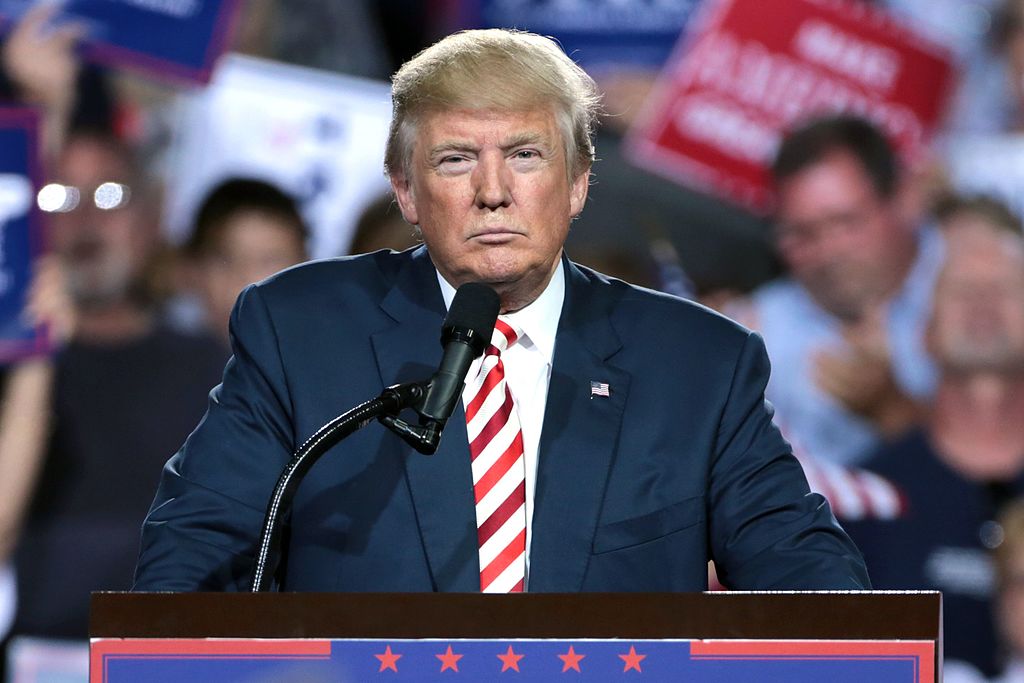
Donald Trump suggested Taiwan should pay the U.S. for defense costs, causing a significant drop in TSMC's stock. The comments sparked debate on U.S.-Taiwan relations and defense expenditures.
Trump's Remarks on Taiwan Defense Payments Impact TSMC Stock; Analysts Warn of Global Economic Risks
U.S. Republican presidential candidate Donald Trump stated on July 17 that Taiwan should compensate the United States for its defense expenditures, as the country does not provide any assistance. This statement resulted in a decline in the stock price of Taiwanese semiconductor manufacturer TSMC.
"I know the people very well and respect them greatly. They did take about 100% of our chip business. I think, Taiwan should pay us for defence," Trump said in an interview with Bloomberg Businessweek on June 25.
"You know, we're no different than an insurance company. Taiwan doesn't give us anything."
Analysts believe any conflict over Taiwan would have a catastrophic impact on the global economy. TSMC is the leading manufacturer of advanced chips in various applications, including AI applications, smartphones, and fighter aircraft.
In response to Trump's remarks, Taiwanese Premier Cho Jung-tai stated that despite the absence of formal ties, they maintain cordial relations with the United States and are committed to strengthening their defenses, according to Reuters.
"Taiwan has steadily strengthened its defense budget and demonstrated its responsibility to the international community," he said at a routine news conference in Taipei.
"We are willing to take on more responsibility; we are defending ourselves and ensuring our security."
Taiwan's most significant international supporter and arms supplier is the United States; however, no formal defense agreement exists. Nevertheless, the United States is legally obligated to provide Taiwan with the necessary resources to defend itself.
Taiwan's government has prioritized defense modernization, including developing its submarines. It has repeatedly stated that the island's security is in its own hands.
To exert pressure on the democratically governed island of Taiwan, which China regards as its territory, the island has complained of repeated military activity by Beijing over the past four years. Taiwan rejects China's sovereignty claims.
The Chinese government has been displeased by comments made by U.S. President Joe Biden, which appeared to imply that the United States would defend Taiwan in the event of an attack. This represents a departure from the long-standing U.S. stance of "strategic ambiguity."
Since 1979, when the United States shifted its recognition to Beijing and terminated a mutual defense treaty, Washington and Taipei have not maintained an official diplomatic or military relationship.
Analysts believe a conflict over Taiwan would devastate the global economy, as TSMC is the leading manufacturer of advanced chips utilized in various applications, including AI applications, smartphones, and fighter aircraft.
TSMC, in a quiet period in anticipation of its second-quarter earnings report, did not respond immediately.
TSMC Shares Drop Over 2% Following Trump's Comments; Taiwan Faces Defense Delays Amid Rising Tensions
Taiwan Semiconductor Manufacturing Co. (TSMC), the world's largest contract chipmaker and a significant supplier to Apple and Nvidia, experienced a more than 2% share decline during July 17 morning trading. The overall market decreased by approximately 0.4%.
"Trump's comments were plainly blunt. We see it as political rhetoric," said Allen Huang, a Mega International Investment Service vice president. "TSMC is an excellent company, and it has won out in the market over many rival companies in the United States."
Most manufacturing will continue in Taiwan even though TSMC is investing billions in constructing new factories overseas. This includes $65 billion for three facilities in the U.S. state of Arizona.
Taiwan also has a backlog of arms deliveries from the United States, estimated to be worth approximately $19 billion. U.S. officials and politicians have consistently pledged to expedite the process.
Taiwan has complained about delays in delivering U.S. weapons, including Stinger anti-aircraft missiles, since 2022. Manufacturers have prioritized providing these weapons to Ukraine to assist it in combating the invading Russian forces.
The U.S. Congress passed a comprehensive foreign aid package in April, which included arms support for the island. This was the result of a sudden change in course by House Republican leaders, who permitted a vote on the $95 billion in aid, primarily military assistance, for Ukraine, Israel, Taiwan, and U.S. partners in the Indo-Pacific zone.
China conducted two war exercises around the island shortly after President Lai Ching-te assumed office in May. The government justified the action as "punishment" for his inauguration speech, which Beijing criticized for its separatist content.
However, China has also been employing grey zone warfare against Taiwan, employing irregular tactics to exhaust a foe by maintaining them constantly on alert without resorting to open combat. This encompasses the dispatch of balloons over the island and the nearly daily operation of air force missions near Taiwan.
China has never renounced the use of force to subjugate Taiwan. Lai, who maintains that the Taiwanese people are the sole ones who have the authority to determine their future, has made numerous attempts to negotiate but has been rejected.







