


 Netanyahu Defends Israel at UN as Delegates Stage Walkout
  South Korea, US Discuss Warship Building Cooperation
  Trump, Xi Focus on Trade and AI at White House Summit
  US Dollar Hits Two-Month High as Fed Rate Hike Bets Rise
  Gaza Faces Evacuation Crisis as War-Damaged Buildings Risk Collapse
  China’s ‘Lipstick King’ Says AI Won’t Replace Livestream Hosts
  Mexico-US Trade Talks Delayed to October as Tariff Negotiations Continue
  Kremlin Says No Decision Yet on Putin-Trump December Summit
  European Stocks Slip as Iran Tensions Offset Strong Eurozone Data
  RBI Uses $10 Billion Currency Swaps to Drain Excess Rupee Liquidity
  North Korea Rejects Nuclear Test Warning, Calls Nuclear Status Irreversible
  Gold Prices Fall as Treasury Yields Rise on Fed Rate Hike Bets
  US, China Extend Trade Truce to Jan. 10 Ahead of Trump-Xi Summit
  Ghana Says Western Support Growing for Slave Trade Reparations
  U.S. Treasury Yields Surge as 30-Year Hits 22-Year High
  US Stock Futures Fall as Treasury Yields Surge Ahead of Trump-Xi Summit
  US Officials Split Over Response to Israeli West Bank Settlements


 Add as a preferred source on Google
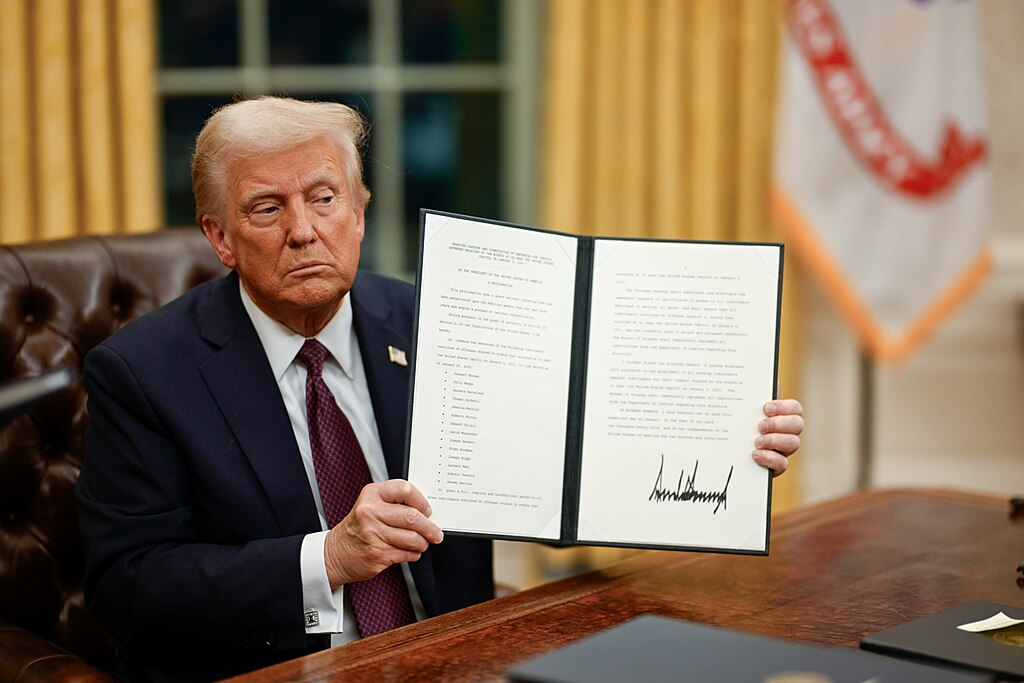
U.S. President Donald Trump announced that tariffs on automobiles are coming “very soon,” signaling a continuation of his aggressive trade strategy. While initially set to unveil sweeping tariffs on April 2, Trump suggested that not all levies would be imposed immediately, and some nations may receive exemptions—a shift Wall Street welcomed as a sign of flexibility.
Despite this, Trump added pressure by imposing a 25% secondary tariff on any country importing oil or gas from Venezuela, pushing oil prices higher. He argued the tariffs are necessary for national security, especially in times of conflict, and said the U.S. must ensure access to key goods like autos, pharmaceuticals, and aluminum.
While specific dates for tariffs on sectors like semiconductors and pharmaceuticals remain undecided, Trump emphasized their inevitability. He also touted a $21 billion investment from South Korea’s Hyundai, including a $5.8 billion steel plant in Louisiana, as evidence of foreign companies responding to his America-first policies.
Trump labeled April 2 as “Liberation Day” for the U.S. economy, aiming to cut the $1.2 trillion trade deficit by matching global tariff levels and countering non-tariff barriers. Reports suggest that the administration may focus the initial round of tariffs on a group dubbed the “Dirty 15”—countries with the highest trade surpluses and restrictive trade practices.
Countries like the UK and India are lobbying for exemptions, but officials warn progress may be too slow. The U.S. Trade Representative highlighted 20 countries of “particular interest,” covering 88% of U.S. trade, including China, the EU, Korea, and Japan.
Markets closed higher Monday, with the S&P 500 gaining nearly 1.8%, as investors bet that the tariffs may be narrower than feared.







