


 Europe Warns Russia Is Escalating Hybrid Attacks Across NATO
  Trump Administration Removes Confederate Memorial Criticism From Arlington Website
  Russian Missile and Drone Attack on Kyiv Kills Two, Damages Maternity Hospital
  France Defends Netanyahu Airspace Clearance Despite ICC Warrant
  Trump Bans CNN, MS NOW and Politico From White House
  NATO Boosts Intelligence Sharing Amid Russia Hybrid Threats
  Ghana Says Western Support Growing for Slave Trade Reparations
  North Korea Warns South Korea Over US-Led Defense Role
  EU Defence Build-Up Too Slow for 2030 Russia Readiness Goal
  US Resumes Immigrant Visa Processing for Hungary, Poland
  US Immigration Arrests Surge as Deportations Lag Behind
  Saudi Arabia Shuts East-West Oil Pipeline After Drone Attack
  Kremlin Says No Decision Yet on Putin-Trump December Summit
  US Bans Canadian Alcohol, Motorcycles as Trade War Escalates
  US, China Extend Trade Truce to Jan. 10 Ahead of Trump-Xi Summit
  Australia Tightens Student Visa Rules, Targets Migration Cut by 2028
  China Reviews Broadcom Switch Use in State Data Centres


 Add as a preferred source on Google
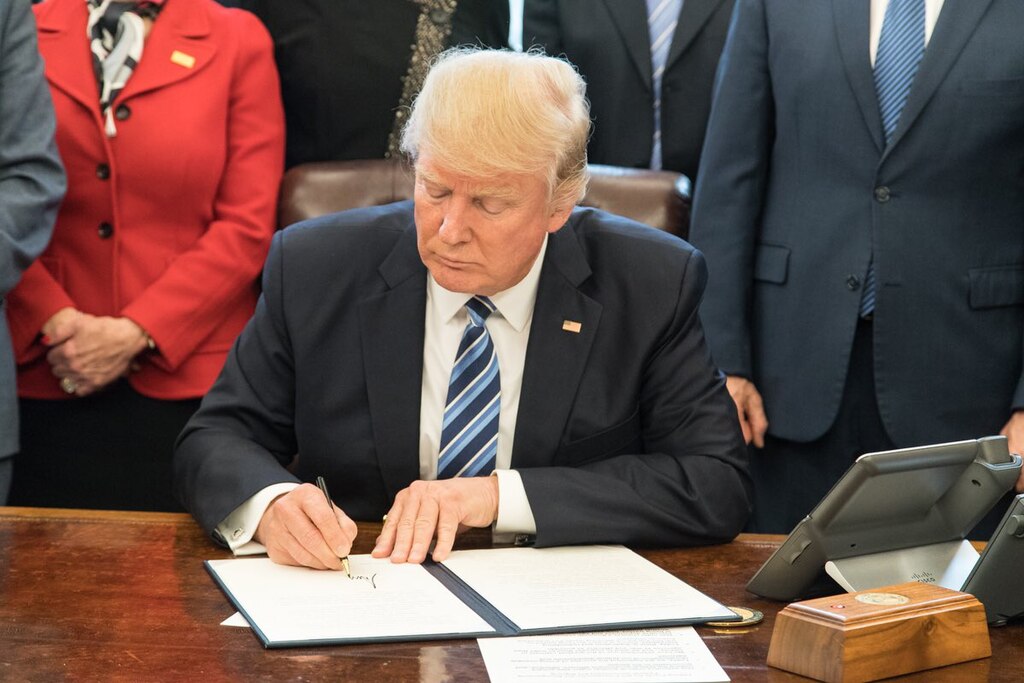
President Donald Trump issued a new executive order Thursday to remove what he called “improper, divisive, or anti-American ideology” from the Smithsonian Institution, reigniting debates over U.S. historical narratives. The order, titled “Restoring Truth and Sanity to American History,” assigns Vice President JD Vance, a member of the Smithsonian’s Board of Regents, to oversee the directive.
The move targets exhibits that Trump claims promote a “false revision” of American history. The National Museum of African American History and Culture was singled out for allegedly portraying values like “hard work,” “individualism,” and “the nuclear family” as aspects of “White culture.” The order also criticizes the American Women’s History Museum for allegedly planning to highlight male athletes in women’s sports.
Trump’s order aligns with his broader push to dismantle diversity, equity, and inclusion (DEI) initiatives across federal institutions. It also mandates the Interior Department to restore national monuments, memorials, and parks altered in recent years, especially those removed amid racial justice protests.
While the White House declined further comment, neither the Smithsonian nor the museums named have publicly responded. The Smithsonian is the world’s largest museum and research complex, encompassing 21 museums, 14 research centers, and the National Zoo.
Critics view the executive order as a political move to reshape U.S. cultural institutions ahead of the 2024 election. Trump has long opposed the removal of Confederate statues and earlier this year reinstated the names Fort Bragg and Fort Benning, despite federal bans on honoring Confederate generals.
The order intensifies Trump’s cultural legacy ambitions, following his self-appointment as chairman of the Kennedy Center. As debates over historical representation continue, this latest directive could have lasting impact on how American history is taught and remembered.







