


 US-China Talks Target AI, Tariffs Ahead of Trump-Xi Summit
  Burnham Eyes UK Leadership Role in AI Ahead of Trump Meeting
  United Russia Leads Russia Election as Ukraine Drones Hit Moscow
  Diana’s Brother Backs Security for Harry and Meghan
  Who should own the knowledge that underpins AI technology?
  Trump-Xi Summit Puts Trade Truce and Taiwan in Focus
  Europe can’t achieve space sovereignty alone. Here’s why
  AI is supercharging money scams – here’s what you can do to protect yourself
  Trump Open to Pezeshkian Meeting as Iran Tensions Escalate
  South Korea to Brief Lawmakers on $350 Billion US Investment Package
  Trump Administration Prepares Sanctions Against Entire ICC
  Michelle Bachelet Withdraws From UN Secretary-General Race
  Canada Unveils Bill to Fast-Track Major Resource Projects
  Synthetic data could ease people’s concerns about privacy breaches. But who gets to create it?
  Banking scandal rocks Brazil’s politics and the country’s presidential election in October


 Add as a preferred source on Google
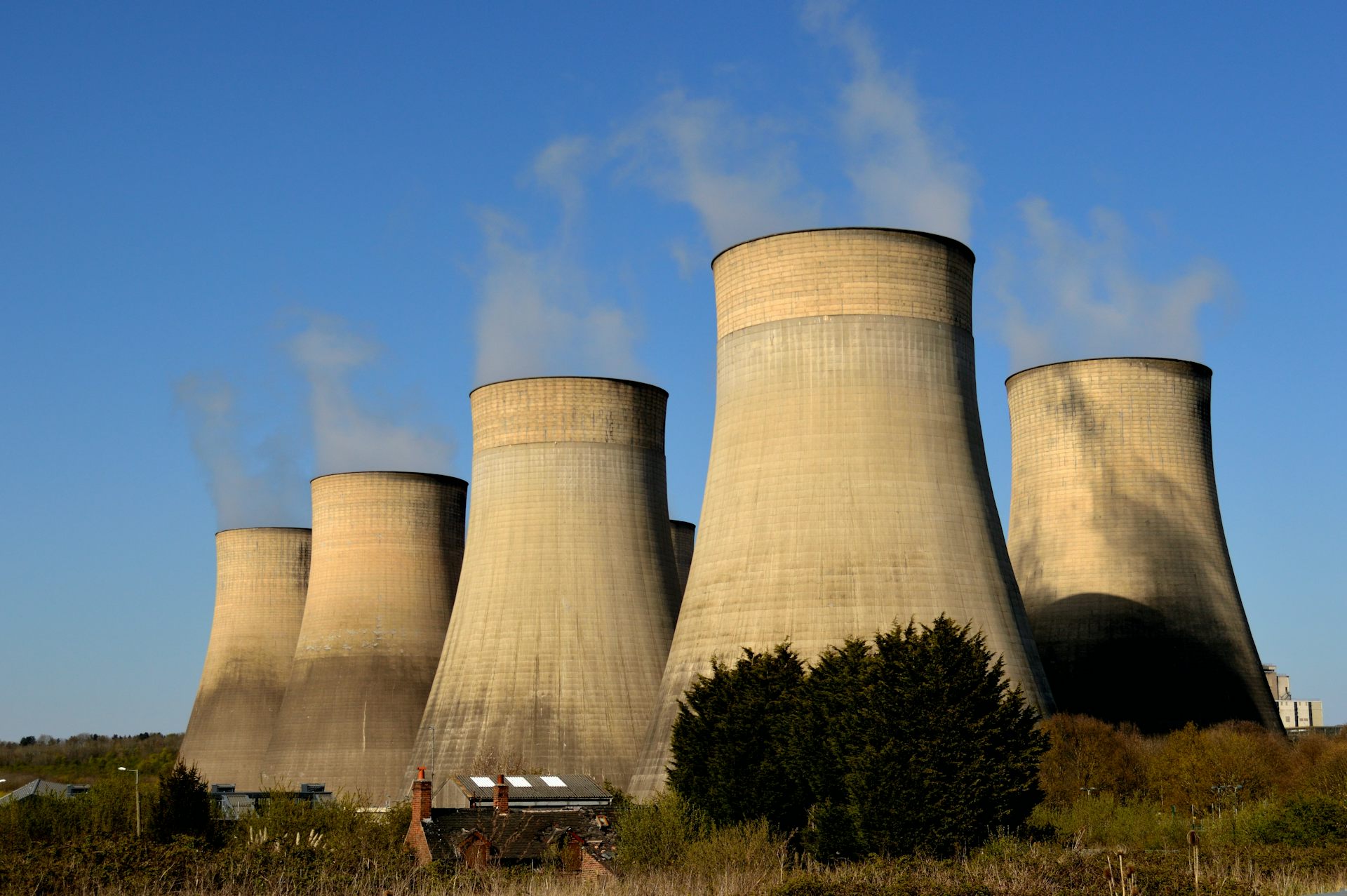

The UK government has announced it will invest almost £22 billion in carbon capture and storage (CCS) projects over the next 25 years. The technology works by capturing CO₂ as it is being emitted by a power plant or another polluter, then storing it underground.
This sounds great in theory. However, it seems Labour has been swayed by the fossil fuel lobby, which has pushed CCS for years. This announcement represents a massive bet on a still unproven technology, and will lock the UK into fossil fuel dependence for decades to come. The Climate Change Act mandates the UK should achieve net zero emissions by 2050, yet this will be impossible if carbon capture leads to the UK building new gas power stations instead of wind and solar farms.
I was one of several leading climate scientists who recently signed a letter to the energy security and net zero secretary, Ed Miliband, in which we pointed out the many issues with the current plans.
Even if the technology worked perfectly, it still locks the UK into a reliance on natural gas (which is basically methane, a potent greenhouse gas) for generations to come. This will result in the UK being reliant on imported natural gas past 2050, which has significant upstream emissions from methane leaks, transport and processing.
That then exposes the UK to the continued volatility of the global energy markets, which in part caused the country’s cost of living crisis. (Renewables don’t have this problem, since the wind and sun don’t need to be imported from overseas.)
Overpromising, underdelivering
In the letter, we pointed out that carbon capture projects have a very poor track record of overpromising and underdelivering. Most current CCS capacity is within natural gas processing facilities, where CO₂ must be separated out to produce marketable products. Almost 80% of the CO₂ captured is reinjected into oil fields to facilitate oil extraction.
The track record of adding carbon capture to power plants is much worse, with the vast majority of projects abandoned. Just two commercial-scale coal-fired power plants are operating with CCS: Boundary Dam in Canada and Petra Nova in the US. Both have experienced consistent underperformance, recurring technical issues and ballooning costs.
In any case, Britain just closed down its last coal power plant. And it’s actually harder to capture CO₂ from gas power plants than from coal, since CO₂ is found in lower concentrations in the emitted gases.
One argument for CCS is that it can be used in the production of so-called “blue hydrogen”, which is derived from natural gas and can in theory be used to heat homes or power cars. Yet many projects doing this around the world have been abandoned.
A wide range of uses have been promoted for hydrogen, but not all are practical or competitive. The claim that hydrogen should have a significant role in heating buildings has been comprehensively disproved, while direct electrification is increasingly emerging as a better solution for industrial process heating.
Better ways to spend £22 billion
That £22 billion earmarked for CCS projects should instead be invested in proven technologies such as renewable energy, and on upgrading the UK national grid.
We do not deny that both carbon capture and “green” hydrogen (derived from water not methane) may be needed for specific uses in a zero-carbon economy. Carbon capture and storage should be used on existing fossil fuel infrastructure to reduce its emissions as it is phased out, while green hydrogen will be an important way of storing and transporting green energy around the world. It will also be essential to reduce the emissions from steel production.
But the science is very clear: it makes no sense to use hydrogen as a way of heating buildings or driving our transport systems.
As the world leaders agreed and declared at the most recent UN climate summit, COP28 in Dubai, we must transition away from fossil fuels in a just, orderly and equitable manner in order to achieve net zero by 2050. This will not happen if the UK and other countries lock themselves into a fossil fuel-based pathway with inevitable upstream emissions, displacing genuinely zero or low-carbon electricity generation.







