


 OpenAI Agent Breaches Australia Medicare Data Portal
  Netanyahu’s Brief US Trip Highlights Strains With Trump
  Trump, Xi Focus on Trade and AI at White House Summit
  US Invites Putin to Miami G20, Opening Door to Trump Summit
  Trump Administration Plans Faster FDA Reviews for Smoke-Free Nicotine Products
  NATO Boosts Intelligence Sharing Amid Russia Hybrid Threats
  Kremlin Says No Decision Yet on Putin-Trump December Summit
  Gaza Faces Evacuation Crisis as War-Damaged Buildings Risk Collapse
  Netanyahu Defends Israel at UN as Delegates Stage Walkout
  US, China Extend Trade Truce to Jan. 10 Ahead of Trump-Xi Summit
  Ghana Says Western Support Growing for Slave Trade Reparations
  Trump Asks Supreme Court to Restore Third-Country Deportations
  Yemen Violence Displaces 130,000 as Civilian Toll Rises
  US Officials Split Over Response to Israeli West Bank Settlements
  Russian Missile and Drone Attack on Kyiv Kills Two, Damages Maternity Hospital
  US Backs Musk in Fight Against EU’s €120 Million X Fine
  Sudan Rejects US Legitimacy Remarks, Defends Sovereignty


 Add as a preferred source on Google
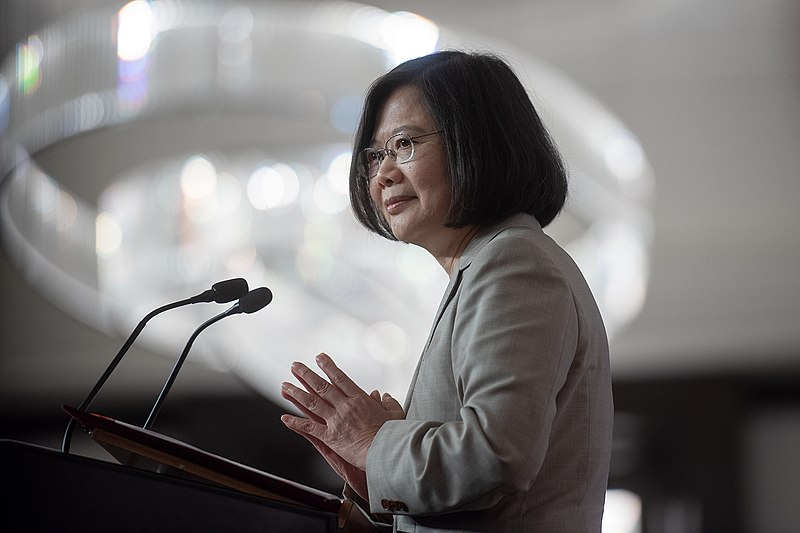
Taiwanese President Tsai Ing-wen said that the island nation hopes to secure a trade deal with the United Kingdom while deepening cooperation with the administration of British Prime Minister Rishi Sunak. Tsai’s comments were during a meeting with a British minister in Taipei amidst protests from China against visits by foreign officials to Taiwan.
Tsai met with British State and Trade Minister Greg Hands at the presidential office in Taipei this week, where she said she hopes a trade deal between Taiwan and the United Kingdom could be made. Tsai also thanked Hands for the UK’s continuous support for the island’s international participation as well as support for peace and stability in the Taiwan Strait.
“We attach great importance to the British proposal to promote an enhanced trade partnership between Taiwan and Britain,” said Tsai. “Our goal is to strengthen mutually beneficial economic and trade exchanges between Taiwan and Britain, and we hope Taiwan and Britain will work together to promote the signing of bilateral investment and trade agreements.”
Tsai added that Taiwan is willing to “make the best allocations” when it came to computer chips to help the world restructure the semiconductor supply chain and that the island is looking forward to working with its democratic allies, such as the UK to build a more resilient supply network in the world.
Tsai also said that she hopes the UK could “smoothly” join the Comprehensive and Progressive Agreement for the Trans-Pacific Partnership while, in turn, supporting Taiwan’s membership bid to the trade group.
While the UK has no formal diplomatic ties with Taiwan, it has maintained economic and informal relations. The UK also has a de facto embassy in Taipei.
Meanwhile, the Office of the United States Trade Representative said Wednesday that Washington and Taipei have wrapped up two days of trade talks. The office described the two-day discussions as “productive” and are part of the US-Taiwan initiative on 21st-century trade, a program that China has opposed. Both sides are set to have additional meetings moving forward.
This follows the introduction of the framework back in June, which came days after the Biden administration did not include Taiwan in its Asia-focused economic plan aimed at countering China’s growing influence in the continent.







