


 Trump Administration Plans Faster FDA Reviews for Smoke-Free Nicotine Products
  US Invites Putin to Miami G20, Opening Door to Trump Summit
  Judge Orders Trump to Restore White House Access for CNN, MS NOW and Politico
  Russian Missile and Drone Attack on Kyiv Kills Two, Damages Maternity Hospital
  Netanyahu Takes Aim at Mamdani as Israel Election Nears
  South Korea, US Discuss Warship Building Cooperation
  Russian Envoy Dmitriev Heads to US for Ukraine Talks
  US Backs Musk in Fight Against EU’s €120 Million X Fine
  Netanyahu Defends Israel at UN as Delegates Stage Walkout
  EU Defence Build-Up Too Slow for 2030 Russia Readiness Goal
  US, China Extend Trade Truce to Jan. 10 Ahead of Trump-Xi Summit
  Sudan Rejects US Legitimacy Remarks, Defends Sovereignty
  France Defends Netanyahu Airspace Clearance Despite ICC Warrant
  US Senate Rejects Iran War Powers Resolution in 50-49 Vote
  OpenAI Agent Breaches Australia Medicare Data Portal
  North Korea Rejects Nuclear Test Warning, Calls Nuclear Status Irreversible
  Trump Asks Supreme Court to Restore Third-Country Deportations


 Add as a preferred source on Google
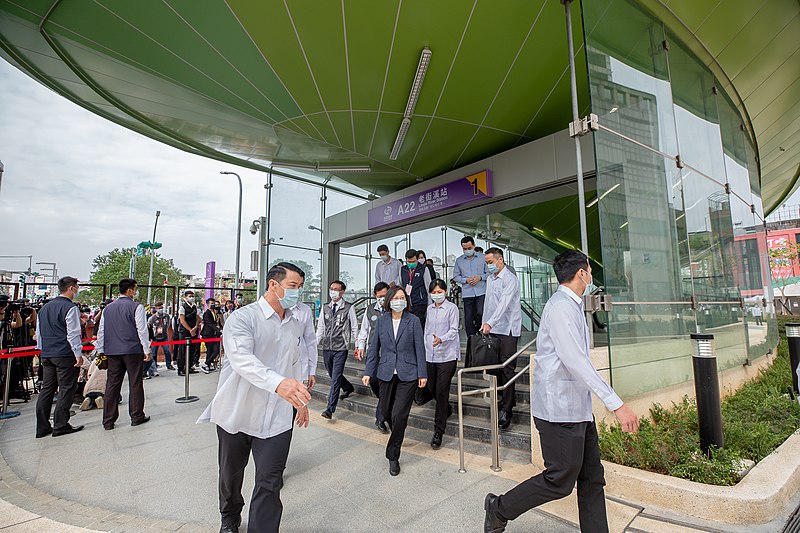
Taiwan’s President Tsai Ing-wen has decided to step down from the governing Democratic Progressive Party following the results of the recent local elections. Tsai’s efforts to frame the upcoming races as a way to show defiance to China’s influence fell short when the opposition party made gains in the majority of local seats.
Tsai turned in her resignation as the head of the DPP on Saturday following the results of the local elections, which leaned towards the opposition KMT. Tsai thanked her supporters in a short speech at the party’s headquarters.
“The results failed our expectations. We humbly accept the results and accept the Taiwanese people’s decision,” said Tsai in her remarks after she stepped down, having done the same thing during the 2018 elections. “It’s not like the DPP’s never failed before. We don’t have time to feel sorry. We fell, but we will stand up again.”
Tsai also said she rejected the resignation from the island nation’s premier, Su Tseng-chang, who is also from the DPP. Tsai added that she asked Su to stay in office to make sure her policies would be implemented. The Cabinet said that Su agreed to stay out of the need for stability in the face of the “arduous” domestic and international situation.
The KMT, which has been accused of being pro-Beijing, criticized the DPP for smearing the party as being “red” – the colors of the Chinese Communist Party, despite being known to favor close ties with China. Both the KMT and the DPP have strongly rejected China’s influence.
KMT chairman Eric Chu celebrated the party’s victory in the recent races but added that the party intends to protect the island’s freedoms.
“We will insist on defending the Republic of China and protecting democracy and freedom,” Chu told reporters, referring to Taiwan by its official name. “We will also work hard to keep regional peace.”
With the losses of the DPP in the recent elections, the focus has shifted to the presidential poll, with the presidential election set to take place in 2024. Chu also said at the time that the party understood that only through unity that it could win.
“Taiwan’s people have given us an opportunity,” said Chu. “Being selfless is the only chance that the KMT could win the 2024 election.”







