


 Pezeshkian Says US Must Choose When Iran War Ends
  US Comfortable With Canada Trade Standoff as Import Bans Loom
  Oil Prices Jump 3% as Houthi Attack Revives Supply Fears
  US Stock Futures Fall as Treasury Yields Surge Ahead of Trump-Xi Summit
  Najib Razak Seeks Stay of 15-Year 1MDB Prison Sentence
  Dollar Holds Near Two-Month High as Yen Approaches 160
  Japan Private-Sector Growth Slows as Domestic Demand Weakens
  Japanese Bank Stocks Surge as Bond Yields Fuel Rate Hike Bets
  Asian Currencies Mixed as Dollar Holds Near Two-Month High
  Oil Prices Fall on U.S.-Iran Hormuz Deal Hopes
  DaVoice Sues Perplexity AI Over Trade Secrets
  US Appeals Court Upholds Anthropic AI Supply Chain Ban
  Rodrigo Duterte Makes First Public Appearance at ICC in 18 Months
  Evan Gershkovich Says FSB Set Trap for 2023 Russia Arrest
  Judge Blocks Trump Rule Limiting Foreign Student Visas
  France Defends Netanyahu Airspace Clearance Despite ICC Warrant


 Add as a preferred source on Google
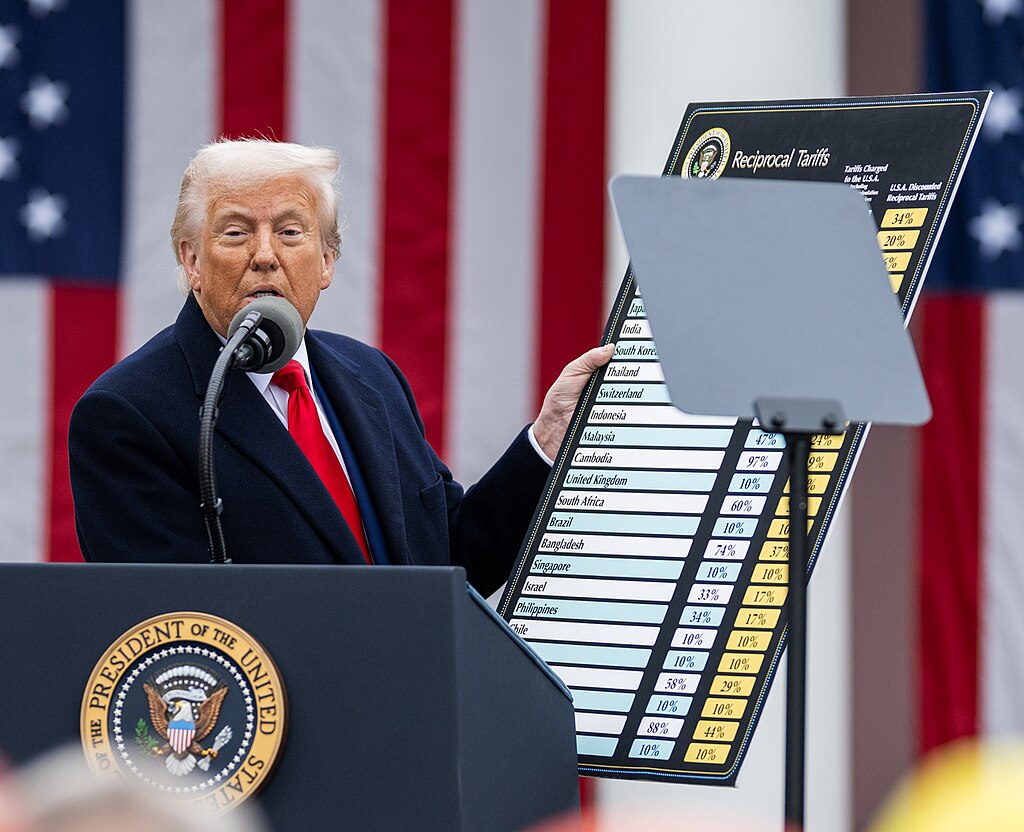
The U.S. dollar’s dominance faces renewed scrutiny as the Supreme Court prepares to examine whether President Donald Trump’s use of emergency powers under the International Emergency Economic Powers Act (IEEPA) to impose tariffs was lawful. According to Macquarie economists, the ruling could have far-reaching implications for inflation, Federal Reserve policy, and the broader U.S. economy.
Macquarie noted that removing some or all IEEPA tariffs could revive disinflation trends, easing inflation expectations and allowing the Federal Reserve to pivot toward more rate cuts. The bank’s analysts estimated that without the new tariffs, consumer inflation in September would have been around 2.2%, compared to the reported 2.9%. A decision against the tariffs could weaken the U.S. dollar while initially pushing long-term Treasury yields higher.
At the core of the legal challenge is whether Trump’s reliance on the IEEPA grants him the authority to impose tariffs. Opponents argue that trade deficits do not constitute national emergencies, while Trump’s legal team insists that the president alone can declare emergencies tied to national security and foreign policy.
However, Macquarie warns that Trump’s own statements could undermine his defense. His decision to hike tariffs on Brazilian exports earlier this year, citing the “witch-hunt” against former President Jair Bolsonaro, might be used as evidence that the measures were politically driven rather than economic necessities.
If deemed illegal, the loss of tariff revenue—estimated at up to $2 trillion over the next decade—could widen the U.S. fiscal deficit by 2–3% of GDP. Still, analysts say the Court might strike a balance by limiting presidential emergency powers without entirely revoking tariff authority. The final ruling, expected between late November and early 2026, could significantly influence the dollar’s trajectory and future monetary policy.







