


 Trump Asks Supreme Court to Restore Third-Country Deportations
  Venezuela Nears Deal to Move $4 Billion in Gold to New York Fed
  Trump, Xi Visit US National Archives After White House Summit
  Sara Duterte Posts Bail Over Grave Threats Case
  Judge Orders Trump to Restore White House Access for CNN, MS NOW and Politico
  Judge Blocks Trump Rule Limiting Foreign Student Visas
  US Backs Musk in Fight Against EU’s €120 Million X Fine
  Appeals Court Rejects Trump Third-Country Deportation Policy
  US Bans Canadian Alcohol, Motorcycles as Trade War Escalates
  Najib Razak Seeks Stay of 15-Year 1MDB Prison Sentence
  South Korea, US Discuss Warship Building Cooperation
  Rodrigo Duterte Makes First Public Appearance at ICC in 18 Months
  Pezeshkian Says US Must Choose When Iran War Ends
  Nvidia-Groq AI Chip Deal Faces U.S. Antitrust Probe
  Honduras Court Drops Charges Against Ex-President Juan Orlando Hernandez
  Canada Unveils Bill to Fast-Track Major Resource Projects
  Mexico-US Trade Talks Delayed to October as Tariff Negotiations Continue


 Add as a preferred source on Google
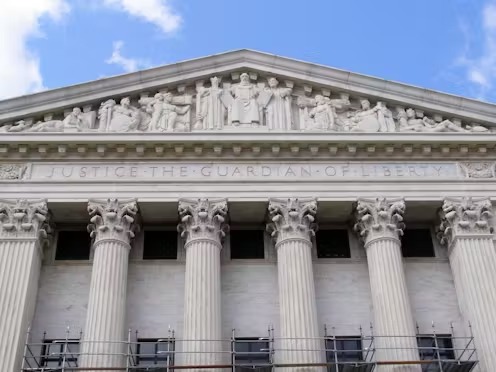
The U.S. Supreme Court has allowed President Donald Trump to proceed with firing two Democratic officials from independent federal labor boards, marking a pivotal moment in the debate over presidential authority. The court blocked lower court rulings that temporarily protected Cathy Harris of the Merit Systems Protection Board (MSPB) and Gwynne Wilcox of the National Labor Relations Board (NLRB) from dismissal.
This ruling, made by the court’s conservative majority, emphasized that the president holds the constitutional power to remove executive officers, with narrow exceptions. Critics argue the decision could threaten the independence of agencies like the Federal Reserve. However, the court dismissed such concerns, calling the Fed a uniquely structured, quasi-private entity.
Both Harris and Wilcox were appointed by President Joe Biden. Trump moved to remove them as part of a broader federal restructuring, which included downsizing agencies and replacing staff with loyalists. Chief Justice John Roberts had already paused injunctions blocking their firings in April. Both officials have since been removed, leaving their respective boards without quorums and impairing their functionality.
Lower court judges had previously ruled that Trump’s actions violated federal statutes protecting board members from arbitrary dismissal. These protections are grounded in the 1935 Humphrey’s Executor case, which limits a president’s ability to remove certain agency officials. Justice Elena Kagan dissented strongly, accusing the majority of undermining this precedent.
Lawyers representing Wilcox confirmed that legal challenges to the dismissals will continue. The case underscores a broader battle over executive power and the independence of regulatory bodies, with far-reaching implications for U.S. governance. As Trump seeks to reshape federal institutions, this legal battle could define the limits of presidential authority over independent agencies.







