


 Sudan Rejects US Legitimacy Remarks, Defends Sovereignty
  U.S. Treasury Yields Surge as 30-Year Hits 22-Year High
  Soybean Futures Slip as Traders Await Trump-Xi Trade Signals
  U.S. 10-Year Treasury Yield Hits 2007 High as Fed Rate Hike Bets Rise
  Netanyahu Takes Aim at Mamdani as Israel Election Nears
  Fed Unveils Stablecoin Rules Under GENIUS Act
  Ukrainian Drone Attacks Hit Russian Regions, Injuring at Least 12
  Oil Prices Ease as Iran Tensions Clash With Diplomacy Hopes
  Russian Envoy Dmitriev Heads to US for Ukraine Talks
  US, China Extend Trade Truce to Jan. 10 Ahead of Trump-Xi Summit
  What ‘Taiwan Independence’ Means as Xi Presses Trump on US Policy
  Oil Prices Surge as U.S.-Iran Diplomacy Hopes Fade
  Abbas Reaffirms November 28 Palestinian Elections
  Wall Street Ends Flat as Oil, Treasury Yields and Fed Jitters Rattle Markets
  Kremlin Says No Decision Yet on Putin-Trump December Summit
  Judge Orders Trump to Restore White House Access for CNN, MS NOW and Politico


 Add as a preferred source on Google
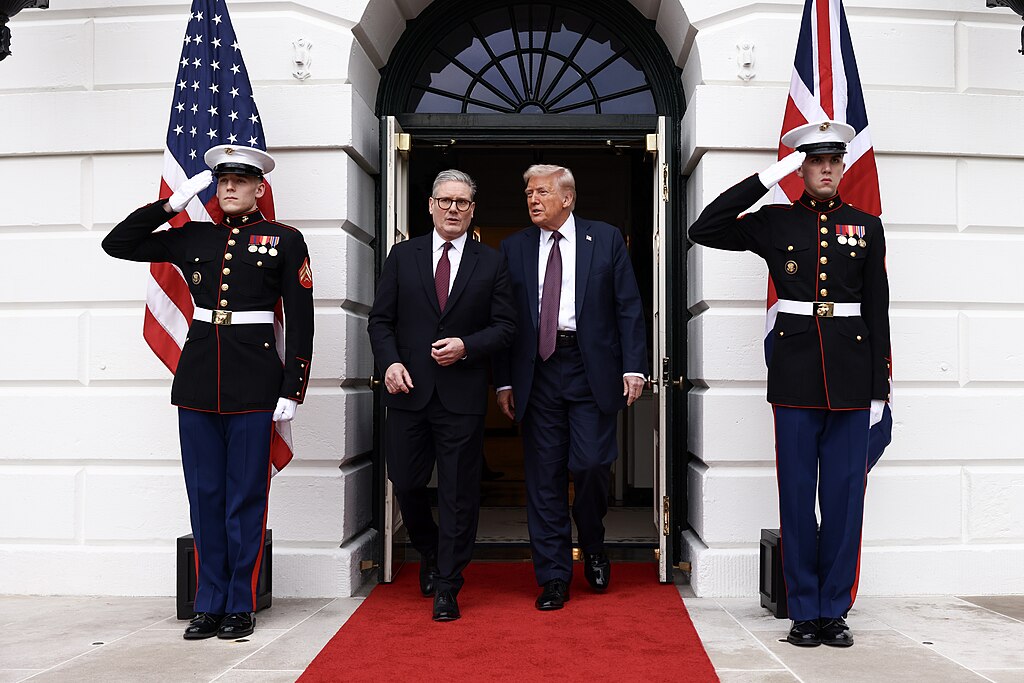
British Prime Minister Keir Starmer has expressed strong opposition to the idea of imposing tariffs on NATO allies, arguing that such measures undermine collective security efforts. Starmer made his position clear during a phone call with U.S. President Donald Trump on Sunday, following a series of discussions with key European and transatlantic leaders, including Denmark, the European Union, and NATO.
According to a Downing Street spokesperson, Starmer first spoke with Danish Prime Minister Mette Frederiksen, European Commission President Ursula von der Leyen, and NATO Secretary General Mark Rutte. These conversations focused heavily on shared security concerns in the High North, particularly in relation to Greenland, a strategically important region for NATO and Euro-Atlantic security. After these discussions, Starmer held a call with President Trump to relay his concerns directly.
During the conversation, Starmer emphasized that applying tariffs on allied nations for actions tied to NATO’s collective defense responsibilities is fundamentally wrong. He stressed that NATO allies should not face economic penalties for pursuing shared security objectives, especially at a time when geopolitical tensions continue to rise. Starmer highlighted that unity among allies remains essential for maintaining stability across the Euro-Atlantic region.
The prime minister reiterated that security in the High North is a top priority for all NATO members. He underscored that protecting this region is crucial not only for regional stability but also for safeguarding broader Euro-Atlantic interests. Greenland, in particular, has gained increased strategic attention due to its geographic location and its role in Arctic security, defense infrastructure, and emerging global trade routes.
Starmer’s comments reflect the UK government’s broader stance on strengthening alliances and promoting cooperation within NATO rather than pursuing unilateral economic measures that could strain relationships. By engaging directly with U.S. leadership and European partners, Starmer aimed to reinforce the importance of coordinated policy decisions that align security, economic stability, and diplomatic trust.
The discussions come amid ongoing debates over trade policy, defense spending, and the future direction of NATO. Starmer’s intervention signals the UK’s commitment to collective defense principles and its opposition to actions that could weaken allied solidarity at a critical moment for global security.







