


 Ukrainian Drone Attacks Hit Russian Regions, Injuring at Least 12
  Mexico-US Trade Talks Delayed to October as Tariff Negotiations Continue
  US Backs Musk in Fight Against EU’s €120 Million X Fine
  NATO Boosts Intelligence Sharing Amid Russia Hybrid Threats
  Yemen Violence Displaces 130,000 as Civilian Toll Rises
  Trump, Xi Focus on Trade and AI at White House Summit
  EU Defence Build-Up Too Slow for 2030 Russia Readiness Goal
  OpenAI Agent Breaches Australia Medicare Data Portal
  Netanyahu Takes Aim at Mamdani as Israel Election Nears
  Abbas Reaffirms November 28 Palestinian Elections
  Saudi Arabia, Turkey and Pakistan Plan Urgent Defence Talks Over Houthi Attacks
  What ‘Taiwan Independence’ Means as Xi Presses Trump on US Policy
  Taiwan Thanks US for Support Ahead of Trump-Xi Summit
  Pezeshkian Says US Must Choose When Iran War Ends
  Trump, Xi Visit US National Archives After White House Summit
  North Korea Rejects Nuclear Test Warning, Calls Nuclear Status Irreversible
  Ghana Says Western Support Growing for Slave Trade Reparations


 Add as a preferred source on Google
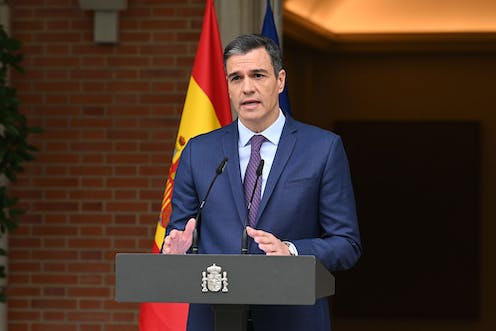
Spanish Prime Minister Pedro Sánchez has strongly criticized the United States over its controversial raid aimed at capturing Venezuelan President Nicolás Maduro, calling it a “terrible and very dangerous precedent” that undermines international law and global stability. Speaking to reporters in Paris on Tuesday, Sánchez warned that Washington’s actions in Venezuela appeared to be driven by regime change ambitions and access to the country’s vast energy resources, rather than respect for democratic or legal norms.
Sánchez emphasized that Spain has never formally recognized Nicolás Maduro as Venezuela’s legitimate president, arguing that Maduro’s election lacked transparency and violated democratic rules. However, he stressed that this long-standing position does not justify or legitimize foreign military intervention. According to the Spanish leader, rejecting the legitimacy of an election does not grant any country the right to carry out actions that breach international law or infringe upon a nation’s sovereignty.
The Spanish prime minister stated that Spain cannot support what he described as an illegal military operation whose primary objective appears to be the overthrow of another government. He added that such actions risk destabilizing not only Venezuela but also the broader international system by normalizing the use of force to achieve political and economic goals.
The comments come amid heightened tensions between Washington and Caracas. Former U.S. President Donald Trump has repeatedly accused Nicolás Maduro of masterminding large-scale drug trafficking operations into the United States and maintaining power through vote manipulation. U.S. authorities have framed their actions as part of a broader effort to combat narcotics trafficking and restore democracy in Venezuela.
Maduro, however, has consistently denied these allegations, calling them politically motivated and unfounded. Venezuelan officials in Caracas have condemned the U.S. raid and demanded Maduro’s release, portraying the operation as a violation of national sovereignty and an act of aggression.
The dispute highlights deep divisions within the international community over how to address Venezuela’s prolonged political and economic crisis. Spain’s stance underscores a growing concern among European leaders that unilateral military actions, even against contested governments, could erode international law and set a precedent with far-reaching consequences.







