


 Trump Says ‘Freedom’ Is Coming to Cuba
  Zelenskiy Warns Russia Preparing Major Attack on Ukraine
  FxWirePro- Crypto Weekly Alpha: ETF Rebounds, L2 Rallies & Key Resistance Levels
  US Officials Split Over Response to Israeli West Bank Settlements
  Europe Warns Russia Is Escalating Hybrid Attacks Across NATO
  South Korea, US Discuss Warship Building Cooperation
  Russian Envoy Dmitriev Heads to US for Ukraine Talks
  Taiwan Thanks US for Support Ahead of Trump-Xi Summit
  Marco Rubio to Meet Russia’s Lavrov in New York
  Mexico-US Trade Talks Delayed to October as Tariff Negotiations Continue
  Macron Challenges Trump’s Gaza Peace Claims at UN
  Gaza Faces Evacuation Crisis as War-Damaged Buildings Risk Collapse


 Add as a preferred source on Google
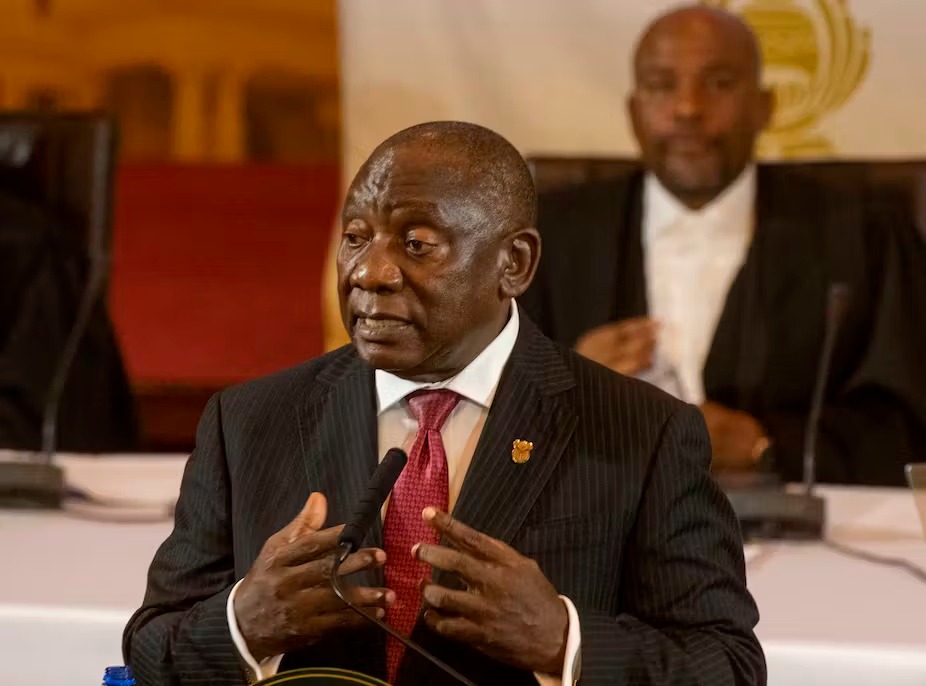

South Africa’s seventh general election since democracy in 1994, set for 29 May 2024, takes place under circumstances different from any other election in the history of the nation. Some view the hotly contested national and provincial elections as a watershed moment for the country. We asked political scientist Dirk Kotze to explain the changed circumstances.
There’s a new electoral law in place. What does this mean for the ballot paper and voters’ choices?
The new electoral system means that voters will receive three ballot papers instead of the two they got in the past: two national ballots (the regional and compensatory ballots) and one provincial ballot paper.
The first national ballot has a list of political parties that are contesting 200 National Assembly seats across the country. The second is the regional ballot in each province: it is for political parties and independent candidates in the nine provinces contesting the other 200 seats in the National Assembly. In total there are 400 seats in the National Assembly. The third is the provincial ballot for the provincial legislatures. South Africa has nine provinces.
Voters will therefore have to make three choices: two for the National Assembly and one for their provincial legislature. It creates the possibility of “strategic” voting. Voters can choose between different parties (or a party and an independent candidate) at the national level. It will also be possible to vote for one party at the national level and for another party (or an independent) at the provincial level.
The amended electoral system also allows independent candidates to stand at both the national and provincial levels for the first time.
The new system is therefore a combination of party lists and individual candidates. The new lists for the provincial legislatures look the same as the national “regional” lists.
What about the choices on the ballot paper?
The options on the national ballot paper increased from 48 parties in 2019 to 52 in 2024. In 1994, 19 parties participated in the first national election. The number of parties has increased gradually over 30 years, not suddenly since the most recent elections.
During the 30 years, the number of parties with seats in the National Assembly has remained relatively constant at about 14. In 1994, three – namely the African National Congress (ANC), New National Party (NNP) and Inkatha Freedom Party (IFP) – each received more than 10% support at the national level. In 1999, this changed with the NNP’s dramatic loss of support and the emergence of the Democratic Alliance (DA). The NNP party was dissolved in 2005.
The Inkatha Freedom Party also declined between 2009 and 2016, but started to recover thereafter. The Congress of the People (Cope) (2009) and the Economic Freedom Fighters (EFF) (2014) emerged as newcomers. Cope has largely disappeared while the DA and EFF have increased their support to between 10% and 20%.
The ANC, DA, EFF and IFP are therefore the main options in 2024, followed by a host of small parties with 1%-2% support. The latest addition is the uMkhonto weSizwe Party (MK Party) led by former president Jacob Zuma. Its support is still untested but it appears to have much potential in the KwaZulu-Natal province. Opinion polls suggest a national presence for the party of about 8%. In principle it means that the main contest is between about five to eight parties. This establishes a truly multiparty dispensation. It also enables a number of options for coalition governments.
The ruling party risks losing 50%. What does this mean?
The 2024 election might become a milestone because, for the first time since 1994, a national coalition government is a possibility. It will differ from the Government of National Unity of 1994-1999 (consisting of the ANC, NNP and IFP), which was an oversized, grand coalition agreed upon before the election as part of the negotiated transition package. It was thus not a conventional coalition government.
The possibility that the ruling ANC might receive less than 50%+1 of the votes at the national level or in some of the provincial legislatures will be highly significant. That’s because the ANC has been a dominant party for 30 years.
This is not unique and dominant parties were in the past or still are in power in India, Sweden, Japan, Botswana, Mexico, Namibia, Mozambique and Zimbabwe. This started to change in South Africa at local government level in 2016. The ANC’s dominance of South African politics has been premised on the fact that before 1990 it developed the status (together with the Pan Africanist Congress of Azania) of an internationally endorsed liberation movement of South Africa.
The ANC also enjoyed elevated status as the party of Nelson Mandela, its late world-renowned leader. It enjoyed international recognition even before it was elected as the government of South Africa. It occupied a moral high ground which no other party could challenge. That moral status and popular support are now under pressure. The risk for the ANC is that, if it loses its status as the sole governing party, its decline may accelerate without the possibility of recovery.







