


 Gold Surges Past $4150 on Dovish Fed Signals and Weak Jobs Data; Bullish Outlook Prevails
  South Korea Warns Won Is Undervalued, Boosts FX Coordination With Japan
  Oil Prices Steady as U.S.-Iran Peace Talks Ease Strait of Hormuz Supply Fears
  Oil Prices Steady as U.S.-Iran Talks Ease Supply Fears Ahead of Holiday Weekend
  Asian Currencies Stay Under Pressure as Dollar Holds Near 13-Month High Ahead of U.S. Jobs Report
  China Services PMI Beats Forecasts as Strong Demand Supports June Growth
  Elon Musk is remaking the world, like Henry Ford before him – but more dangerously
  Japan Signals Readiness to Act on Yen as Intervention Speculation Grows
  Morgan Stanley Names BAE Systems Top European Defence Stock Despite Lower Price Target
  Asian Currencies Rise as Dollar Weakens; Yen Holds Steady Amid Japan Intervention Watch
  Gold Price Today: Bullion Heads for First Weekly Gain as Weak U.S. Jobs Data Eases Rate Hike Fears
  Mary Daly Says AI Uncertainty Clouds Fed Rate Outlook Despite Restrictive Policy
  New Zealand Consumer Confidence Rises in June as Inflation Expectations Ease


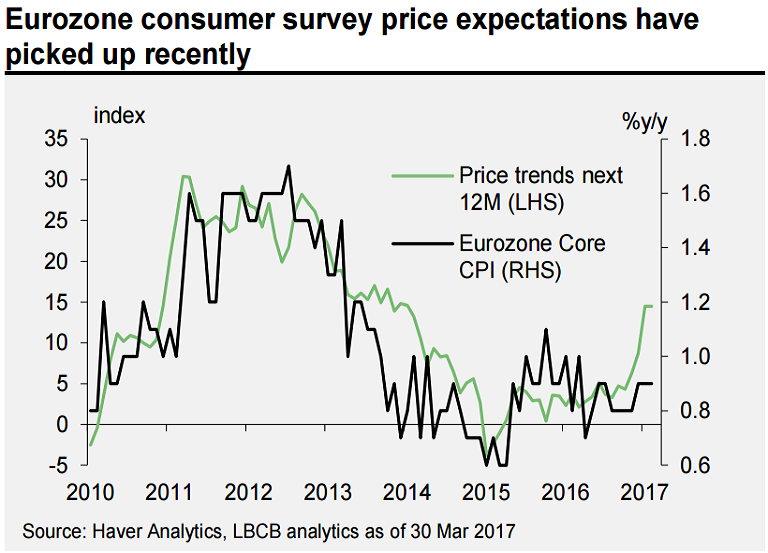
National CPI inflation releases today from Germany, eurozone's largest economy point to price growth falling back from a four-year high this month. Flash German inflation data considered as a precursor to Friday's Eurozone ‘flash’ CPI have seen notable drops. Cheaper energy and food prices are likely to have been the main drag.
The surprisingly weak figures from several German states hinted that price pressures in Europe's biggest economy still remain relatively modest. Consumer price growth in Brandenburg is down to 1.4 percent in March from 2 percent in the previous and has declined to 1.7 percent from 2.5 percent in Hesse and Bavaria. The state readings will feed into nationwide inflation data due later today and suggest that German inflation fell more sharply than expected in March.
The weak German state data follows Spanish price figures that also showed consumer inflation eased sharply in March. After rising at their fastest level since 2012, inflation in Spain pulled back more than expected in March. According to INE, Spain's national consumer price index rose by 2.3 percent year-on-year in March, down from 3.0 percent in February. On a month-on-month basis, Spanish national consumer prices were flat, unchanged from the previous month.
Separate data from the European Commission's monthly sentiment survey showed the eurozone consumer index of price trends over the next 12 months rose to 15.3 points from 14.5 in February, the highest since October 2013. The indicator for selling price expectations among manufacturers also rose to 9.8 points from 9.0 in February, the highest since July 2011.
The inflation rate for the entire euro zone is due on Friday and analysts' expect the eurozone inflation to have fallen to 1.8 percent in March from 2.0 percent in February. The European Central Bank (ECB) has said it needs to see stable inflation rises at the start of the year in the medium term before considering changing policies. Below-target inflation should quell hawks in the ECB.
ECB’s Chief Economist Praet had already rowed back on hawkish rhetoric earlier in the week. A media report yesterday indicated ECB’s hawkish message from March meeting was misinterpreted and that ECB wanted to communicate reduces tail risk, not a step towards exit. The euro weakened as a response. EUR/USD was trading at 1.07350 at around 1215 GMT. Technical studies are bearish. We see break below 1.07350 to confirm minor weakness, a decline till 1.07000 is possible. Any break below 1.0700 (50% retracement of 1.04948 and 1.09058) will drag the pair till 1.06500/1.0600.
FxWirePro's Hourly EUR Spot Index was highly bearish at -118.483 at 1215 GMT. For more details on FxWirePro's Currency Strength Index, visit http://www.fxwirepro.com/currencyindex.







