


 OpenAI Agent Breaches Australia Medicare Data Portal
  Ghana Says Western Support Growing for Slave Trade Reparations
  Judge Orders Trump to Restore White House Access for CNN, MS NOW and Politico
  Sudan Rejects US Legitimacy Remarks, Defends Sovereignty
  Netanyahu Takes Aim at Mamdani as Israel Election Nears
  US Officials Split Over Response to Israeli West Bank Settlements
  Pezeshkian Says US Must Choose When Iran War Ends
  Abbas Reaffirms November 28 Palestinian Elections
  Trump, Xi Focus on Trade and AI at White House Summit
  France Defends Netanyahu Airspace Clearance Despite ICC Warrant
  Yemen Violence Displaces 130,000 as Civilian Toll Rises
  Trump Asks Supreme Court to Restore Third-Country Deportations
  US Senate Rejects Iran War Powers Resolution in 50-49 Vote
  NATO Boosts Intelligence Sharing Amid Russia Hybrid Threats
  Netanyahu Defends Israel at UN as Delegates Stage Walkout
  EU Defence Build-Up Too Slow for 2030 Russia Readiness Goal
  Russian Envoy Dmitriev Heads to US for Ukraine Talks


 Add as a preferred source on Google
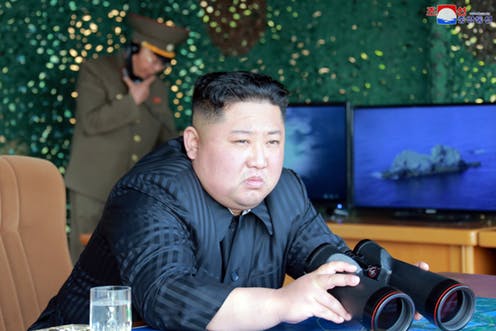
North Korea has conducted a series of weapons tests this week, showcasing cutting-edge military technology including cluster-bomb warheads, electromagnetic weapons, and carbon-fibre bombs, according to state media outlet KCNA. The tests, overseen by General Kim Jong Sik, signal Pyongyang's growing ambition to develop asymmetric warfare capabilities suited for modern conflict.
Among the weapons demonstrated was the Hwasongpho-11 Ka, a surface-to-surface tactical ballistic missile equipped with a cluster-bomb warhead capable of destroying targets across an area of up to seven hectares. North Korea's Academy of Defence Science also tested a mobile short-range anti-aircraft missile system, with launches confirmed over several days by South Korea's Joint Chiefs of Staff.
Analysts warn the electromagnetic weapon system could potentially disable electronic circuits in enemy assets, posing a significant threat to South Korea's F-35A stealth fighters and Aegis-equipped warships. Meanwhile, carbon-fibre bombs — previously developed only by advanced militaries like the United States and China — can disable power grids and critical infrastructure by scattering conductive fibre strands over targets, making them a formidable addition to North Korea's arsenal.
Security experts note that Pyongyang appears to be drawing lessons from the conflicts in Ukraine and the Middle East, prioritizing mass-producible, cost-effective weapons alongside high-tech electronic warfare tools. This dual approach reflects a broader strategy aimed at overwhelming South Korea's defence systems through asymmetric means.
The tests come ahead of a scheduled visit by Chinese Foreign Minister Wang Yi to Pyongyang and amid speculation over a potential summit between U.S. President Donald Trump and North Korean leader Kim Jong Un. Analysts view the timing as a deliberate show of force, intended to strengthen North Korea's negotiating position while signaling its expanding conventional and electronic warfare capabilities to both adversaries and allies.







