


 US Comfortable With Canada Trade Standoff as Import Bans Loom
  Oil Prices Ease as Iran Tensions Clash With Diplomacy Hopes
  Oil Prices Jump 3% as Houthi Attack Revives Supply Fears
  Oil Prices Fall on U.S.-Iran Hormuz Deal Hopes
  Australia Unemployment Hits Five-Year High Despite Strong Jobs Growth
  China’s ‘Lipstick King’ Says AI Won’t Replace Livestream Hosts
  Fed Unveils Stablecoin Rules Under GENIUS Act
  Wall Street Ends Flat as Oil, Treasury Yields and Fed Jitters Rattle Markets
  Soybean Futures Slip as Traders Await Trump-Xi Trade Signals
  Dollar Falls as Oil Eases, Yen Jumps on Intervention Signals
  Canadian Dollar Faces Pressure as Fed-BoC Policy Gap Widens
  Trump, Xi Focus on Trade and AI at White House Summit
  Fed’s Hammack Says Bond Yield Surge Is Not Driven by Inflation Fears
  Asian Stocks Fall as Bond Yields Surge Ahead of Trump-Xi Summit
  European Stocks Fall as Bond Yields and Geopolitical Risks Weigh
  Asian Stocks Fall as Surging Bond Yields Rattle Markets
  Asian Currencies Mixed as Dollar Holds Near Two-Month High


 Add as a preferred source on Google
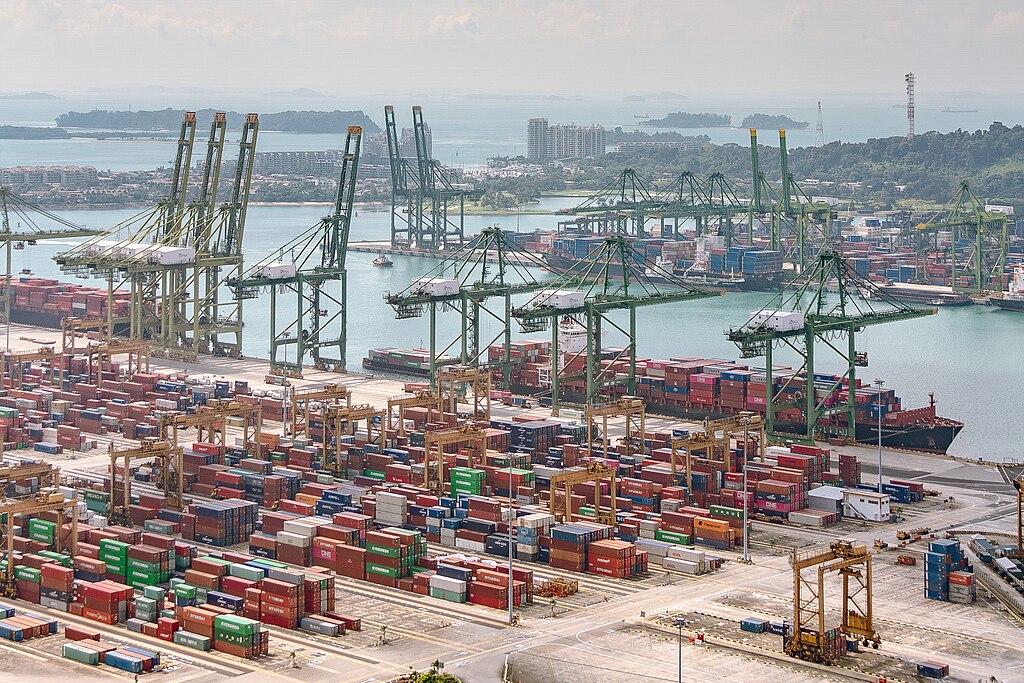
Singapore’s economy delivered stronger-than-expected performance in late 2025, according to preliminary government data, although policymakers have warned that sustaining such momentum in 2026 will be challenging. Advance estimates released on Friday showed that Singapore’s gross domestic product (GDP) grew 5.7% year-on-year in the fourth quarter, reflecting robust activity across key sectors. On a quarter-on-quarter, seasonally adjusted basis, GDP expanded by 1.9% compared with the third quarter, highlighting continued economic resilience.
For the full year 2025, Singapore’s economy expanded by 4.8%, an improvement from the 4.4% growth recorded in 2024 and well above earlier expectations. In a New Year message, Prime Minister Lawrence Wong noted that while economic growth in 2025 exceeded forecasts, replicating that pace this year would be difficult due to mounting global uncertainties.
The prime minister attributed last year’s stronger growth partly to U.S. tariffs being implemented later and at lower levels than initially anticipated. He also highlighted a surge in artificial intelligence-driven demand for semiconductors and electronics, which provided a significant boost to Singapore’s export-oriented economy.
Although Friday’s GDP release did not include fresh projections for 2026, the Ministry of Trade and Industry has previously forecast growth of between 1.0% and 3.0% for the year. This more moderate outlook reflects concerns over global trade conditions and potential downside risks from broader sectoral tariffs.
In November, the trade ministry raised its 2025 growth forecast to around 4.0%, up from an earlier range of 1.5% to 2.5%, underscoring how economic performance consistently surprised on the upside. Meanwhile, the Monetary Authority of Singapore kept monetary policy unchanged at its October review, citing resilient growth despite challenges posed by U.S. trade measures. The next policy review is scheduled for later this month.
Singapore’s exports to the United States currently face a 10% tariff, lower than those imposed on several Southeast Asian peers. However, sector-specific levies, including a 100% tariff on branded pharmaceutical products, remain a key concern. Broader sectoral tariffs could dampen demand for Singapore’s exports such as semiconductors, consumer electronics, and pharmaceutical goods, which together account for roughly 40% of exports to the U.S., according to the central bank.







