


 SK Hynix’s $28B U.S. IPO Draws Strong Demand as AI Chip Boom Fuels Investor Interest
  LG Energy Solution Q2 Profit Plunges 77% Despite Revenue Growth on Weak EV Demand
  OpenAI GPT-5.6 Set for Wider Release After U.S. Commerce Approval, Report Says
  SpaceX Stock Draws Bullish Wall Street Coverage Ahead of Nasdaq-100 Inclusion
  Samsung Chairman Lee Jae-yong Expected to Meet Nvidia CEO Jensen Huang on AI and Chip Partnership
  Elon Musk Says Anthropic Leads AI Race as Claude Models Challenge OpenAI
  OpenAI Executive Fidji Simo to Step Down Amid Health Challenges Ahead of IPO
  AI Memory Chip Shortage Likely to Persist Despite Korea Investment Boom, Nomura Says
  AstraZeneca Shares Sink After Wainua Trial Misses Key Heart Disease Goal
  Zhipu AI Stock Jumps on Report of Custom AI Chip Development Plans
  Kitron Q2 Revenue Beats Estimates as Defense Demand Lifts Growth
  Japan Regional Bank Stocks Drop After Zentoshin Bankruptcy Sparks Credit Risk Concerns
  SK Hynix’s $28 Billion U.S. Share Sale Draws Massive Demand Amid AI Chip Boom
  China 618 Smartphone Sales Drop 13% as Higher Prices Hurt Demand, Huawei Gains Market Share
  Kuaishou Stock Jumps as Kling AI Secures $2 Billion Funding Round
  Chinese Chip Stocks Jump as Apple Reportedly Tests CXMT Memory Chips for China Devices


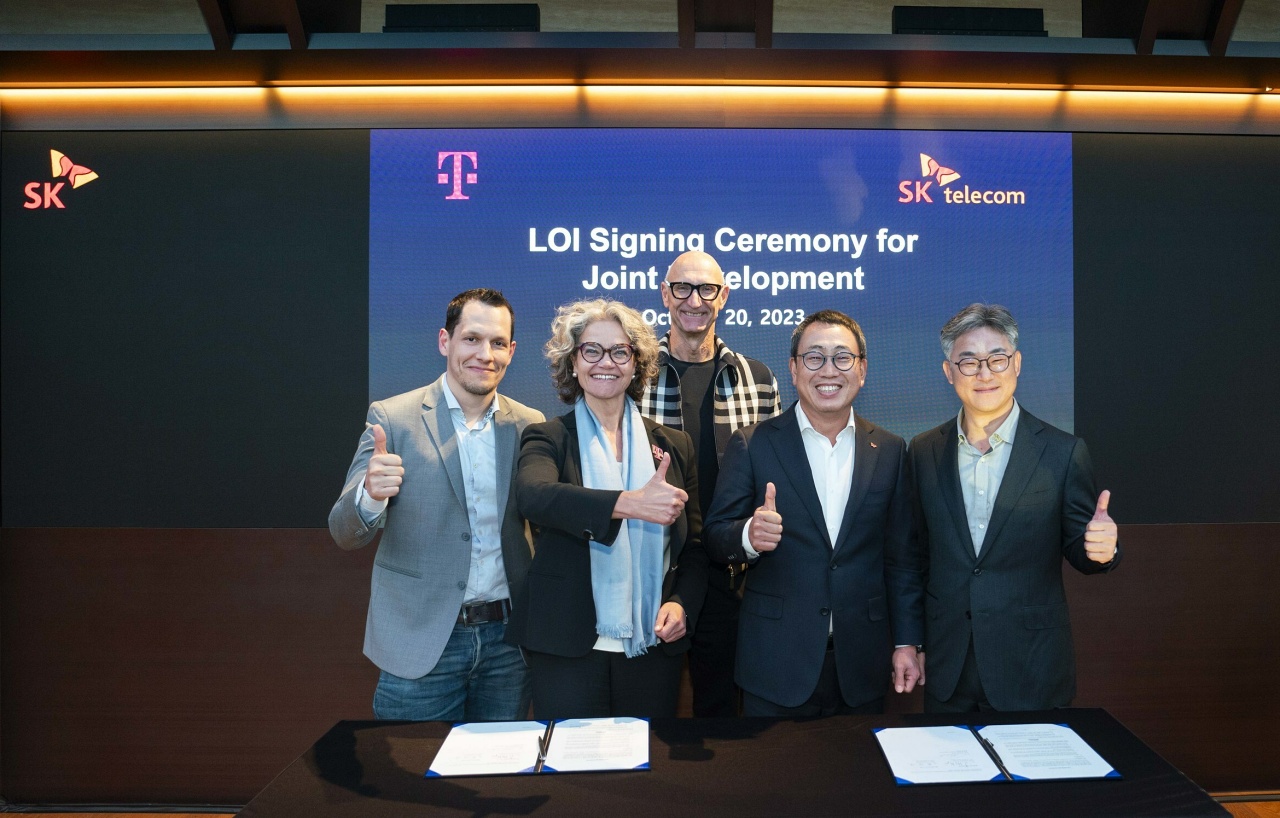
SK Telecom and Deutsche Telekom have signed a partnership deal to develop a Large Language Model designed for artificial intelligence (AI). The two telecom firms will work on creating a telecom-focused LLM that will be available in English, Korean, and German.
SK Telecom and Deutsche Telekom's new AI language model is set to be released within the first quarter of 2024. As the firms are jointly working on this project, they will be able to create generative artificial intelligence models quickly and with ease. This is because each company has the tools needed to create the technology, so their joint efforts will make the process easier.
LLM Development to Cater to Different Languages
According to Business Korea, SK Telecom and Deutsche Telekom are co-developing the telco-specific multilingual LLM model in collaboration with other major companies such as Meta and Anthropic. Initially, the technology will cater to three languages first.
The telecoms' LLM is said to have a high-level comprehension of telecommunications services related to domains. It is also proficient at understanding user intentions, and these traits make it especially cut out for applications in AI call centers and other functions related to customer service.
Main Goal for the LLM Joint Venture
The Korea Economic Daily reported that these AI-based call centers will utilize SKT and Deutsche Telekom's LLM. The former also said that its AI integration package - AI Full Stack Structure and Connection Standards - was marked an international standard during a study group of the International Telecommunication Union's Telecommunication Standardization Sector that was held in Geneva, Switzerland, from Oct. 16 to Oct. 20.
SK Telecom and Deutsche Telekom will now use their LLM creation to advance to Europe, Asia, and the Middle East. The expansion to other countries turned out to be the main objective of the companies for their joint venture.
"Through our partnership with Deutsche Telekom, we have secured a strong opportunity and momentum to gain global AI leadership and drive new growth," SK Telecom's chief executive officer, Ryu Young Sang, said in a press release. "By combining the strengths and capabilities of the two companies in AI technology, platform and infrastructure, we expect to empower enterprises in many different industries to deliver new and higher value to their customers."
Claudia Nemat, Deutsche Telekom's board member for technology and innovation, further commented, "AI shows impressive potential to enhance human problem-solving capabilities significantly. To maximize its use, especially in customer service, we need to adapt existing large language models and train them with our unique data. This will elevate our generative AI tools."
Photo by: SK Telecom Press Release







