


 SanDisk Q4 Earnings Beat Estimates as Q1 Revenue Outlook Meets Expectations
  Nvidia to Invest Up to $3 Billion in Blackstone-Backed Lancium
  Singapore Says One-Third of U.S. Exports Hit by New 12.5% Tariff
  Brazil Cuts Selic Rate to 14% as Inflation Eases but Risks Persist
  Heineken H1 Operating Profit Meets Forecast as Beer Volumes Beat Expectations
  Airbnb Stock Jumps After Q2 Earnings Beat, Strong 2026 Outlook
  US Job Growth Seen Picking Up in July
  SoftBank Q1 Profit Beats Forecast as Intel Rally and OpenAI Investments Boost Returns
  SK Hynix, Samsung Lead Asian Chip Stock Selloff After Sandisk, Western Digital Outlook
  Trump Unveils $3 Billion U.S. Critical Minerals Push
  Asian Currencies Hold Steady as US Dollar Nears Seven-Week Low Ahead of Key Jobs Data
  China Exports Beat July Forecasts as AI Demand Fuels High-Tech Trade
  US Dollar Falls as Weak July Jobs Report Dents Fed Rate Hike Bets
  China Trade Surplus Beats Forecasts in July as Exports Stay Strong
  Delta Flight Makes Emergency Landing in Atlanta After Cockpit Fumes Reported
  Oil Prices Slip as Hormuz Shipping Progress and Rising U.S. Crude Stocks Weigh on Market
  Wall Street Ends Mixed as Dow Hits Record Despite Tech Weakness


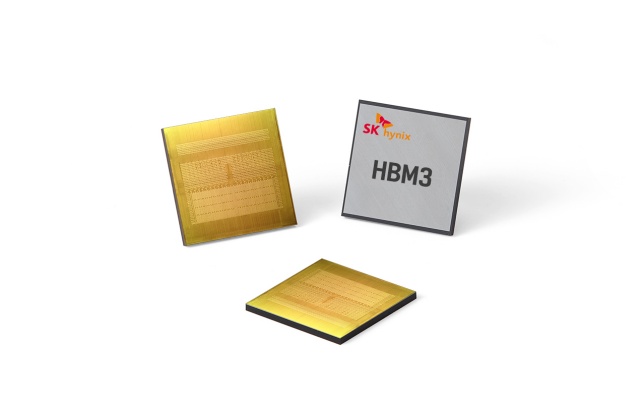
SK Hynix has signed a deal to supply the HBM3 microchip to Nvidia Corporation, which is an American tech company. The chip has been described as the world's best-performing chip and a first of its kind in the industry.
SK Hynix announced on Thursday, June 9, that it has already started the mass production of the HBM3 chip, which is a DRAM or dynamic random access memory product. The first batch of its production will be shipped to Nvidia in the United States, which is apparently, its very first client for the supply of HBM3, as per The Korea Herald.
This is the latest HBM3 DRAM semiconductor and the fourth generation of SK Hynix's HBM product line. It features high bandwidth memory that vertically interconnects multiple DRAM chips, boosting data processing speed.
SK Hynix is currently the second-largest memory chip producer in the world, and it is now the first to mass-produce the high-value, high-performance microchip that is said to be a breakthrough in the chip industry just seven months since its development.
As for Nvidia, it is the largest chipmaker in the U.S. in terms of market value. It has completed the performance tests for SK Hynix's HBM3 chip and planning to use this for its own H100 graphics processing unit. It will be a component of the company's advanced artificial intelligence technologies, such as accelerated computing.
Noh Jong Won, SK Hynix's president and chief marketing officer, said in a press release announcing its partnership with Nvidia as a supplier, "We aim to become a solution provider that deeply understands and addresses our customers' needs through continuous open collaboration."
The CMO, who is also known as Kevin Noh, further said, "In a close partnership with Nvidia, we have secured top-notch competitiveness in the premium DRAM market."
Finally, an SK Hynix official said on Thursday via Aju Business Daily that "HBM3 has opened a new market for superfast AI semiconductors." He added that depending on Nvidia's requirements. The company will be increasing the production of its HBM3, which is expected to be used in Nvidia designs graphics processing units, mobile phone processors, vehicle navigation, and systems on chip (SoCs).







