


 SpaceX’s Starship Completes 11th Test Flight, Paving Way for Moon and Mars Missions
  NASA Partners with Katalyst to Save Swift Observatory with Innovative Docking Mission
  Moody’s Downgrades Mexico Credit Rating Amid Rising Debt and Fiscal Pressure
  Astronomers have discovered another puzzling interstellar object − this third one is big, bright and fast
  Intuit Raises Full-Year Forecast After Strong Q3 Earnings Despite Stock Drop
  How to create a thriving forest, not box-checking ‘tree cover’
  JPMorgan Sees Large-Cap Biotech Stocks Entering New Growth Phase in 2026
  Fungi are among the planet’s most important organisms — yet they continue to be overlooked in conservation strategies
  How ongoing deforestation is rooted in colonialism and its management practices
  FDA Pilot Program Eases Rules for Nicotine Pouch Makers
  H.B. Fuller Eyes Advanced Medical Solutions in Potential £600M Takeover Deal
  SpaceX Delays Starship V3 Launch Ahead of Potential Record IPO
  Cuba needs a long-term solution to its energy crisis
  Thousands of satellites are due to burn up in the atmosphere every year – damaging the ozone layer and changing the climate
  Goldman Sachs to Pay $500M in 1MDB Shareholder Fraud Settlement
  Analog Devices Nears $1.5B Acquisition of AI Chip Firm Empower Semiconductor


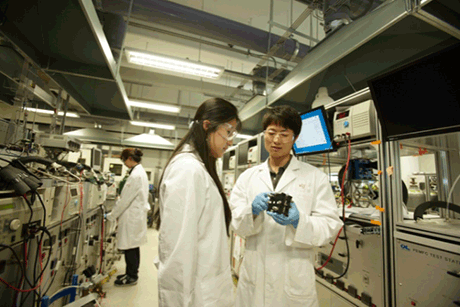
The Korea Institute of Science and Technology has developed a technology that uses photovoltaic energy for producing hydrogen peroxide, replacing a thermochemical process that requires high energy and creates environmental issues.
The thermochemically produced organic solution was used by the study team to create a photocatalytic reaction solution, which improved the photocatalyst's capacity for oxygen reduction.
The research team employed solar energy to manage the photocatalyst and organic solution, and they were able to produce 5.3 percent hydrogen peroxide per unit hour and a gram of photocatalyst, which is five times more than the minimal industrial output standard.







